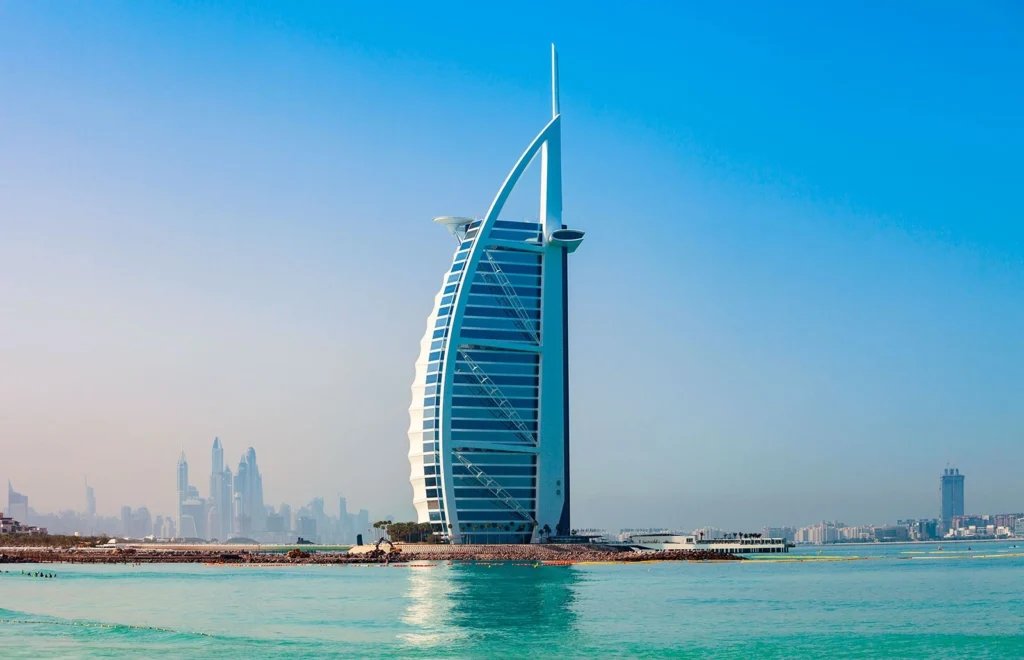
Jumeirah has announced a carefully phased restoration programme for Burj Al Arab, beginning a significant new chapter for one of Dubai’s most recognisable hotels and reinforcing the emirate’s position at the forefront of global ultra-luxury hospitality.
The approximately 18-month programme will be led by acclaimed French interior architect Tristan Auer and will focus on preserving the hotel’s architectural identity while refining its interiors, craftsmanship, technology and guest experience.
Rather than radically reinventing the property, the restoration has been designed as a considered evolution. Jumeirah intends to protect the hotel’s cultural and design legacy while introducing contemporary comfort for future generations of travellers.
The project follows more than 25 years of continuous operations since Burj Al Arab opened in 1999. During that period, its sail-shaped silhouette, all-suite accommodation and personalised service model helped establish Dubai as a global destination for ambitious architecture and premium hospitality.
Phased Programme Protects Guest Experience
The restoration will be delivered in carefully managed phases, allowing work to progress with close attention to the property’s operations, design integrity and service standards.
This approach is particularly important for a hotel that functions not only as accommodation but also as an internationally recognised symbol of Dubai. Burj Al Arab remains a major attraction for luxury travellers, special-event visitors, restaurant guests and architecture enthusiasts.
The programme is expected to strengthen the hotel’s long-term competitiveness as new luxury resorts, branded residences and lifestyle developments continue to enter Dubai’s hospitality market.
By preserving a flagship property while enhancing its functionality, Jumeirah is signalling that heritage can remain commercially relevant when it is supported by thoughtful investment and modern guest-focused design.
Tristan Auer Leads Sensitive Design Evolution
Tristan Auer was selected following a strategic design process and brings extensive experience restoring prestigious hotels, palaces, restaurants and private residences.
His portfolio includes work associated with Hôtel de Crillon in Paris and other internationally recognised luxury destinations. His design philosophy places strong emphasis on heritage, detail, craftsmanship and emotional atmosphere.
For Burj Al Arab, Auer’s brief centres on renewal rather than reinvention. The majority of the hotel’s bold decorative language will remain, while bespoke finishes, custom textiles and discreet technological upgrades will introduce greater comfort and functionality.
The result is intended to feel unmistakably familiar while appearing more refined, relevant and responsive to the expectations of contemporary travellers.
Sail-Shaped Landmark Retains Its Identity
The hotel’s defining architectural form will remain untouched. Inspired by the sail of a traditional Arabian dhow, the structure has shaped Dubai’s coastline and international image for more than a quarter of a century.
Its interior is equally distinctive. The soaring atrium, powerful colour combinations, extensive marble surfaces, gold-leaf detailing and Swarovski crystal features have created one of the most theatrical environments in global hospitality.
The restoration will preserve these signature elements rather than replace them with a minimalist or standardised luxury aesthetic. This is critical to maintaining the sense of arrival, spectacle and exclusivity that has long distinguished the property.
Jumeirah has described the project as comparable to conserving a work of art, with careful attention being given to the materials, decorative techniques and visual details that define the hotel.
Bespoke Craftsmanship Shapes the Next Era
Custom-made production will be central to the redesign. Specially developed fabrics, embroidery, furnishings and decorative finishes will be created exclusively for Burj Al Arab.
This approach reflects Auer’s concept of haute decoration, in which each interior element is treated as an individually crafted expression rather than a widely replicated hotel product.
The strategy supports Burj Al Arab’s positioning at the highest end of the hospitality market, where exclusivity increasingly depends on authenticity, craftsmanship and experiences that cannot be duplicated elsewhere.
Technology will also be integrated more discreetly, allowing guests to benefit from modern convenience without disrupting the hotel’s established visual identity.
Restoration Strengthens Dubai Luxury Tourism
The investment arrives as Dubai continues to expand its appeal among affluent leisure travellers, high-profile events, destination weddings and premium culinary visitors.
Burj Al Arab’s 198 suites remain an important part of this tourism ecosystem. Its restaurants, wellness facilities, private experiences and highly personalised service generate economic activity across the wider hospitality, aviation, retail and events sectors.
The restoration may also encourage repeat visitation by introducing renewed experiences while preserving the emotional connection many guests associate with the landmark.
As luxury travel becomes increasingly experience-driven, established icons face pressure to evolve without losing the qualities that made them famous. Burj Al Arab’s phased renewal offers Dubai an opportunity to demonstrate how architectural heritage and contemporary hospitality can coexist.
The project ultimately represents more than an interior upgrade. It protects one of the emirate’s strongest tourism symbols while preparing it to remain relevant for the next 25 years and beyond.
For more travel news like this, keep reading Global Travel Wire