China, Denmark and a growing group of international destinations are placing sustainable architecture at the centre of tourism development in 2026, creating greener hotels, cultural attractions and public spaces designed to reduce environmental pressure.
The movement reflects a wider shift in how destinations approach visitor growth. Rather than constructing buildings solely around capacity, appearance and commercial value, governments and developers increasingly consider energy use, carbon emissions, climate resilience and biodiversity.
For travellers, this transition is producing a new generation of attractions where environmental design becomes part of the destination experience. Public libraries, museums, resorts and urban landmarks can now function as both visitor facilities and demonstrations of responsible development.
Sustainable buildings also help destinations respond to climate risks while attracting travellers who value environmental responsibility.
China Develops Low-Carbon Tourism Models
China is using large-scale planning, energy technology and international cooperation to advance climate-conscious urban and tourism infrastructure.
Hainan’s Wuzhizhou Island has emerged as a notable example of low-carbon island development. The destination is being treated as a living laboratory for renewable energy, efficient infrastructure and smarter resource management.
The approach aims to reduce dependence on fossil fuels while protecting the natural assets supporting the island’s tourism economy. Islands face particular sustainability challenges because hotels, attractions and transport systems can place heavy pressure on energy, water and waste services.
China is also investing in public architecture that can strengthen city tourism. Major cultural developments in Beijing and Shanghai demonstrate how libraries and civic buildings can become visitor attractions through distinctive design, public accessibility and better integration with urban environments.
International climate cooperation is supporting China’s transition towards climate-neutral districts during the country’s 2026–2030 planning period. These projects explore renewable power, energy efficiency, smart grids and resource reuse that could eventually be applied across tourism zones.
Denmark Shares Green Building Expertise
Denmark remains an influential contributor to global sustainable building design.
Its approach combines energy efficiency, renewable systems, healthy indoor environments and circular construction principles. Danish organisations are also sharing technical knowledge through international partnerships, supporting other countries seeking to lower emissions from cities and buildings.
Buildings form a significant part of climate action because they consume energy throughout construction and operation. Improved insulation, efficient heating, natural daylight and intelligent management systems can reduce long-term environmental impacts.
For tourism, Denmark’s green architecture strengthens Copenhagen and other cities as destinations associated with sustainability and liveability. Visitors increasingly encounter environmentally designed hotels, cycling infrastructure, waterfront districts and public spaces as part of the travel experience.
Denmark’s official green-transition platform identifies sustainable and energy-efficient buildings as essential to responding to climate change and urbanisation.
Singapore Connects Architecture With Nature
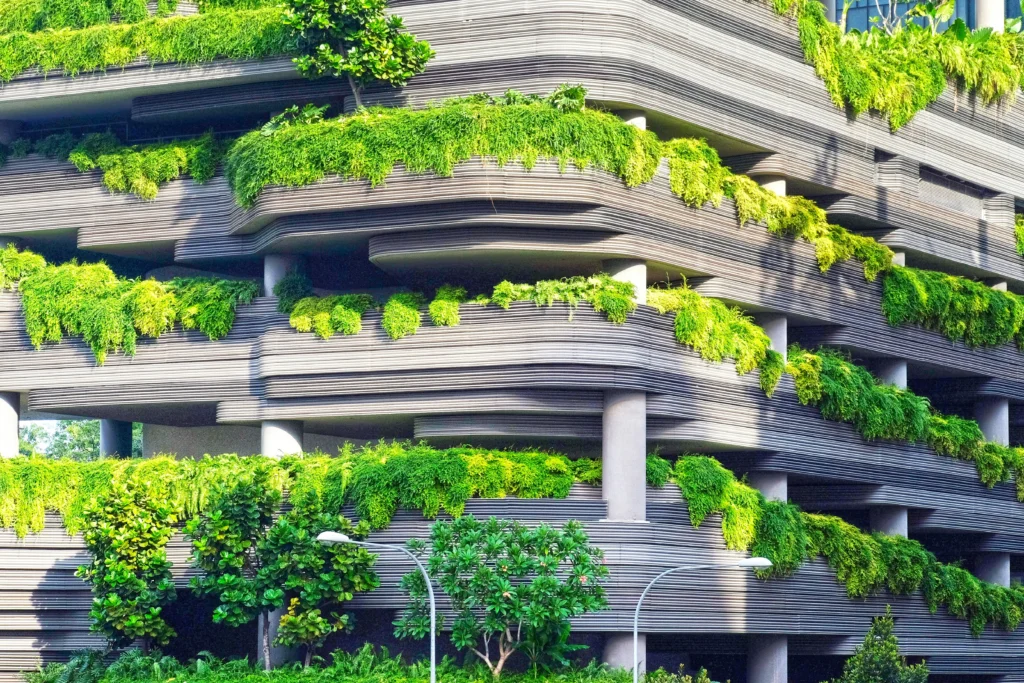
Singapore continues to demonstrate how a densely developed city can integrate greenery with tourism infrastructure.
Vertical gardens, tree-filled developments and energy-efficient visitor attractions have become important parts of the city-state’s destination identity. Jewel Changi Airport’s Rain Vortex uses recirculated rainwater, while its indoor landscape contains more than 2,000 trees.
Hotels and commercial buildings are also adopting water conservation, energy management and environmentally responsible operating practices.
This combination allows travellers to experience modern architecture without losing access to greenery and biodiversity. Singapore promotes public transport, certified sustainable accommodation and responsible visitor behaviour as parts of a wider low-impact tourism journey.
Adaptive Reuse Protects Heritage Attractions
European destinations are increasingly transforming older industrial and historic buildings instead of demolishing them.
Adaptive reuse reduces construction waste while protecting local identity. Former factories, warehouses and public buildings can become museums, performance spaces, hotels and cultural attractions.
This approach gives travellers access to places that retain visible connections with local history. It can also revitalise neighbourhoods without requiring entirely new developments.
Norway, Sweden, France, Germany and Switzerland are combining reuse with timber construction, energy-efficient systems and landscape-sensitive planning.
Mountain destinations are particularly focused on climate-resilient architecture because changing snowfall, extreme weather and ecosystem pressures can affect tourism infrastructure.
India Expands Nature-Based Accommodation
India’s eco-tourism regions are increasingly adopting architecture that uses bamboo, mud, stone, terracotta and locally sourced materials.
Such construction methods can help accommodation blend more naturally into forests, mountains and rural landscapes. They can also support local craftspeople and reduce dependence on carbon-intensive materials.
Eco-retreats near wildlife reserves and mountain routes are designed to provide visitor comfort while limiting disruption to surrounding ecosystems.
For travellers, these properties offer a stronger connection with nature and local communities. For destinations, they create tourism income while encouraging conservation and responsible resource use.
Green Hotels Become Mainstream
Sustainable hotels are moving beyond a specialist niche.
Properties worldwide are introducing renewable energy, natural ventilation, water-saving fixtures, waste reduction and locally sourced materials. These features can lower operating costs while responding to traveller expectations.
Island and coastal resorts are also investing in resilient structures capable of addressing rising temperatures, stronger storms and water shortages.
Travellers may increasingly compare accommodation according to sustainability performance alongside price, location and amenities.
Architecture Becomes Part of the Journey
The global transition towards sustainable architecture shows that buildings are no longer merely places where tourism happens.
They are becoming attractions, environmental statements and tools for managing destination growth.
China’s low-carbon developments, Denmark’s building expertise, Singapore’s nature-integrated cityscape and India’s eco-retreats demonstrate different pathways towards the same goal.
As green construction expands beyond 2026, future hotels, airports, museums and visitor centres will increasingly generate cleaner energy, reuse resources and support biodiversity.
This transformation could help tourism destinations welcome visitors while protecting the landscapes, communities and cultural assets that make travel meaningful.
For more travel news like this, keep reading Global Travel Wire