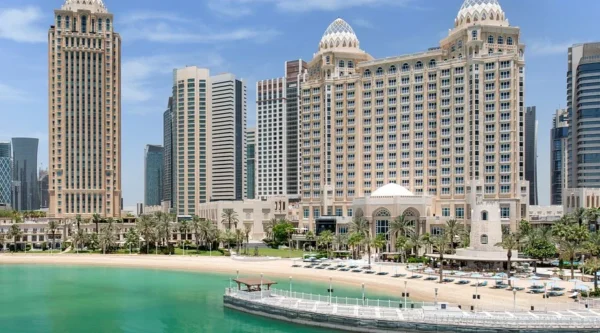
Strong visitor demand and higher hotel rates are widening interest in licensed holiday homes across Dubai and Doha in 2026. Apartments and villas offer another accommodation format for families, remote workers, corporate visitors and travellers planning extended stays.
Premium districts such as Dubai Marina, Downtown Dubai, West Bay and Msheireb Downtown are well placed to benefit. These neighbourhoods combine central locations with residences offering kitchens, living areas and greater privacy than standard hotel rooms.
However, official data does not establish that travellers are abandoning hotels for Airbnb properties on a mass scale. Instead, the evidence points to a diversifying hospitality market where hotels, hotel apartments and regulated holiday homes serve different visitor needs.
Both destinations continue to record strong conventional hotel performance. At the same time, Dubai’s Department of Economy and Tourism and Qatar Tourism have created formal systems governing short-term residential accommodation.
Dubai hotel performance supports a broader market
Dubai entered 2026 after welcoming a record 19.59 million international overnight visitors during 2025, up 5% annually. The city’s hotels recorded an average occupancy rate of 80.7%, compared with 78.2% in 2024.
The average daily hotel rate increased 8% to AED 579. Revenue per available room advanced 11% to AED 467, reflecting both stronger pricing and high room demand.
Dubai ended 2025 with 154,264 rooms across 827 hotel establishments. Guests generated 44.85 million occupied room nights, while the average stay remained 3.7 nights.
These figures demonstrate the strength of traditional hospitality rather than its decline. Nevertheless, higher average prices can encourage budget-conscious visitors and larger groups to compare hotels with residential alternatives.
Holiday homes may become particularly attractive when travellers need several bedrooms, cooking facilities or space for work. They can also support longer visits by offering a more residential routine.
Licensing brings structure to Dubai holiday homes
Dubai requires individuals and professional operators to register apartments or villas through the official Holiday Homes system. Individual homeowners can register up to eight units, while professional operators need an appropriate commercial licence.
The regulatory framework classifies holiday homes as Standard or Deluxe. This classification gives visitors a clearer indication of the accommodation category before arrival.
Guests must also pay the Tourism Dirham. The charge is AED 10 per room per night for Standard holiday homes and AED 15 for Deluxe units. For stays exceeding 30 consecutive nights, the fee applies to the first 30 nights.
Permits are issued for one year and require renewal. Operators must follow established requirements covering guest information, safety, property management and the collection of official charges.
For travellers, this makes licence verification an essential booking step. A central location or attractive online listing should never replace confirmation that the property operates legally.
Qatar formalises its alternative accommodation sector
Doha’s accommodation market has also become more varied following years of tourism investment and destination development. Hotels remain central to the city’s business, leisure and events economy, while holiday homes add flexibility for other visitor segments.
Qatar Tourism allows owners and authorised tenants to apply for a Holiday Homes licence through its electronic services portal. The licence is valid for five years and covers apartments and villas.
Applicants must be at least 21 years old and hold valid identification. They must complete a self-assessment classification checklist and provide property documents or an authorised lease arrangement.
Required evidence includes photographs of bedrooms, living and dining areas, bathrooms and kitchens. Applicants must also demonstrate that the unit has safety provisions such as a first-aid kit, secure storage and fire extinguishers.
Qatar Tourism states that its system is designed to provide transparency, safety and consistency. This oversight helps holiday homes operate as a recognised part of the visitor economy rather than an informal parallel market.
Central districts appeal to longer-stay guests
In Doha, West Bay offers access to corporate offices, hotels and waterfront attractions. Msheireb Downtown provides a walkable, technology-focused urban environment close to important cultural and commercial areas.
In Dubai, Marina and Downtown combine residential towers with dining, shopping and major attractions. Such districts appeal to visitors who want hotel-like convenience with the layout of a private apartment.
Families may avoid booking several separate rooms, while corporate travellers can maintain daily routines during extended assignments. Remote workers may also value kitchens, laundry facilities and defined working areas.
Yet holiday homes do not always deliver lower prices. Nightly rates vary according to season, location, unit size, cleaning charges and major events. Travellers should compare the complete booking cost with hotel packages before deciding.
Hotels and holiday homes can grow together
The expansion of alternative accommodation does not mean holiday homes will replace Gulf hotels. Luxury properties retain advantages in concierge service, dining, wellness, meetings and resort facilities.
Hotels are also likely to remain dominant for short visits, premium holidays and large events. Holiday homes can complement them by serving families, long-stay guests and visitors seeking residential independence.
For Dubai and Doha, the strategic benefit is greater choice. A properly regulated accommodation mix can extend average stays, broaden affordability and distribute visitor spending across more neighbourhoods.
In 2026, the most important shift is therefore not a simple move away from hotels. It is the emergence of a more flexible Gulf hospitality market shaped by strong demand, formal regulation and increasingly diverse traveller expectations.
For more travel news like this, keep reading Global Travel Wire