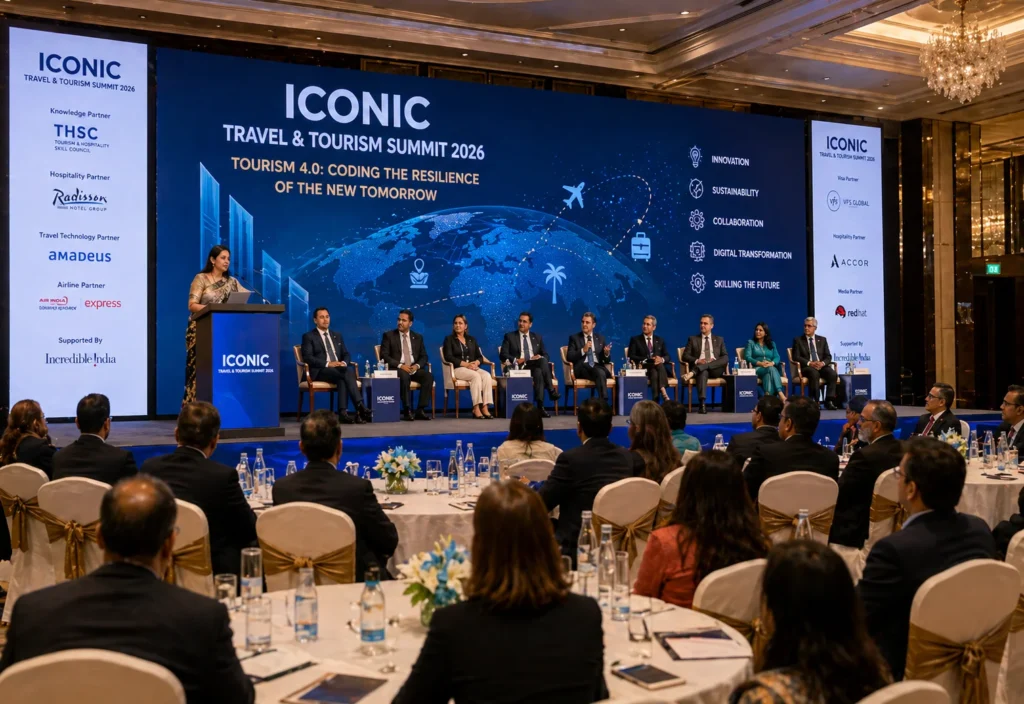
India’s tourism industry took center stage in New Delhi as the ICONIC Travel and Tourism Summit 2026 brought together leading voices from travel, aviation, hospitality, policy, and global diplomacy. Hosted at the prestigious ITC Maurya under the theme “Tourism 4.0: Coding the Resilience of the New Tomorrow,” the summit highlighted how innovation, collaboration, and sustainability will shape the next era of tourism growth.
With participation from senior industry executives, tourism experts, hotel leaders, airline professionals, destination marketers, and diplomatic representatives, the event reflected India’s rising importance in the global tourism economy. More than a networking platform, the summit became a forward-looking forum focused on technology, skilling, sustainability, destination readiness, and the future traveler.
As India continues to strengthen its position as one of the world’s fastest-growing travel markets, gatherings like this are helping define the roadmap for the sector’s next chapter.
Why the Summit Matters for Indian Tourism
Tourism contributes significantly to employment, entrepreneurship, infrastructure development, and cultural exchange. As traveler expectations evolve rapidly, industry collaboration is essential to maintain competitiveness and unlock new opportunities.
The ICONIC Travel and Tourism Summit 2026 arrives at an important time for the sector. India is expanding airports, improving road and rail access, investing in digital public infrastructure, and promoting domestic as well as international tourism.
By bringing multiple sectors together in one room, the summit demonstrated that tourism growth depends on coordinated progress across aviation, hotels, visas, skills, marketing, and destination management.
Tourism 4.0: The New Growth Model
The central theme of the event, Tourism 4.0, focused on building a smarter and more resilient travel ecosystem through digital transformation and innovation.
This concept reflects a new tourism model where technology improves every stage of the visitor journey, including:
- Travel discovery and inspiration
- Online booking and trip planning
- Smart airport experiences
- Contactless hotel services
- Data-driven destination marketing
- Sustainable travel management
- Personalized guest experiences
Tourism 4.0 also emphasizes resilience, ensuring the industry can adapt quickly to economic shifts, changing traveler behavior, and global disruptions.
Industry Leaders Shape the Conversation
The summit featured a distinguished lineup of tourism and hospitality leaders representing airlines, hotels, travel technology, visa services, destination marketing, and travel platforms.
Their discussions explored how India can accelerate growth through innovation while maintaining service quality and long-term sustainability.
Key themes included:
- The future of aviation connectivity
- Hotel expansion and guest expectations
- AI-driven travel services
- Talent development and skilling
- International partnerships
- Women in travel leadership
- Destination competitiveness
The diversity of speakers reflected the broad ecosystem required to power modern tourism.
India’s Aviation Growth in Focus
Aviation remains one of the strongest enablers of tourism expansion. Improved air connectivity can unlock regional destinations, shorten travel times, and support both domestic and inbound visitor growth.
At the summit, aviation leaders discussed the importance of capacity expansion, passenger experience, and stronger route networks.
India’s airport modernization programs and rising airline competition are helping create more travel opportunities across the country. Better connectivity supports not only metro cities but also emerging destinations in the Northeast, spiritual circuits, coastal tourism zones, wildlife regions, and heritage towns.
For travelers, stronger aviation networks mean more convenience and greater destination choice.
Hospitality Excellence and New Opportunities
Hotel leaders at the summit highlighted how hospitality is evolving beyond accommodation to become an experience-led industry.
Modern travelers increasingly look for:
- Wellness stays
- Sustainable hotels
- Local cultural experiences
- Digital convenience
- Flexible work-and-travel options
- Personalized service
- Authentic food experiences
India’s hotel sector is responding through new openings, upgraded properties, branded residences, lifestyle hotels, and stronger service innovation.
As visitor numbers rise, hospitality investment will remain essential to support future tourism demand.
Skilling as a National Priority
One of the most important discussions centered on workforce development and skilling. Tourism is a people-driven industry, and service quality depends on trained professionals across hotels, airlines, guiding, transport, culinary services, and travel operations.
Industry leaders emphasized that India’s demographic advantage can become a tourism strength if talent is equipped with future-ready skills.
Priority areas include:
- Digital tools and AI literacy
- Customer service excellence
- Foreign language capabilities
- Sustainability practices
- Culinary and hospitality training
- Leadership development
- Entrepreneurship support
A skilled workforce can enhance visitor satisfaction while creating meaningful employment nationwide.
Global Partnerships Strengthen Tourism Growth
The presence of diplomatic representatives from key international markets underscored the value of global cooperation in tourism.
Cross-border partnerships can support:
- Increased inbound arrivals
- Easier travel facilitation
- Cultural exchange programs
- Joint promotions
- Aviation connectivity
- Business events and MICE tourism
- Education and heritage tourism
As India expands its global tourism footprint, international relationships will play a key role in attracting visitors and encouraging outbound travel exchanges.
Women Travelers and the Creator Economy
The summit also featured conversations around solo female travel and the growing role of digital creators in tourism inspiration.
Travel content creators now influence destination awareness, itinerary planning, and traveler confidence. Their real-time storytelling can spotlight hidden gems, local experiences, and practical travel advice.
The focus on women travelers was especially relevant as safety, empowerment, and representation become central themes in modern tourism marketing.
This signals a broader shift toward inclusive tourism that welcomes diverse traveler needs and perspectives.
Sustainable Tourism Takes Priority
Sustainability remained a core message throughout the event. As tourism grows, destinations and businesses are increasingly expected to balance expansion with environmental and cultural responsibility.
Key sustainability priorities include:
- Waste reduction
- Energy efficiency
- Community-based tourism
- Heritage conservation
- Responsible visitor management
- Low-impact mobility solutions
- Local sourcing and livelihoods
Travelers are increasingly choosing destinations and brands that align with these values.
India’s Tourism Outlook for 2026
The strong response to the summit reflects growing confidence in India’s tourism future. With rising domestic demand, improved infrastructure, expanding aviation networks, and strong policy support, the country is well positioned for sustained growth.
India offers a unique mix of heritage, spirituality, wellness, nature, cuisine, luxury, and modern urban experiences—making it attractive to a wide range of global travelers.
Final Word
The ICONIC Travel and Tourism Summit 2026 was more than an industry gathering—it was a statement of intent. India’s tourism sector is embracing innovation, investing in talent, strengthening partnerships, and preparing for a smarter future.
As the country moves deeper into the Tourism 4.0 era, its journey toward becoming a global tourism powerhouse looks stronger than ever.
For more travel news like this, keep reading Global Travel Wire