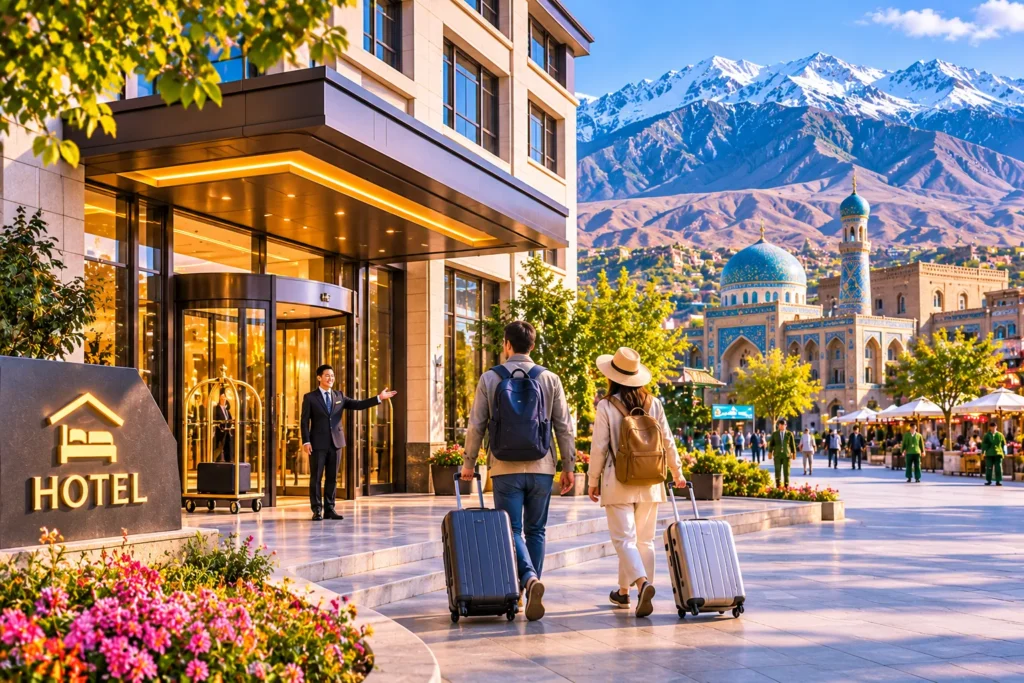
Urumqi, November 25, 2026 — As winter snow blankets the mountains of Altay in Northwest China’s Xinjiang Uygur Autonomous Region, skiers arriving at premier alpine slopes are encountering an expanded hospitality landscape. Major international flags—including Conrad, Hilton, and Four Points by Sheraton—have recently opened properties adjacent to key ski resorts, introducing upscale accommodation choices to a region rapidly emerging as a flagship destination for year-round leisure and corporate travel.
This expansion extends well beyond mountain resorts. Across scenic destinations such as Ili, Bole, and Kashgar, as well as commercial centres like Urumqi, global hospitality operators have steadily scaled up their regional footprint over the past two years. Official regional industry data confirms that three of the world’s largest hotel groups—Marriott International, InterContinental Hotels Group (IHG), and Hilton—now collectively operate more than 50 properties throughout Xinjiang.
Four-Season Appeal and Untapped Hospitality Capacity
The surge in branded hotel development is anchored in two primary drivers: rapid visitor growth and low chain-hotel penetration. In Altay’s Hemu Village, renowned dry powder snow has fuelled a thriving winter skiing market, while pristine alpine forests and wooden cabins draw steady waves of nature travellers throughout spring, summer, and autumn. Recognising this four-season demand, Hilton has introduced both its Conrad and flagship Hilton brands to the area, while IHG is preparing to open a lifestyle property under its Hotel Indigo banner.
Official statistics released by the Xinjiang Department of Culture and Tourism underscore the scale of this visitor expansion. Between 2023 and 2025, annual tourist visits to Xinjiang climbed from 265 million to 323 million, generating 370 billion yuan in tourism revenue during 2025 alone. Despite ranking among the fastest-growing engines of China’s domestic visitor economy, branded chain hotel penetration in Xinjiang remains considerably below the national average, offering international operators substantial room for structured growth.
Because upscale and luxury hotels require longer capital recovery timelines, global hospitality groups are aligning their development pipelines with long-term regional policy goals. Regional authorities have set out strategic plans to cultivate a trillion-yuan cultural and tourism industrial cluster while welcoming more than 400 million annual tourist visits by 2030.
Cross-Border Trade Fuels Corporate and MICE Demand in Urumqi
Alongside leisure resorts, commercial hubs are generating robust corporate lodging demand. In the regional capital of Urumqi, accelerated development of the China (Xinjiang) Pilot Free Trade Zone and the expansion of the Urumqi International Land Port into a multimodal logistics gateway connecting Asia and Europe have attracted sustained business travel.
Marriott, IHG, and Hilton already operate more than a dozen properties across Urumqi, with Marriott having signed additional agreements to introduce its Westin, Ritz-Carlton, and Aloft brands to the city. For upper-upscale and luxury hotels, non-room revenue streams—spanning conference facilities, banquets, executive dining, and wellness amenities—represent a critical share of profitability, and corporate delegates form the backbone of that segment.
Official customs statistics illustrate the economic momentum behind this business travel. During the 14th Five-Year Plan period from 2021 to 2025, Xinjiang’s total foreign trade volume surpassed successive milestones of 200 billion, 300 billion, 400 billion, and 500 billion yuan, reaching a record 520.4 billion yuan in 2025. Momentum continued through the first three quarters of 2026, with regional import and export value climbing 11.3% year-on-year to 437.89 billion yuan.
Modern Hospitality Along Historic Trade Corridors
Centuries ago, merchant caravans relied on relay stations and inns scattered along the Ancient Silk Road. Today, enhanced high-speed rail links, expanded regional airport networks, and cross-border economic cooperation have transformed Xinjiang into a modern Eurasian crossroads. With rising visitor arrivals, expanding international trade corridors, and supportive infrastructure policies, international hotel groups are positioning themselves at the forefront of Xinjiang’s long-term tourism and commercial transformation.
For more travel news like this, keep reading Global Travel Wire