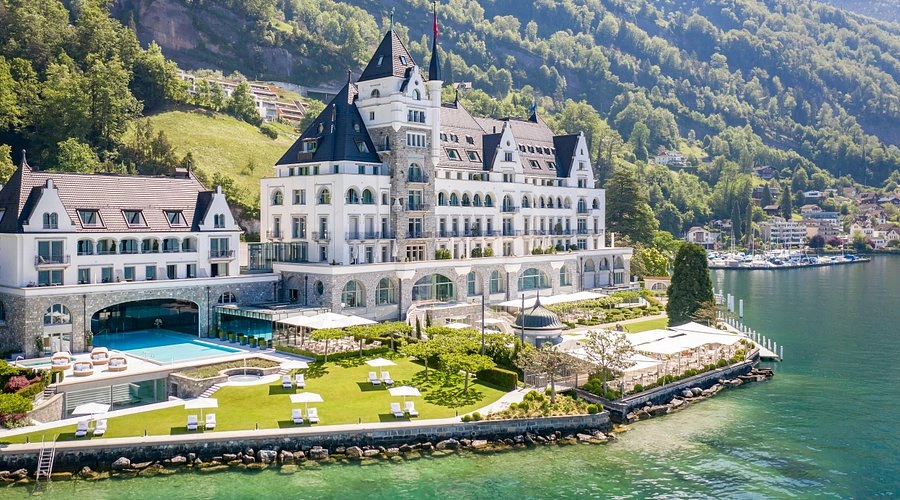
Park Hotel Vitznau and Campus Hotel Hertenstein have achieved their first Green Globe certification, strengthening the environmental credentials of two prominent hospitality properties overlooking Switzerland’s Lake Lucerne.
Operated under Hospitality Visions Lake Lucerne AG, the sister hotels have developed a shared sustainability programme focused on energy efficiency, renewable resources, waste reduction, biodiversity and employee participation. Green Globe confirmed the inaugural certification after assessing their sustainability practices.
The recognition is particularly relevant for travellers and event planners seeking independently assessed sustainability credentials alongside premium accommodation. It also connects two different tourism segments under one environmental strategy: luxury leisure at Park Hotel Vitznau and meetings and events at Campus Hotel Hertenstein.
Two hotels serve different tourism markets
Park Hotel Vitznau is a five-star-superior lakeside retreat with a history dating to the early 20th century. Its luxury suites and residences, spa facilities, dining experiences and direct Lake Lucerne setting position it strongly within Switzerland’s high-value leisure market. Switzerland Tourism also identifies the property among the destination’s leading luxury accommodation options.
Campus Hotel Hertenstein, located on the Hertenstein peninsula in Weggis, combines accommodation with conference and event facilities.
That distinction gives the joint sustainability programme wider tourism relevance. Environmental initiatives can influence leisure stays, corporate meetings, conferences, dining operations and longer lakeside visits.
For business travel buyers, verified sustainability performance is becoming increasingly valuable when selecting venues that need to align with organisational environmental policies.
Lake Lucerne supports energy efficiency
One of the most distinctive elements of the hotels’ environmental strategy is the use of Lake Lucerne as part of their heating and cooling infrastructure.
Water from the lake supports a system using heat exchangers, helping the properties reduce dependence on conventional energy sources. The hotels combine this approach with heat-pump optimisation, modern lighting systems and other efficiency improvements.
Campus Hotel Hertenstein also operates photovoltaic installations that generate renewable electricity for hotel operations.
Park Hotel Vitznau’s 2025 sustainability reporting identified a photovoltaic installation as a planned development for 2026. Until its completion and operating status are formally confirmed, the project remains part of the hotel’s future renewable-energy strategy rather than an existing installation.
Energy measures strengthen environmental performance
The hotels have reported substantial electricity savings through technical improvements.
Measures include heat-pump optimisation, frequency converters, compressor upgrades, improved hydraulic systems and more efficient lighting.
At Campus Hotel Hertenstein, solar generation adds another renewable component to the property’s energy mix. These initiatives demonstrate how established hotels can reduce operational energy requirements without removing the comfort and services expected by leisure and business travellers.
However, sustainability certification should not be interpreted as proof of zero environmental impact or complete carbon neutrality.
Instead, the certification establishes a framework for measuring performance, implementing environmental management practices and demonstrating continued improvement.
Biodiversity becomes part of hospitality strategy
Nature protection also plays an important role in the wider sustainability programme.
A privately managed forest covering approximately 25,000 square metres supports biodiversity, habitat protection and natural ecological functions around the Lake Lucerne region.
The hotels have also introduced measures involving water conservation, waste separation and recycling.
Water-saving aerators have been installed across the wider hotel portfolio, while linen-changing procedures aim to reduce unnecessary resource consumption without limiting guest choice.
Organic kitchen waste is directed toward biogas production, while recycling initiatives include the collection of used coffee capsules.
Employee participation is another key element. Sustainability training helps staff understand how everyday operational decisions can contribute to energy savings, waste reduction and responsible hospitality.
Certification strengthens sustainable travel choices
For Switzerland’s tourism industry, independent sustainability certification can make environmental claims easier for travellers and travel professionals to evaluate.
Rather than relying only on general sustainability marketing, certification provides a structured framework covering environmental management and broader responsible tourism practices.
Park Hotel Vitznau also holds Forbes Travel Guide’s Responsible Hospitality Verified distinction, adding another sustainability-related credential to its luxury positioning.
For Campus Hotel Hertenstein, Green Globe recognition may be particularly valuable in the meetings and events sector, where companies increasingly consider environmental performance when selecting conference venues.
The certification therefore strengthens Lake Lucerne’s ability to combine premium hospitality with more measurable sustainability practices.
For both properties, the next challenge will be maintaining progress through continued assessment, transparent reporting and further renewable-energy development.
Their first Green Globe certification represents an important milestone rather than a final destination, demonstrating how luxury leisure and business hospitality can move together toward a more sustainable tourism model in Switzerland.
For more travel news like this, keep reading Global Travel Wire