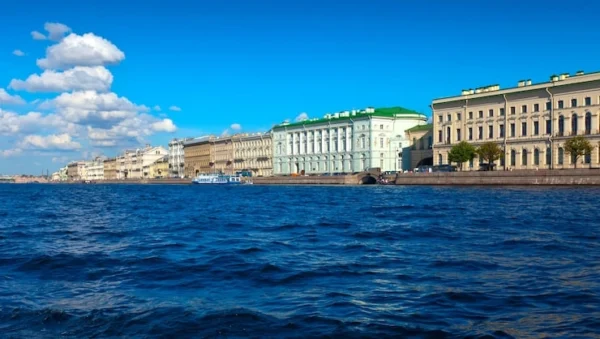
Russia’s tourism tax is generating stronger municipal revenues in 2026, creating a new source of funding for destinations seeking to improve visitor infrastructure, strengthen hospitality regulation and support long-term regional tourism development.
The system, introduced nationally from January 2025 to replace the previous resort-fee model, allows municipalities to levy a tourism tax on qualifying accommodation businesses. In 2026, the maximum permitted rate increased to 2% of the taxable accommodation value, although individual municipalities may adopt lower rates or differentiated structures.
The minimum tax mechanism remains important for lower-cost accommodation. Where the percentage calculation falls below the statutory minimum, the payable amount is generally determined using a minimum of RUB100 for each day of accommodation.
Hotels and other qualifying accommodation operators, rather than individual travellers, are responsible for calculating and paying the tax through the formal tax system.
Municipalities gain a growing tourism revenue stream
The tax is increasingly becoming an important financial tool for tourism-focused municipalities.
Revenue is directed to local budgets where participating accommodation properties operate, giving regional authorities additional resources that can support tourism and urban development.
The first half of 2026 produced notable gains in several destinations.
Amur Oblast collected RUB15.3 million in tourism tax during the first six months of the year. That represented approximately 1.9 times the amount generated during the same period of 2025.
However, rates vary within the region.
For 2026, Blagoveshchensk, Svobodny and the Bureysky Municipal District apply a 1% rate, while Belogorsk uses a 2% rate.
Around 90 taxpayers covering approximately 100 accommodation properties were expected to submit second-quarter declarations across participating Amur municipalities.
Stavropol strengthens its powerful spa tourism economy
Stavropol Krai provides one of the clearest examples of how accommodation taxation can support an established tourism economy.
The region includes the Caucasian Mineral Waters resort cluster, one of Russia’s most important health, wellness and spa tourism destinations.
During 2025, the first full year of the new mechanism, Stavropol Krai generated RUB738 million from the tourism tax. Collections continued growing during the first quarter of 2026, rising 1.5% compared with the corresponding period a year earlier.
Kislovodsk, Pyatigorsk, Yessentuki, Zheleznovodsk and the Mineralovodsky district were among the leading contributors.
The geographical reach of the tax has also expanded substantially across Stavropol, extending from 22 municipalities in 2025 to 32 in 2026.
This wider coverage creates a broader funding base while bringing more hospitality businesses into the formal tourism economy.
Dagestan records dramatic revenue growth
Dagestan has experienced an even sharper increase.
Tourism tax receipts reached RUB16.7 million between January and June 2026, more than triple the amount generated during the same period of 2025.
The expansion reflects both growing tourism activity and wider municipal participation.
Additional cities and municipal districts introduced the tax during 2026, expanding coverage beyond locations that had already implemented it during the previous year.
Authorities are also bringing more accommodation businesses into official registration systems.
The formalisation of guest houses is particularly significant for emerging tourism destinations because it improves transparency, expands the legitimate accommodation market and creates fairer operating conditions between hotels and smaller lodging providers.
Greater registration can also help destinations understand visitor capacity more accurately while supporting future infrastructure planning.
Protected travellers remain outside taxable base
Russia’s tourism tax framework includes protections for several legally defined categories of guests.
When qualifying documentation is presented, accommodation provided to designated groups is excluded from the taxable base.
Protected categories include certain decorated national heroes, Second World War participants and disabled veterans, eligible participants in military operations, combat veterans, people with Group I or Group II disabilities, people disabled from childhood and children with disabilities.
The structure therefore combines municipal revenue generation with statutory social protections for qualifying travellers.
The tax period is quarterly, with accommodation operators responsible for submitting declarations and making payments according to established reporting deadlines.
Moscow follows a different path in 2026
Implementation is not uniform across the country.
Moscow has not introduced the tourism tax for 2026 because the federal city had not adopted the required local legislation bringing the levy into force.
This highlights the decentralised character of the system.
Municipalities generally determine whether to introduce the tax and establish applicable rates within federal limits, while Moscow, Saint Petersburg and Sevastopol operate through legislation adopted at federal-city level.
Tourism funding could reshape regional destinations
For Russia’s regional tourism sector, the significance extends beyond tax collection.
Stronger local revenues can provide municipalities with additional capacity to improve public spaces, visitor facilities, transport environments and destination infrastructure.
The system may also encourage greater formalisation across hotels, guest houses and other accommodation businesses as tourism markets expand.
With Amur Oblast recording RUB15.3 million in first-half receipts, Dagestan exceeding RUB16.7 million and Stavropol maintaining its position as a major revenue-generating tourism region, the 2026 results show how accommodation taxation is becoming increasingly important to local travel economies.
As implementation broadens, the long-term impact will depend on how effectively municipalities convert additional revenue into visible improvements that strengthen destinations, support hospitality businesses and enhance the overall visitor experience.
For more travel news like this, keep reading Global Travel Wire