Seven destinations across Asia highlight the variety of winter holidays available beyond Europe’s traditional mountain resorts.
Lebanon, Kyrgyzstan, South Korea, Azerbaijan, Kazakhstan and Japan offer established skiing alongside other mountain activities. Vietnam’s northern highlands provide a different experience, centred on cold-weather scenery rather than dependable ski conditions.
Together, these destinations serve travellers seeking family recreation, challenging slopes, cultural experiences or quieter sightseeing breaks.
However, their tourism offerings differ considerably. Snowfall, operating schedules, transport access and local conditions determine what visitors can experience.
For holidaymakers, choosing between them starts with deciding whether skiing is essential or simply one possible activity.
Lebanon’s Mzaar Combines Slopes and Mountain Leisure
Mzaar Ski Resort, above Kfardebian in Mount Lebanon, offers an established mountain holiday setting.
The resort advertises 115 kilometres of ski terrain and 19 lifts, with its summit reaching approximately 2,465 metres.
Skiing and snowboarding form the core attraction, while scenic lift journeys and other recreational activities broaden its appeal.
Accommodation and wellness options also give non-skiers reasons to spend time in the mountains.
The advertised winter season generally extends from December to April, subject to snowfall and operating conditions.
Any decision to visit must also account for current security conditions. Travellers should review official advice and transport availability before committing to arrangements.
Kyrgyzstan Offers High-Altitude Winter Adventure
Karakol Ski Base provides access to the Tian Shan mountains near Lake Issyk-Kul.
Located approximately seven kilometres from Karakol city, the resort combines forested slopes with a high-altitude mountain setting.
Its published resort elevation reaches around 3,040 metres, with a base near 2,300 metres.
Equipment rental and nearby accommodation support visitors planning several days of skiing.
The destination can also form part of a wider journey exploring Kyrgyzstan’s landscapes and cultural heritage.
However, mountain transfers require careful planning. Travellers should compare accommodation locations, road journeys and available instruction rather than assess the destination solely through its elevation.
South Korea’s Taebaek O2 Focuses on Varied Abilities
O2 Ski Resort in Taebaek, Gangwon Province, offers another option within South Korea’s winter tourism market.
The supplied tourism information lists 12 slopes and a dedicated sledging area.
These facilities make the resort relevant to families and groups whose members have different levels of skiing experience.
Its highest point, Eutteum Maru, reaches approximately 1,408 metres.
Taebaek’s railway station and intercity bus terminal provide regional arrival points, followed by a local transfer.
For international visitors, the destination offers scope to combine winter recreation with a broader South Korean itinerary.
Actual opening dates and available slopes should be checked for the intended season.
Vietnam Provides Winter Scenery Rather Than Skiing
Sapa offers a contrasting experience in Vietnam’s northern highlands.
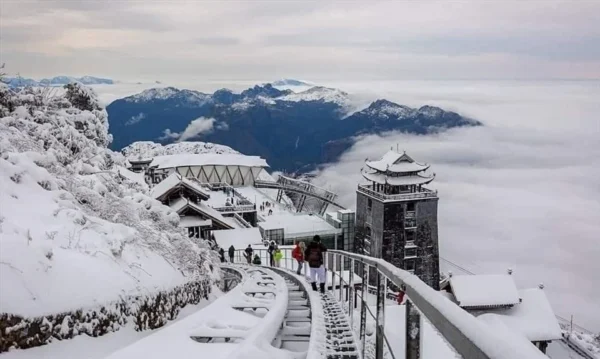
Visitors travel for mountain views, valleys, local communities and the journey towards Fansipan, which rises approximately 3,143 metres.
Cold, misty conditions shape the winter atmosphere. Frost and occasional snowfall can add interest, but neither should be treated as guaranteed.
The Fansipan cable car provides access towards the summit area, creating a sightseeing option for travellers avoiding strenuous mountain walks.
Sapa is therefore better suited to scenic winter travel than a holiday built around downhill skiing.
Visitors should prepare for changing visibility and weather when organising outdoor activities.
Azerbaijan and Kazakhstan Expand Mountain Choices
Shahdag Mountain Resort near Gusar offers Azerbaijan’s winter visitors a multi-activity resort experience.
Its advertised facilities include 45 kilometres of skiable terrain, 37 slopes and 20 lifts.
Snowmaking supports operations, while activities such as tubing, snowshoeing and ice skating provide alternatives to skiing.
Kazakhstan’s Shymbulak offers a different combination, linking mountain recreation with access to Almaty.
The resort’s base sits approximately 2,260 metres above sea level, with its highest point around 3,180 metres.
Travellers can combine skiing with city accommodation, dining and sightseeing. In both destinations, comparing transfer arrangements and operating conditions remains central to planning.
Japan Pairs Snow Forests with Hot Springs
Zao Onsen in Yamagata Prefecture combines skiing with the distinctive ice-covered trees known as juhyo, or snow monsters.
Freezing moisture and accumulated snow transform the mountain forests during suitable winter conditions.
Ropeway access allows non-skiers to experience the scenery, while the surrounding hot spring district adds another dimension to a stay.
This combination makes Zao relevant to mixed-interest groups seeking skiing, sightseeing and relaxation.
Across all seven destinations, the strongest holiday choice depends on matching expectations with actual conditions.
Reliable transfers, suitable accommodation and confirmed activities matter as much as dramatic mountain scenery when creating a rewarding winter journey.
For more travel news like this, keep reading Global Travel Wire