Spain’s planned Alovera Beach attraction could create opportunities for overnight tourism near Madrid, extending visitor spending into Guadalajara province. However, additional hotel bookings remain a commercial possibility rather than an established outcome.
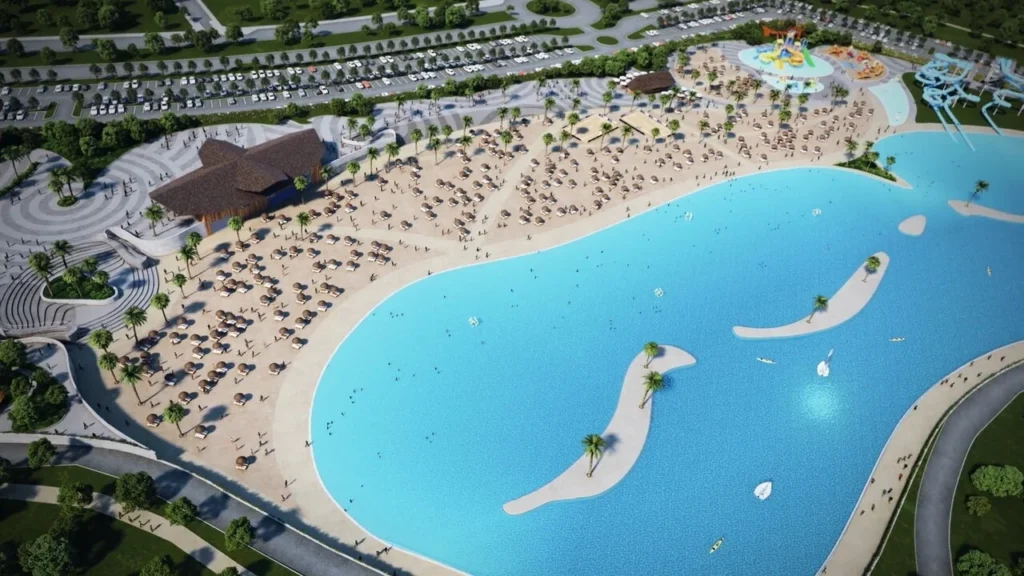
The project envisages a ticketed lagoon attraction combining swimming, water sports, dining and events. Its wider tourism impact will depend on whether visitors explore surrounding destinations or leave after their beach experience.
Current opening arrangements, admission information and accommodation partnerships will therefore matter as much as the attraction itself. For travellers, those details determine whether a visit becomes a day excursion or part of a longer holiday.
Planned Lagoon Offers a New Leisure Draw
An October 2025 company announcement identified Grupo Rayet as the developer working with Crystal Lagoons on the Alovera project.
The planned facilities establish a leisure proposition that could appeal to residents and visitors seeking activities outside central Madrid. Swimming and water sports would provide the main attraction, supported by dining and events.
Nevertheless, attendance alone would reveal little about the project’s contribution to overnight tourism.
A local resident returning home and an international visitor booking accommodation create different spending patterns. Both support commercial activity, but they do not generate the same accommodation demand.
Madrid’s Hotel Market Provides Important Context
Madrid already attracts substantial hotel demand, giving nearby destinations an established visitor market to engage.
Madrid City Council recorded 10,423,522 hotel travellers and 21,469,552 hotel overnight stays during 2025. These figures cover hotel establishments within the city, rather than the entire Madrid region.
For Alovera and surrounding communities, the challenge involves encouraging those visitors to extend or reshape their itineraries.
Someone with an existing Madrid hotel reservation could simply add a beach excursion without changing accommodation. That would diversify the holiday experience while generating no additional hotel night.
An overnight visit would require a stronger reason to remain nearby.
National Growth Does Not Predict Local Bookings
Spain’s wider accommodation performance provides further context, although it cannot forecast demand generated by one proposed attraction.
The National Statistics Institute’s January 2026 provisional release recorded 366.7 million hotel overnight stays during 2025, up 1% annually.
It also reported average daily hotel revenue per occupied room of €127.70 nationally.
Neither measure establishes future room prices around Alovera. Nor can national hotel revenue be multiplied by anticipated beach attendance to calculate local earnings.
A credible assessment will need actual accommodation bookings linked to attraction visits once operations begin. Until then, the national figures describe the existing market.
Overnight Visits Need a Complete Itinerary
Guadalajara’s opportunity extends beyond providing a room after a day beside the water.
Visitors would need suitable accommodation, evening dining and a reason to explore the area the following morning. Convenient transport would also influence whether staying locally feels practical.
Hotels and tour operators could potentially combine those elements into a broader visitor experience. However, no verified hotel partnership or bookable overnight programme has been established in the available project information.
Any combined product would require clear admission arrangements, transport details and understandable cancellation conditions.
Without that coordination, returning to Madrid may remain the simpler option for many visitors.
Wider Benefits Depend on Spending Beyond the Gates
The planned dining and entertainment offer could encourage visitors to spend within the attraction itself.
That activity would differ from expenditure at independent restaurants, accommodation businesses and other establishments across surrounding communities.
Evaluating regional benefits will therefore require more than an entrance count. Useful measures would include overnight visitors, accommodation locations and spending outside the complex.
Employment figures would also need careful interpretation, distinguishing permanent jobs from seasonal positions and preliminary forecasts.
These measures would help show whether the attraction supports a broader destination economy or primarily concentrates activity within its boundaries.
Opening Information Remains the Next Essential Step
As checked on 26 October 2026, the project website displayed an under-construction notice without a usable visitor booking guide.
The October 2025 announcement included an earlier construction and partial-opening timetable. It does not independently confirm the subsequently reported summer 2028 opening.
For travellers and accommodation providers, a current official timetable remains essential before planning attraction-dependent stays. Admission availability and operating details will need to accompany that information.
Alovera Beach’s overnight tourism potential ultimately rests on a complete, dependable visitor offer. Once that exists, bookings and local spending can establish whether a beach excursion becomes a longer Guadalajara stay.
For more travel news like this, keep reading Global Travel Wire