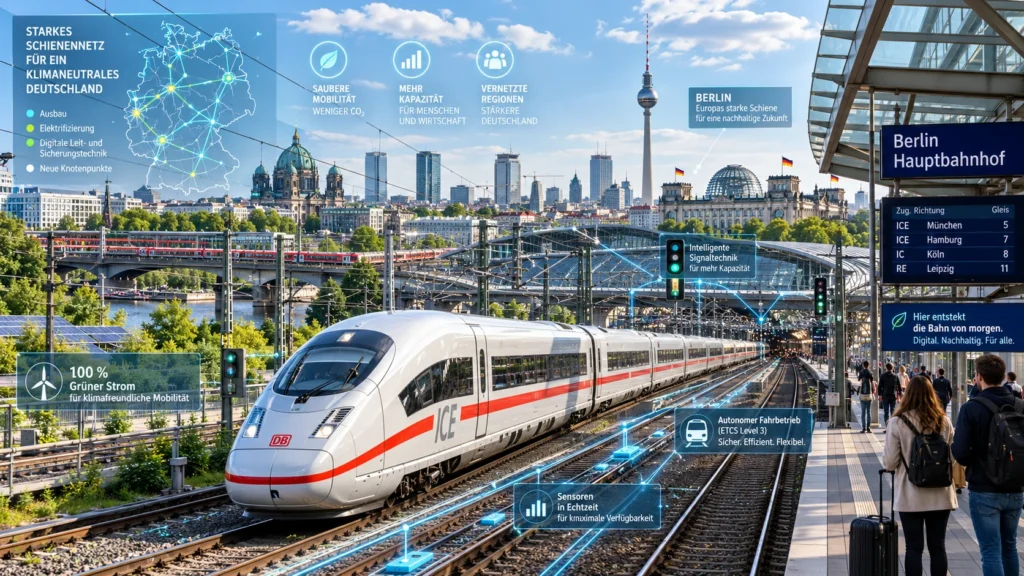
Germany’s national transport sector is accelerating long-term digital transformations as federal authorities, technology enterprises, and railway operators deploy artificial intelligence and autonomous systems across national rail infrastructure. Demonstrated at the recent InnoTrans trade gathering in Berlin, next-generation mobility projects highlight how automated rolling stock and real-time operational data are being integrated into public transportation networks.
Supported by multi-billion-euro federal development programs, these digital initiatives aim to overcome long-standing operational bottlenecks, improve passenger schedule reliability, and modernize the country’s extensive regional rail network. While regulatory authorization processes and major track maintenance projects present short-term scheduling challenges, public transit authorities are laying the foundation for automated, high-capacity passenger travel.
Federal Subsidies Drive Next-Generation Autonomous Trains
Central to the technical display was the “Automated Train” initiative, an advanced research project designed to introduce driverless operations across depot facilities and regional passenger lines. The specialized train unit operates autonomously at speeds up to 40 kilometers per hour, using a synchronized sensor array combining LiDAR laser radar, ultrasonic monitoring, and high-resolution infrared cameras. The system continuously evaluates track conditions, detects potential hazards, and executes automatic braking procedures to ensure maximum operational safety.
The Federal Ministry for Economic Affairs and Climate Action provided 42 million euros in direct subsidies to support the automated technology program. This initiative forms part of a broader 100-billion-euro public funding commitment scheduled through 2030 to overhaul national railway infrastructure, upgrade physical track alignments, and integrate modern signaling systems across major transport corridors.
To support passenger communications during major track modernizations, national operators are preparing the deployment of virtual passenger assistants. These digital interfaces use real-time data integration to deliver updated connection times, platform guidance, and timetable notifications directly to international travelers and daily commuters.
Infrastructure Upgrades and System Standardization
The long-term transition toward digital rail management requires substantial upgrades to foundational signaling networks. Industry monitoring reports from rail advocacy associations like Allianz Pro Schiene indicate that less than two percent of the German national network was equipped with the European Train Control System (ETCS) by 2025, compared to a broader European network average of nine percent. Modernizing these trackside safety protocols is essential for unlocking automated train dispatching and expanding corridor capacity.
Simultaneously, major physical track renovations are underway to replace legacy infrastructure. Significant engineering projects—including a comprehensive 14-month reconstruction along the high-density rail corridor connecting Berlin and Hanover—require temporary train re-routing and alternative bus transfers. Transport officials emphasize that these temporary disruptions are necessary to establish high-capacity, high-speed travel lines capable of supporting future automated transit demand.
According to economic analysis conducted by the Boston Consulting Group, artificial intelligence applications across global railway networks could generate between 36 billion and 79 billion dollars in operational cost efficiencies while delivering up to 50 billion dollars in annual economic value. Achieving these benchmarks requires transitioning field trial programs into standardized commercial operations across national transport authorities.
International Technology Partnerships and Operational Safety
International robotics and software firms are collaborating with domestic rail authorities to accelerate automated driver-assistance systems and collision prevention frameworks. Technology developers including Ostirion, OTIV, and Futurail demonstrated automated freight remote-control systems and driver-assistance solutions designed to support train drivers during challenging operating conditions.
Industry technical managers emphasize that automated control systems serve to alleviate repetitive operational stress, assist with precision maneuvering in depot yards, and improve timetable accuracy for travelers. Software engineers working on autonomous rail platforms further clarify that digital assistance tools are specifically designed to resolve widespread workforce shortages across the transportation sector rather than replace qualified operational staff.
Beyond heavy rail lines, transport planners are evaluating autonomous road shuttles to supplement rural passenger transit and replace traditional feeder bus lines, targeting full network integration in future transportation master plans.
Public Oversight and the Future of European Travel Infrastructure
The integration of artificial intelligence and digital signaling protocols represents a long-term strategic priority for European public transport. Labor unions representing railway employees, including the GDL train drivers’ association, are actively engaged in consultation frameworks with government ministries to ensure that digital transformation models prioritize workplace safety, employee training, and job security alongside network efficiency gains.
As federal agencies, engineering enterprises, and international transport operators align safety standards with updated regulatory frameworks, Germany’s rail infrastructure modernization program remains a vital component of Europe’s broader transition toward sustainable, high-tech passenger mobility.
For more travel news like this, keep reading Global Travel Wire