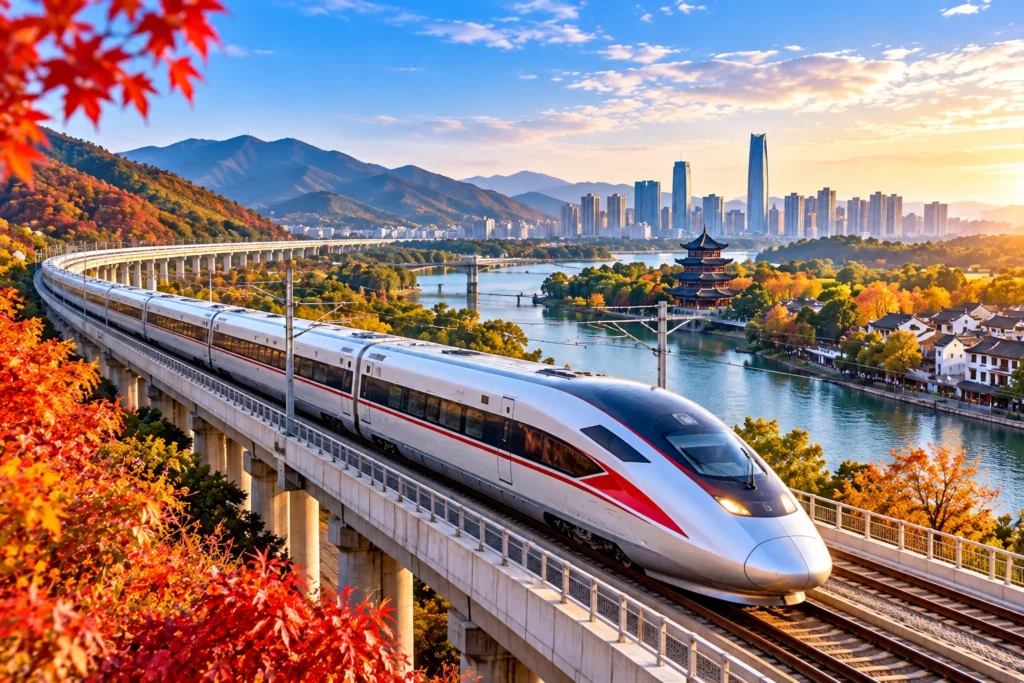
The opening of major new high-speed railway corridors across China is driving a significant expansion in holiday travel, enabling millions of domestic tourists to explore iconic cultural and natural destinations during peak National Day travel periods. The newly operational bullet train sections span northern, northwestern, central, and northeastern provinces, integrating high-capacity transit infrastructure directly with regional tourism ecosystems.
By significantly shortening travel times between major population centers and scenic landmarks, the expanded rail network is facilitating faster transit, encouraging spontaneous short-haul getaways, and increasing passenger volumes across the nation. Official statements from China State Railway Group indicate that national railway travel during the combined Mid-Autumn Festival and National Day holiday period is projected to reach approximately 284 million passenger trips, with single-day transit flows peaking on National Day itself.
Strategic High-Speed Routes Link Iconic Scenic Landmarks and Cultural Sites
The newly commissioned high-speed sections create seamless connections across diverse geographical regions, allowing travelers to reach remote scenic zones and historic sites with unprecedented convenience. Key line additions include the Yichang-Xingshan line in central China’s Hubei Province, which enhances visitor access to the Three Gorges Dam and surrounding river landscapes, as well as the Harbin-Yichun railway in the far northeast, opening up access to the vast forest ecology of Yichun.
Official transportation reports emphasize that these high-speed links integrate cultural and ecological resources into unified travel corridors. In northern and central regions, the Xiong’an-Shangqiu high-speed section connects historic destinations across Hebei, Shandong, and Henan provinces. By linking these neighboring provinces along a high-speed corridor, the route encourages cross-regional tourism and makes multi-city holiday itineraries far more accessible for family travelers and tour groups alike.
Rapid Transit Times Drive Spontaneous Weekend and Short-Holiday Trips
The dramatic reduction in travel duration between regional cities is transforming domestic travel habits from planned multi-day vacations into spontaneous weekend excursions. In northwestern China’s Shaanxi Province, the opening of the Xi’an-Ankang high-speed section has reduced transit time between the two cities to just 45 minutes, down from several hours on conventional rail lines.
Local tourism authorities report that this rapid connection enables visitors from the Guanzhong Plain region to complete comfortable round trips within a single day. The increased ease of movement is expected to generate sustained surges in weekend visitor arrivals, boosting revenue for local hospitality providers, catering services, and cultural venues throughout the year rather than solely during gold-week holiday surges.
Local Tourism Authorities Focus on Service Upgrades and Unique Experiences
As the expanded rail network brings larger numbers of first-time visitors into regional cities, local tourism bureaus and resort operators are upgrading public infrastructure and diversifying their guest experiences. Rather than relying on generic attractions, regional destinations along the new high-speed corridors are focusing on authentic cultural heritage, immersive eco-tourism, and high-quality service delivery.
Municipal tourism departments emphasize that converting transit-driven first-time visitors into repeat long-term guests requires continuous investment in destination quality. In response to shifting consumer preferences toward experiential travel, local authorities are enhancing visitor centers, refining regional festival programming, and ensuring that transport hubs link smoothly with local bus and shuttle networks.
Expanded Transportation Capacity Supports Sustainable Sector Growth
The continuous integration of high-speed rail networks serves as a fundamental driver of China’s domestic tourism economy. By distributing passenger traffic efficiently across multi-provincial routes, the modern railway network helps alleviate highway congestion and reduces environmental impacts associated with private vehicle travel during major national holidays.
With hundreds of millions of passengers utilizing state-of-the-art rail corridors during seasonal travel rushes, the synergy between public transport infrastructure and destination marketing remains vital. The newly opened railway sections not only fulfill immediate holiday transit demands but also establish a long-term framework for sustainable tourism expansion, economic development, and cultural preservation across diverse regions of China.
For more travel news like this, keep reading Global Travel Wire