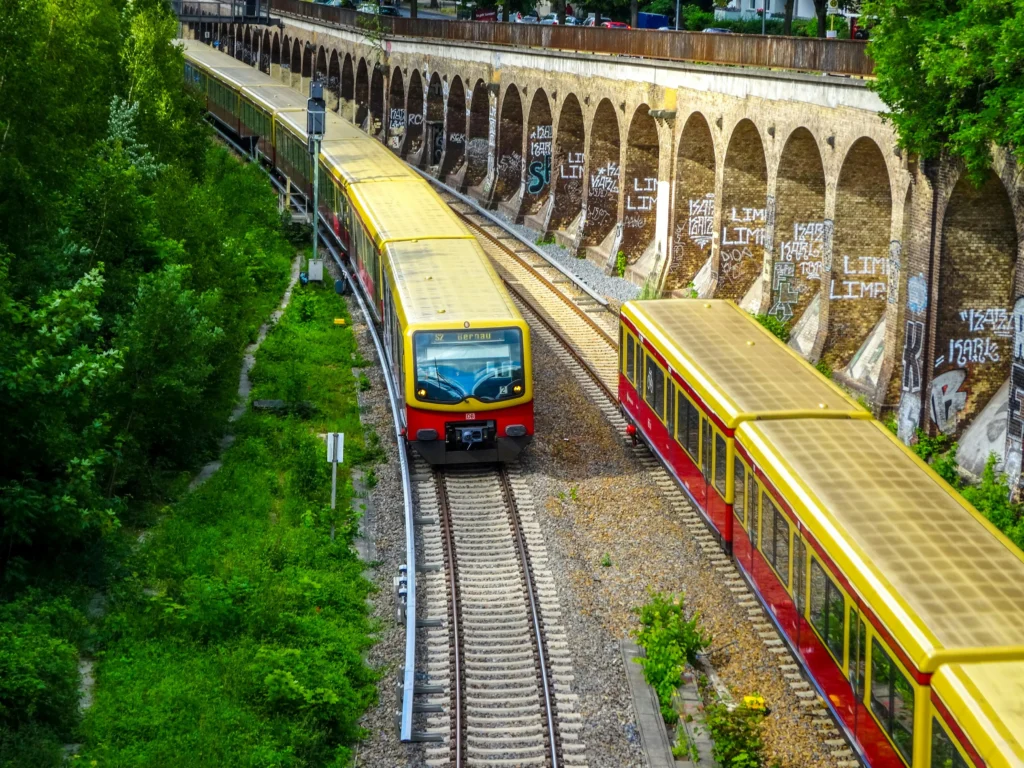
The geography of continental European leisure travel is undergoing a major structural evolution as a massive wave of vacationers opts for the tracks over the tarmac. In an official performance and strategy disclosure, Germany’s national rail operator, Deutsche Bahn (DB), confirmed that one out of every six long-distance rail passengers chose an international route over the past year. This paradigm shift translated into an extraordinary 25 million cross-border travelers, marking a spectacular ridership surge of nearly one-third compared to pre-pandemic baseline figures.
According to verified transport statistics, the steady momentum behind international rail travel has been driven by an expanding network of direct high-speed links and a fundamental shift in traveler mindset. Major cross-border tourism corridors recorded dramatic year-on-year increases. The spectacular mountain-and-lake route linking Munich to Zurich witnessed a 27% passenger spike, while the cultural and culinary corridor between Frankfurt and Paris grew by 22%. Similarly, the historic transit path connecting Cologne to the diamond capital of Brussels edged up by 16%.
Dr. Michael Peterson, the Deutsche Bahn Management Board Member responsible for Long-Distance Passenger Transport, emphasized that the current boom is heavily anchored in the unique spatial advantages of modern rail networks. Travelers increasingly appreciate that high-speed trains deposit them directly into vibrant, historic city centers, completely bypassing the time-consuming transfers, baggage waits, and remote suburban logistics associated with regional airport infrastructure. Furthermore, contemporary traveler behavior reflects an unprecedented willingness to embrace longer, scenic train journeys, with the acceptable threshold for a single rail itinerary extending to between six and eight hours.
Scaling the Network: New High-Speed Gateways and Coastal Extensions
To capitalize on this overwhelming consumer appetite for eco-friendly transit, European rail networks are introducing a dynamic roster of new and enhanced international connections. Beginning in mid-June, the direct trans-European service connecting Copenhagen to Prague via the vibrant metropolitan hubs of Hamburg and Berlin will double its capacity to two daily train pairs, creating an ideal pathway for multi-destination summer itineraries.
For travelers seeking sun, sand, and historic architecture, DB has confirmed an exciting seasonal extension running from June through the end of August. On weekends, select high-speed ICE trains operating from Cologne to Brussels will continue their journeys deep into the Belgian province of Flanders, stopping at the medieval canal cities of Ghent and Bruges before terminating directly on the Belgian coast at Ostend. Simultaneously, a dedicated Saturday service connecting Frankfurt to the world-renowned wine estates of Bordeaux will operate throughout the peak summer holiday window of July and August.
The autumn expansion pipeline introduces further structural connectivity. Starting September 7, a newly finalized schedule will deploy four daily high-speed ICE trains between Cologne and Antwerp, featuring a historic first-time direct integration with Brussels Airport. Looking downstream toward future holiday horizons, a coordinated joint venture between DB, Austria’s ÖBB, and Italy’s Trenitalia is firmly on track to debut a direct, high-capacity link connecting Munich to Milan and Rome by 2027, unlocking seamless alpine-to-mediterranean exploration.
Focus Keyword: Ecotourism Infrastructure and the AI-Driven Travel Experience
The spectacular rise of cross-border rail networks is inherently intertwined with the global advancement of sustainable ecotourism infrastructure. Amid fluctuating fossil fuel costs and heightened environmental consciousness, international travelers are deliberately seeking out transport networks powered entirely by green, renewable electricity. This shift not only minimizes the individual carbon footprint of a European vacation but also isolates the transport network from global energy price shocks, ensuring structural stability for long-term holiday planning.
However, scaling a massive, interconnected rail grid across dense international boundaries introduces complex operational variables. To address network consistency and insulate travelers from cascading delays, Deutsche Bahn has commenced live operational testing of advanced artificial intelligence software. Rather than relying on traditional, rigid dispatching rules, the intelligent software actively weighs connection impacts across the entire grid moment by moment.
When an unexpected disruption occurs, the AI instantly evaluates real-time network inputs to suggest the mathematically optimal path—whether that means holding a connecting train for a group of international transit tourists or keeping a service strictly on time to maintain subsequent line balances. By utilizing automated data patterns early, this technological framework significantly dampens the traditional ripple effects of travel delays. For global tourists, this sophisticated integration of technology into ecotourism infrastructure ensures that their journeys remain fluid, predictable, and profoundly secure.
Overcoming Cross-Border Regulatory Realities
While connectivity across continental Europe’s open border zones expands rapidly, certain highly anticipated routes face distinct regulatory environments. Establishing direct, non-stop high-speed train services originating from German hubs like Cologne or Frankfurt through to London remains a long-term engineering and political puzzle.
Because the United Kingdom remains outside the Schengen passport-free zone, executing a seamless, non-stop trans-channel rail journey requires the construction of highly specialized, isolated terminal zones equipped with individualized passport control setups and comprehensive security screening infrastructure. While DB continues to collaborate closely with Eurostar to explore innovative, long-term technical fixes, international vacationers can easily navigate the corridor by utilizing high-frequency ICE connections to Brussels Midi, where a seamless transfer unlocks the historic journey through the Channel Tunnel.
As Europe’s rail network continues to evolve through smart technology, environmental stewardship, and unprecedented cross-border diplomacy, the future of international tourism looks remarkably bright. By replacing stressful airport lines with panoramic windows, direct city-center arrivals, and green-powered propulsion, the continent’s revitalized tracks invite global explorers to slow down, relax, and discover the true romance of borderless exploration.
For more travel news like this, keep reading Global Travel Wire