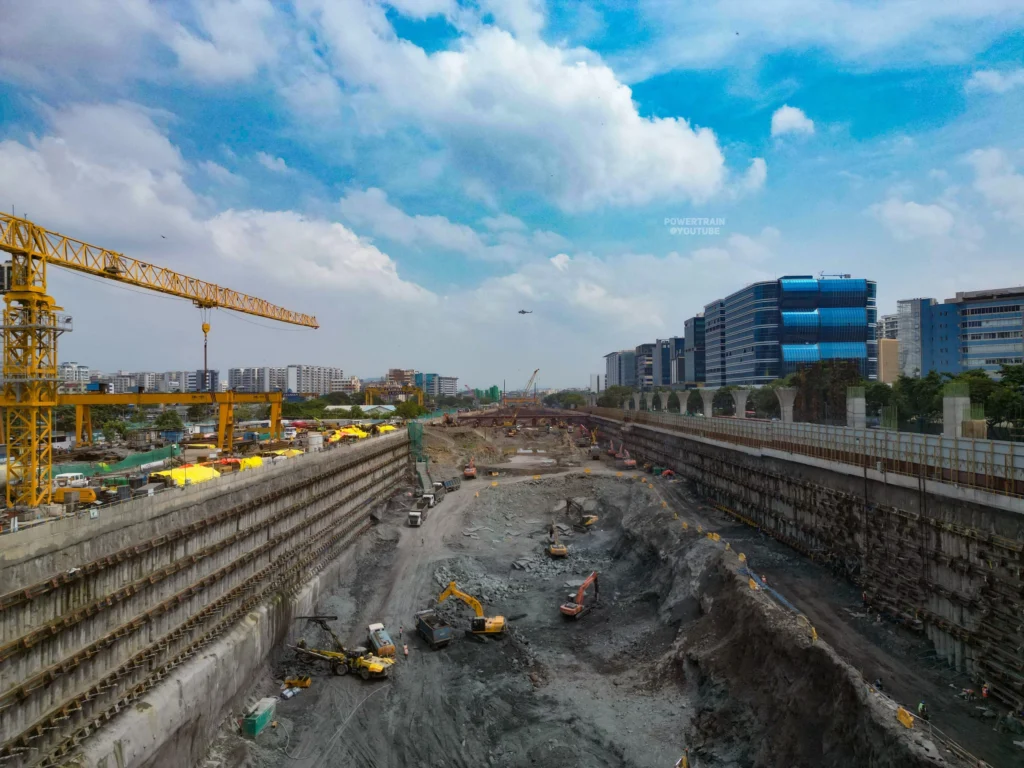
India’s ambitious Mumbai-Ahmedabad high-speed rail project is moving closer to reality as construction advances on the country’s first-ever bullet train station at Mumbai’s Bandra-Kurla Complex (BKC), a landmark infrastructure development expected to reshape domestic travel, tourism, and business connectivity.
Scheduled for completion by 2028, the BKC Mega-Project forms a major part of the Mumbai-Ahmedabad bullet train corridor and is expected to dramatically reduce travel time between India’s financial capital and Gujarat’s largest city from nearly eight hours to approximately two hours.
The project marks a significant milestone in India’s transportation modernization strategy while positioning high-speed rail as a major catalyst for tourism growth, economic development, and sustainable mobility across the country.
High-Speed Rail to Revolutionize Travel Between Mumbai and Ahmedabad
Once operational, the bullet train service will allow passengers to travel at speeds reaching up to 320 kilometers per hour, creating one of India’s fastest and most advanced transportation systems.
The reduction in travel time is expected to significantly benefit both leisure and business travelers by making same-day return trips between Mumbai and Ahmedabad more practical and efficient.
Tourism industry experts believe the corridor will strengthen domestic tourism by encouraging travelers to explore multiple destinations within shorter timeframes. Weekend tourism, cultural exchanges, business meetings, and short leisure trips are all expected to increase once the high-speed rail service becomes operational.
The project also reflects broader changes in India’s transportation sector as the country invests heavily in modern infrastructure to support rising urbanization, economic activity, and domestic travel demand.
BKC Station Designed as a Modern Travel Hub
The new bullet train station at Bandra-Kurla Complex is expected to become one of India’s most advanced transportation hubs, featuring modern passenger facilities, integrated connectivity, and commercial amenities designed to improve the overall travel experience.
Plans for the station include spacious waiting lounges, retail outlets, dining areas, business facilities, and efficient connections to Mumbai’s wider public transportation network.
BKC’s strategic location within Mumbai’s central business district makes the station especially important for corporate travelers, financial institutions, and international business visitors. The area already serves as one of India’s leading commercial and financial centers, housing multinational companies, banks, convention facilities, and luxury hotels.
Improved transportation access is expected to further strengthen Mumbai’s role as a major business and tourism gateway for both domestic and international travelers.
Tourism Industry Expected to Benefit From Improved Connectivity
The Mumbai-Ahmedabad bullet train corridor is expected to deliver substantial benefits to India’s tourism industry by making travel between two of western India’s most important destinations significantly faster and more convenient.
Mumbai remains one of India’s leading tourism hubs, attracting visitors to iconic attractions such as the Gateway of India, Marine Drive, Chhatrapati Shivaji Maharaj Terminus, and Bollywood-related experiences. Meanwhile, Ahmedabad offers travelers rich cultural heritage, UNESCO-recognized historic districts, and major attractions including Sabarmati Ashram and traditional markets.
Tourism authorities believe the high-speed rail connection will encourage multi-city itineraries, increase domestic visitor flows, and improve accessibility to nearby destinations across Maharashtra and Gujarat.
The project also aligns with India’s broader tourism development goals focused on strengthening transportation infrastructure to support regional tourism growth and improve traveler experiences.
Business Travel and Economic Integration to Accelerate
In addition to tourism, the high-speed rail corridor is expected to strengthen economic integration between Mumbai and Ahmedabad, two cities with strong commercial, industrial, and financial importance.
Faster travel times are likely to improve business efficiency, increase corporate mobility, and encourage greater collaboration between industries operating across both states.
Industry analysts note that improved transportation infrastructure often contributes directly to investment growth, real estate development, conference tourism, and regional economic expansion.
The BKC station is expected to become a major driver of commercial activity, potentially attracting additional hospitality investments, retail development, and office expansion in surrounding areas.
Sustainable Transportation Becomes a Key Focus
The bullet train project also supports India’s long-term sustainability goals by promoting rail travel as a lower-emission alternative to road and air transportation.
High-speed rail systems are widely recognized globally for their energy efficiency and lower environmental impact compared with short-haul aviation and private vehicle travel. Authorities expect the project to help reduce congestion, fuel consumption, and carbon emissions associated with traditional intercity transportation.
The BKC Mega-Project itself incorporates multiple sustainable infrastructure features, including energy-efficient design elements, rainwater harvesting systems, and renewable energy integration.
As travelers become increasingly conscious of environmental impact, sustainable transportation projects are expected to play a growing role in shaping future tourism and mobility trends.
India Expands Modern Transportation Infrastructure
The Mumbai-Ahmedabad bullet train corridor represents one of India’s most ambitious infrastructure projects and signals the country’s broader commitment to upgrading transportation systems to international standards.
Government officials continue emphasizing the importance of modern rail infrastructure in supporting economic development, tourism expansion, urban mobility, and regional connectivity.
The project also reflects growing demand for faster and more reliable domestic travel options as India’s middle class expands and tourism activity continues increasing nationwide.
Bullet Train Project Expected to Redefine Domestic Travel
As construction progresses toward the anticipated 2028 launch, the Mumbai-Ahmedabad bullet train is already generating strong interest among travelers, tourism operators, and business communities.
The ability to move quickly and comfortably between two of India’s most influential cities is expected to transform travel behavior while creating new opportunities for tourism, hospitality, retail, and business sectors.
With its focus on speed, convenience, sustainability, and connectivity, the BKC bullet train station is poised to become one of India’s most important transportation landmarks and a defining symbol of the country’s next generation of travel infrastructure.
For more travel news like this, keep reading Global Travel Wire