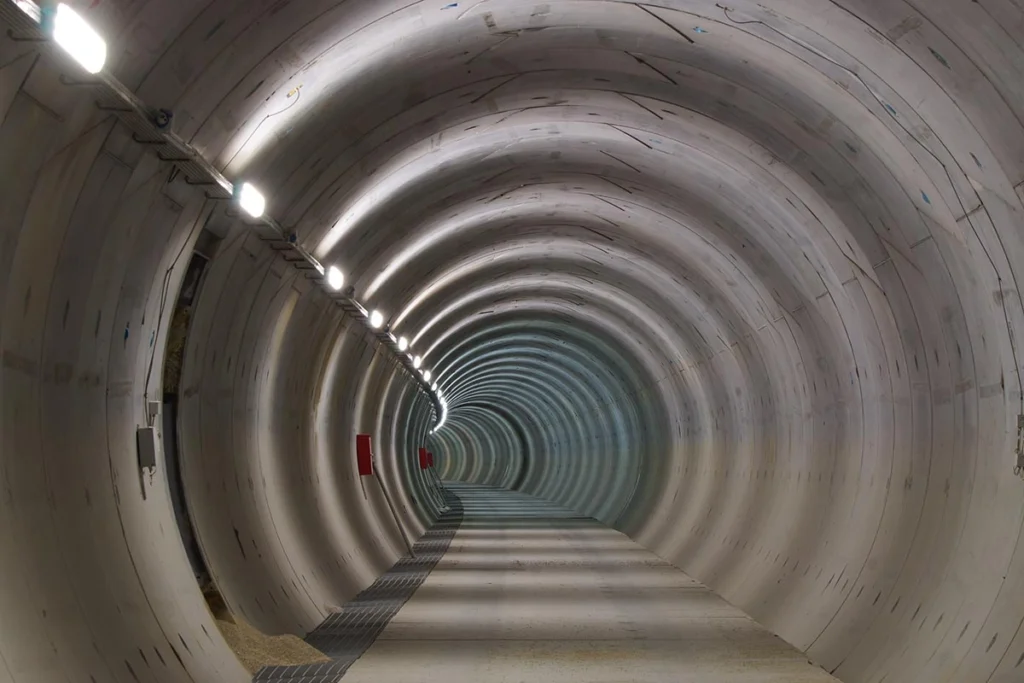
Italy has officially launched excavation work on the Gardena Tunnel, marking a major milestone in the development of the Brenner Base Tunnel, the massive rail infrastructure project connecting Italy and Austria through the Alps. The latest construction phase strengthens Europe’s push toward faster, more sustainable cross-border rail transport while improving freight and passenger connectivity across the continent.
The excavation is taking place within the Fortezza–Ponte Gardena construction section in northern Italy’s Trentino-Alto Adige/Südtirol region. The tunnel forms part of the southern access system linked to the future Brenner Base Tunnel, one of Europe’s most important transport infrastructure projects under the Trans-European Transport Network (TEN-T).
Officials say the project will significantly improve rail capacity, reduce Alpine transit times, and support a long-term shift from road freight to rail transportation, helping reduce congestion and environmental pressure across one of Europe’s busiest freight corridors.
Gardena Tunnel Excavation Begins
Tunnel-boring machine Kathrin has officially started excavation through the rock formations of the Gardena section following months of preparatory work. The launch comes after the completion of the Funes access window, an exploratory shaft used to support tunnelling operations safely and efficiently.
The Gardena Tunnel is considered one of the most technically complex sections of the wider Brenner Base Tunnel system due to challenging geological conditions and the need for seamless integration with adjacent construction lots.
Project officials describe the latest development as a major step forward in delivering the broader Alpine rail corridor that will connect southern and central Europe through high-capacity underground rail infrastructure.
Brenner Base Tunnel to Transform European Rail
The Brenner Base Tunnel stretches between Innsbruck in Austria and Fortezza in Italy and is expected to become one of the world’s longest underground railway systems.
The main tunnel sections extend approximately fifty-five kilometres, while the total connected network, including bypass routes, will reach around sixty-four kilometres in length. Passenger trains are expected to operate at speeds of up to 250 kilometres per hour, while freight services will benefit from increased capacity and smoother gradients.
The tunnel has been designed to eliminate steep Alpine climbs that currently slow rail traffic across the Brenner Pass. By creating a flatter and straighter route beneath the mountains, the system will allow faster, more reliable rail operations for both passengers and freight operators.
Transport planners believe the project will become a major alternative to heavily congested road routes used by trucks and cross-border travelers throughout the Alpine region.
Italy and Austria Strengthen Rail Cooperation
The Brenner Base Tunnel is jointly managed by Italian and Austrian authorities through the BBT SE project company, making it one of Europe’s largest cross-border infrastructure partnerships.
Funding is shared between Italy, Austria, and the European Union through the TEN-T programme, highlighting the corridor’s strategic importance for European mobility and economic integration.
Italian rail infrastructure operator Rete Ferroviaria Italiana, under the FS Italiane Group, continues overseeing the integration of the Italian sections into the country’s broader rail network.
Officials say the project reflects Italy’s commitment to modern rail infrastructure, sustainable freight mobility, and stronger European transport links.
Sustainable Transport Goals Drive Project
Environmental sustainability remains one of the central goals behind the Brenner Base Tunnel project. European authorities view the corridor as essential for shifting freight traffic away from highways and toward lower-emission rail transportation.
The reduction in heavy truck traffic through Alpine routes is expected to improve air quality, reduce greenhouse gas emissions, and ease congestion in mountain regions heavily impacted by freight transport.
Freight operators will benefit from the ability to run longer and heavier trains more efficiently, while passenger rail services are expected to become faster and more competitive with road and air travel.
The project aligns with broader European climate and transportation strategies focused on cleaner mobility and sustainable logistics.
Tourism and Regional Economies to Benefit
The improved rail corridor is expected to create long-term economic and tourism benefits for Italy, Austria, and neighboring European regions.
Faster rail connections will improve accessibility between major destinations while supporting business travel, tourism flows, and regional trade. Hospitality businesses, transport services, and commercial developments near connected rail hubs are also expected to benefit from stronger mobility and increased visitor traffic.
Infrastructure experts believe the Brenner Base Tunnel will strengthen Italy’s role as a key transportation gateway linking Mediterranean Europe with northern and central European markets.
Brenner Base Tunnel Targets 2032 Opening
Construction across multiple sections of the Brenner Base Tunnel system is expected to continue through the late 2020s and early 2030s, with full operations currently projected around 2032.
The start of Gardena Tunnel excavation highlights steady progress on one of Europe’s most ambitious transport infrastructure projects. As work advances beneath the Alps, the Brenner Base Tunnel is expected to reshape cross-border rail travel, strengthen economic integration, and support Europe’s long-term sustainability goals for decades ahead.
For more travel news like this, keep reading Global Travel Wire