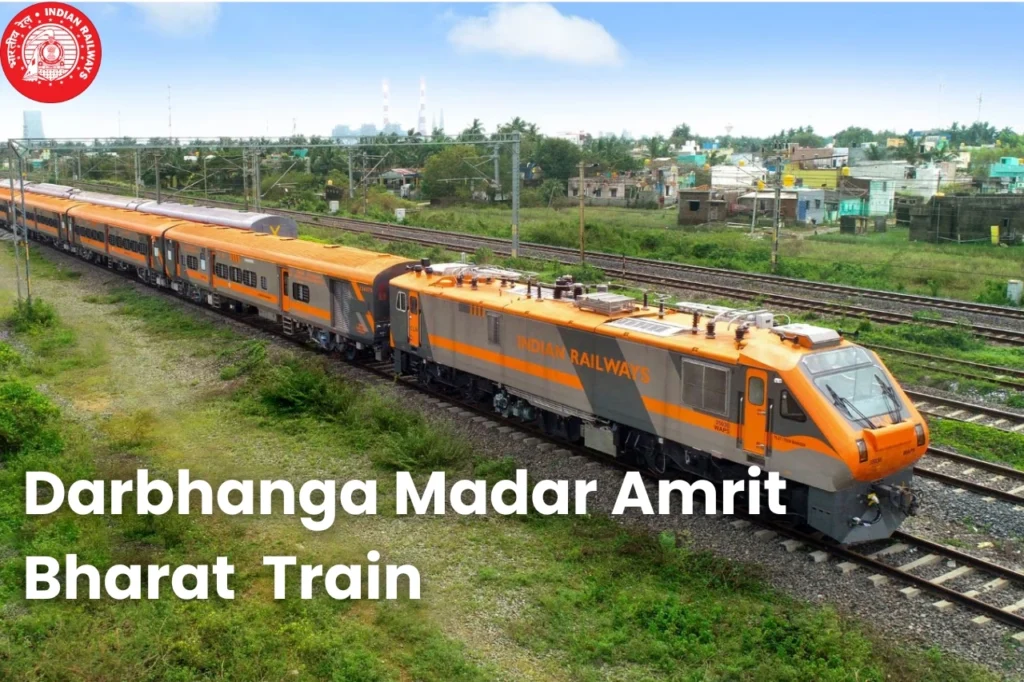
India’s inter-state rail connectivity is set for a major travel boost as the Madar–Darbhanga Amrit Bharat Express has been upgraded from a weekly service to a daily train, strengthening passenger movement across Rajasthan, Uttar Pradesh and Bihar.
The move is expected to transform travel on one of the country’s most important long-distance mobility corridors, serving migrant workers, students, business passengers, families and regular travellers who depend on affordable rail access between western and eastern India.
By operating daily, the Madar–Darbhanga Amrit Bharat Express will reduce pressure on ticket bookings, improve seat availability and give passengers more flexibility than the earlier weekly schedule. For millions of travellers, the upgrade means easier planning, shorter waiting periods and more dependable access to a route that connects employment centres, education hubs, tourism cities and densely populated districts.
Daily Service Replaces Weekly Constraint
The earlier weekly operation placed clear limits on passenger convenience. Travellers often had to plan around one departure, face long waiting lists or depend on alternative trains with less suitable timings and routes.
The daily schedule changes that experience. Passengers travelling between Rajasthan and Bihar will now have regular access throughout the week, making the journey more practical for people moving for work, study, family obligations and business.
This is especially important during festival seasons, school holidays, admission periods and peak migration cycles, when demand for long-distance trains rises sharply. More frequent service can distribute passenger load across the week, reduce congestion and make travel more predictable.
Rajasthan Gains Stronger Multi-State Rail Access
The route begins at Madar Junction and passes through several important points in Rajasthan, including Kishangarh, Jaipur Junction, Gandhinagar Jaipur, Bandikui Junction, Mandawar M Road and Bharatpur Junction.
This section gives the train strong relevance for both travel and the local economy. Jaipur is a major tourism, administrative and commercial hub, while Ajmer, Kishangarh and surrounding areas draw workers, traders, students and visitors from other states.
For passengers from Bihar and eastern Uttar Pradesh working in Rajasthan, the daily train provides a more reliable link to employment zones. It also supports family travel and domestic tourism by making access to Rajasthan’s cities easier and more frequent.
Uttar Pradesh Corridor Strengthens National Rail Mobility
After Rajasthan, the train moves through a long and strategically important Uttar Pradesh corridor. Key stops include Idgah Agra Junction, Tundla Junction, Etawah Junction, Phaphund, Kanpur Central, Unnao Junction, Aishbagh, Badshahnagar, Gomti Nagar, Barabanki Junction, Gonda Junction, Mankapur Junction, Basti and Gorakhpur Junction.
This belt connects industrial, educational, cultural and administrative centres across one of India’s busiest railway regions. Kanpur, Lucknow-area stations and Gorakhpur are especially important for passenger movement, trade, employment and onward travel.
The daily Amrit Bharat Express will strengthen regional mobility by giving passengers a continuous link through this dense travel belt. It will also support smoother movement for people changing trains, accessing jobs or travelling between smaller towns and major junctions.
Bihar Connectivity Expands Through Eastern Corridor
The final stretch into Bihar covers Kaptanganj Junction, Siswa Bazar, Bagaha, Narkatiaganj Junction, Sikta, Raxaul Junction, Bairagnia, Sitamarhi Junction, Janakpur Road, Kamtaul and Darbhanga Junction.
This eastern corridor is central to the train’s social and economic value. Many districts along the route have strong migration links with Rajasthan and Uttar Pradesh, with passengers regularly travelling for employment, education, trade and family responsibilities.
Darbhanga, Sitamarhi, Raxaul and surrounding areas are important passenger catchments. Daily operation will improve access for communities that previously depended on limited long-distance availability, helping make rail travel more dependable and inclusive.
Migrant Workers And Students Benefit Most
The biggest impact of the daily service is expected to be felt by migrant workers and students. A large number of people from Bihar travel to Rajasthan for employment in construction, manufacturing, services, trade and informal sectors.
Under the weekly schedule, travel planning was difficult. Missed availability could mean waiting several days or using less convenient routes. With daily operation, workers can move more freely between home districts and employment cities.
Students will also gain. Those studying in coaching centres, colleges, technical institutes and universities across Rajasthan, Uttar Pradesh and Bihar will have better access to home travel, exam travel and seasonal movement.
Tourism And Local Economies Receive A Connectivity Lift
The upgraded train can also support domestic tourism. Rajasthan’s Jaipur and Bharatpur, Uttar Pradesh’s Agra region, Lucknow corridor and Gorakhpur belt, and Bihar’s cultural and regional destinations all gain from stronger rail access.
Better connectivity encourages family visits, short trips, religious travel and regional exploration. It also supports local spending on food, transport, lodging and retail around stations and nearby cities.
For small traders and entrepreneurs, the daily schedule improves predictability. More frequent travel options can support business visits, market access and movement across three economically connected states.
Amrit Bharat Express Strengthens Passenger-Centric Rail Growth
The Madar–Darbhanga Amrit Bharat Express reflects the broader role of long-distance rail in India’s mobility system. Its daily operation focuses on affordability, reliability and mass connectivity across regions where rail remains the most important transport lifeline.
By upgrading frequency, Indian Railways is addressing real passenger demand on a critical migration and economic corridor. The route now offers stronger access, better convenience and more balanced passenger distribution.
For Rajasthan, Uttar Pradesh and Bihar, the daily service marks a meaningful improvement in inter-state mobility. For passengers, it turns a limited weekly option into a dependable daily lifeline connecting work, education, family, tourism and opportunity across northern India.
For more travel news like this, keep reading Global Travel Wire