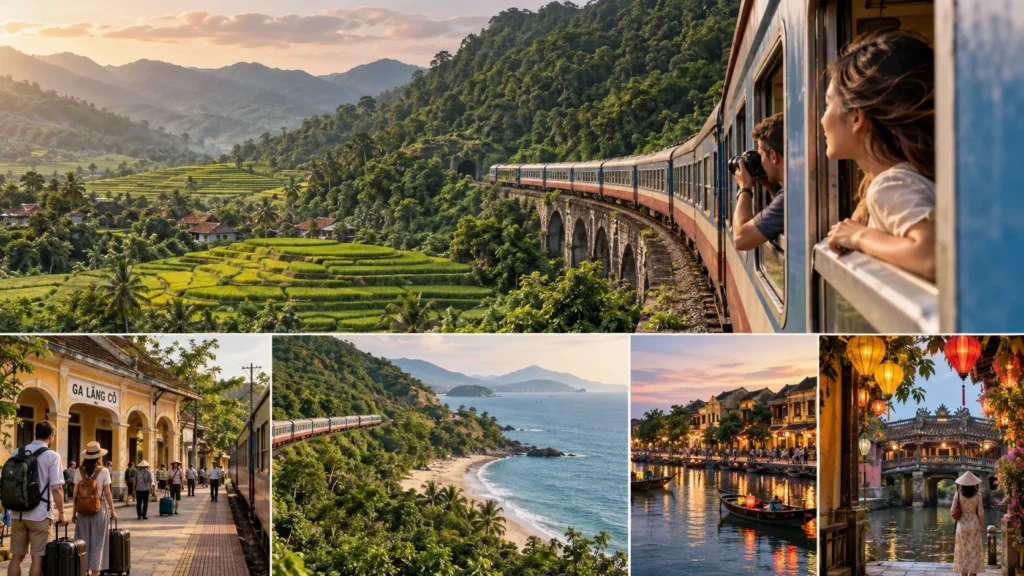
The 1,726-kilometer historic railway connecting Hanoi and Ho Chi Minh City is undergoing a major strategic pivot, transforming from a traditional transit line into a high-value slow travel product. Initiatives championed by national tourism authorities and rail operators aim to leverage the global slow travel movement to decentralize tourism revenue, steering international and domestic visitors away from congested metropolitan centers into regional hinterlands.
By enhancing the travel experience along the historic North-South arterial line, Vietnam is expanding its appeal to luxury heritage seekers, eco-conscious explorers, and culture-focused travelers.
+------------------------------------+-----------------------------+---------------------------+-----------------------------------+
| Route Corridor                     | Iconic Landmark Linkage     | Primary Traveler Segment  | Key Geographic Feature            |
+------------------------------------+-----------------------------+---------------------------+-----------------------------------+
| Hanoi to Ho Chi Minh City          | Reunification Express Route | Long-Haul Explorers       | Coastal Plains & Central Highlands|
+------------------------------------+-----------------------------+---------------------------+-----------------------------------+
| Da Nang to Hue                     | Hai Van Pass & Coastal Rim  | Heritage & Photography    | Annamite Mountains & East Sea     |
+------------------------------------+-----------------------------+---------------------------+-----------------------------------+
| Hanoi to Ninh Binh                 | Trang An Scenic Landscape   | Eco & Nature Enthusiasts  | Karst Topography & River Basins   |
+------------------------------------+-----------------------------+---------------------------+-----------------------------------+
| Ho Chi Minh City to Phan Thiet     | Mui Ne Coastal Corridor     | Beach & Adventure Seekers | Coastal Sand Dunes & Gulf Basins  |
+------------------------------------+-----------------------------+---------------------------+-----------------------------------+
| Hanoi to Lao Cai                   | Sapa Mountain Gateway       | Cultural Trekkers         | Northern Alpine Highlands         |
+------------------------------------+-----------------------------+---------------------------+-----------------------------------+
Strategic Pivot Toward Heritage Rail and Sustainable Yields
For decades, the national rail network functioned primarily as a core transportation service for domestic travel. Today, updated promotional strategies prioritize railway travel as a destination in itself. Connecting key regional lines directly to recognized heritage assets—such as the UNESCO-listed Trang An Scenic Landscape Complex in Ninh Binh or the coastal sand dunes of Mui Ne—allows tourism authorities to establish sustainable visitor flow across secondary provinces.
This shift toward scenic rail travel helps mitigate the environmental impact of short-haul domestic flights while offering an immersive alternative for travelers prioritizing carbon-footprint reduction.
The Da Nang to Hue route along the Hai Van Pass highlights the scenic appeal of the network. Bypassing highway tunnels, the coastal train travels between sea-level views and mountain cliffs, connecting the historical imperial citadel of Hue with the modern urban coastal center of Da Nang.
Economic Impact of Premium Carriage Expansion
The introduction of curated heritage carriages and multi-day luxury rail itineraries represents a significant evolution in Southeast Asian destination management. Slow travel itineraries extend the average duration of stay, encouraging visitors to spend more time exploring regional stopovers.
This extended travel time increases economic yield across smaller municipalities along the tracks. Local craft villages, regional food vendors, boutique heritage hotels, and regional tour guides directly benefit from tourist spending that might otherwise bypass rural areas during direct air transit.
Infrastructure upgrades executed in alignment with international safety standards ensure that modernized passenger carriages, improved dining services, and private sleeper cabins maintain high operational quality.
Practical Guidelines for Railway Travelers in Vietnam
Travelers planning an itinerary along Vietnam’s historic scenic rail corridors should observe essential travel guidelines:
Advance Booking for Peak Routes: Popular scenic segments—particularly the coastal Hai Van Pass route between Da Nang and Hue or the night trains to Lao Cai—require advance reservation through official railway portals during peak travel seasons.
Selecting the Right Carriage Service: Passengers can choose between standard soft-seat options, express sleeper berths, or privately operated luxury heritage carriages attached to national trains.
Planning Regional Stopovers: To experience the diversity of the landscape, travelers are encouraged to build multi-day stopovers into their North-South ticket itineraries, exploring regional destinations like Ninh Binh, Hue, and Quang Nam.
By transforming transit time into an authentic heritage experience, Vietnam continues to set a benchmark for sustainable destination management across Southeast Asia.
Frequently Asked Questions
What is the total length of the North-South railway line in Vietnam?
The complete rail corridor connecting Hanoi in the north to Ho Chi Minh City in the south covers 1,726 kilometers, making it one of Asia’s most iconic continuous rail journeys.
Which railway route is considered the most scenic in Vietnam?
The segment connecting Da Nang and Hue via the Hai Van Pass is widely regarded as the most picturesque, offering dramatic views where mountain ranges meet the sea.
How does railway tourism support sustainable travel in Southeast Asia?
Rail travel reduces per-passenger carbon emissions compared to short-haul flights and distributes economic benefits into regional and rural communities along the transit line.
For more travel news like this, keep reading Global Travel Wire