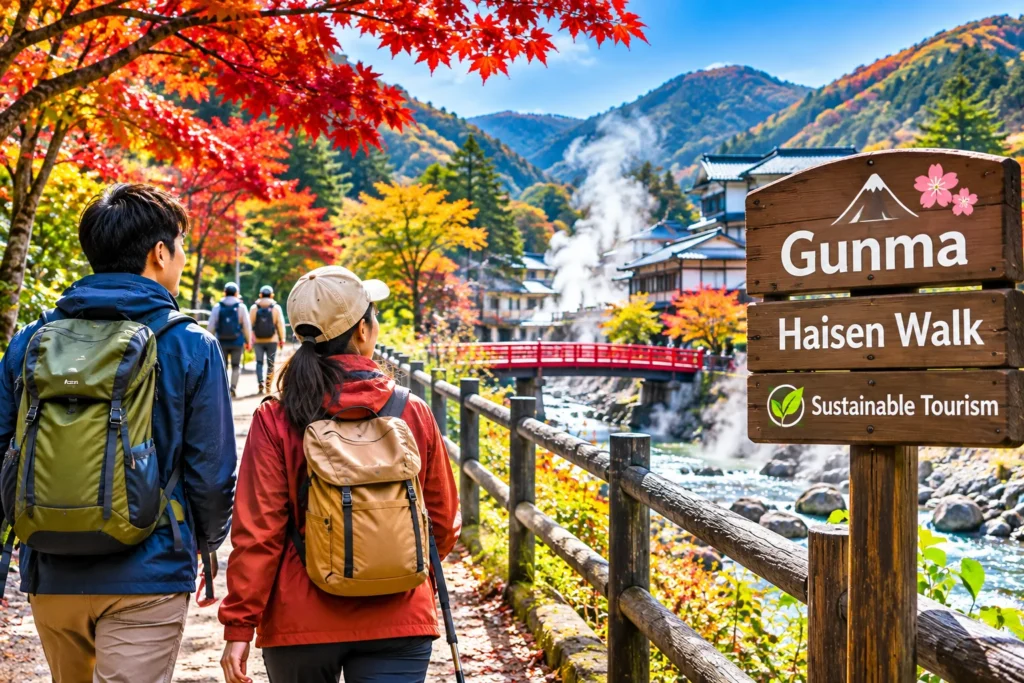
Sustainable tourism Japan has achieved a major international milestone after the Haisen Walk at Usui Pass in Annaka, Gunma Prefecture, was officially selected for the 2026 Green Destinations Top 100 Stories. Marking the first attraction in Gunma Prefecture to earn this prestigious global recognition, the initiative celebrates how local communities can safeguard industrial and railway heritage while cultivating responsible, low-impact visitor experiences.
Compiled annually since 2014 by Green Destinations, an international sustainable tourism certification organization headquartered in the Netherlands, the Top 100 Stories competition honors destinations demonstrating exemplary destination management, environmental stewardship, and cultural preservation. Alongside Annaka in Gunma Prefecture, the 2026 selections also recognized Aizuwakamatsu in Fukushima Prefecture and the Echizen-Sabae region in Fukui Prefecture, underscoring Japan’s growing leadership in community-driven heritage tourism.
Preserving Railway Heritage Along the Historic Usui Pass
Organized by the Annaka Tourism Association, the Haisen Walk transforms a decommissioned mountain railway corridor into an immersive, educational guided trekking experience. The six-hour guided tour leads participants along an 11-kilometer stretch of the former JR Shin-etsu Main Line between Yokokawa Station in Gunma Prefecture and Karuizawa in neighboring Nagano Prefecture, a steep mountain section that ceased rail operations in 1997 following the opening of the Hokuriku Shinkansen.
Launched in 2018 to prevent the historic mountain infrastructure from deteriorating into inaccessible ruins, the project allows visitors to walk directly along original steel rails, traverse historic brick tunnels, and cross monumental masonry viaducts—including structures designated by the Japanese government as Important Cultural Properties. Rather than passive sightseeing, the guided format immerses travelers in the engineering legacy of Meiji-era mountain railways while keeping environmental impact strictly controlled through small-group leadership.
Community Stewardship, Culinary Heritage, and Economic Impact
What began as an ambitious heritage conservation effort has evolved into a cornerstone of regional tourism sustainability. To date, approximately 12,000 participants—ranging from railway historians and mountain hikers to photographers and architectural enthusiasts—have completed the guided trek. Today, the program generates roughly 80 percent of the Annaka Tourism Association’s self-raised revenue, demonstrating how authentic cultural preservation can achieve financial self-sufficiency without over-commercialization.
The itinerary also celebrates local culinary traditions through its inclusion of the iconic Toge no Kamameshi, a traditional earthenware pot lunch box crafted by Oginoya Co. at Yokokawa since 1958 and served to walkers during the journey. Beyond economic benefits, regular guided foot traffic along the remote mountain alignment serves a vital practical conservation function: guides and participants can immediately spot fallen trees, drainage blockages, or minor landslides before they threaten historic brickwork. Supporting these efforts, more than 120 local residents have enrolled in a dedicated volunteer supporter network to clear brush and maintain the corridor throughout the year.
Advancing World Heritage Aspirations and Inbound Appeal
For local leaders and guides in Annaka, international recognition from Green Destinations provides valuable momentum toward an even larger cultural goal. Municipal authorities and heritage advocates are actively working toward securing UNESCO World Cultural Heritage designation for the Usui Pass railway facilities, highlighting their significance in Japan’s modern industrial history.
Shota Uehara, who conceptualized the Haisen Walk and serves as a guide with the Annaka Tourism Association, emphasized that global recognition validates years of grassroots community dedication and opens new opportunities to welcome international travelers. As global demand continues to shift toward meaningful, slow-paced cultural and nature experiences outside Japan’s major metropolitan centers, Annaka’s abandoned railway walk stands as an inspiring model for sustainable rural revitalization.
For more travel news like this, keep reading Global Travel Wire