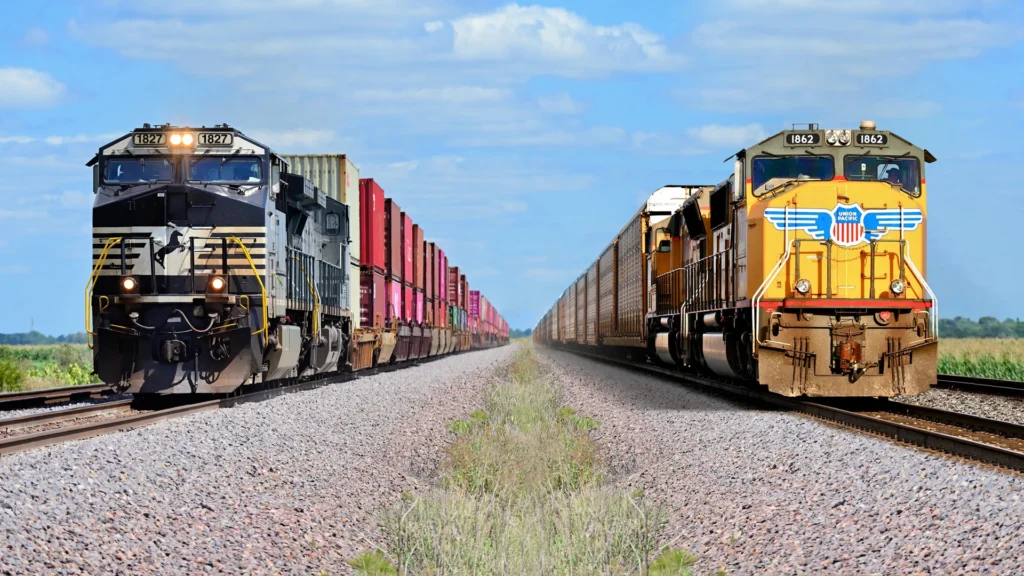
The proposed Union Pacific–Norfolk Southern merger is facing renewed political and regulatory scrutiny as questions emerge over shipper protections, rail competition and the future stability of North American supply chains.
United States Senator Tammy Baldwin has asked the Surface Transportation Board to take allegations of possible customer retaliation seriously. She argued that rail customers must remain free to express support or opposition during the federal review without fearing commercial consequences.
Union Pacific has denied threatening customers and maintains that comments attributed to its leadership were misinterpreted. The company continues to promote the transaction as a way to create a more efficient single-line freight network across the United States.
The Surface Transportation Board accepted the companies’ revised merger application for consideration on May 28, 2026. However, it placed the proceeding in abeyance and requested supplemental information by July 27.
Baldwin Calls for Strong Customer Protections
Baldwin’s intervention adds another layer of political attention to one of the largest proposed railroad combinations in modern United States history.
Her concerns centre on allegations that Union Pacific Chief Executive Officer Jim Vena made statements that could discourage customers from publicly opposing the transaction.
The senator has urged the federal regulator to make clear that retaliation against shippers participating in the review process would not be tolerated. She has also raised broader concerns about consolidation, customer choice and potential freight costs for businesses, farmers and consumers.
Union Pacific firmly rejects the allegations. The railroad says it has not threatened customers and argues that the proposed combination would improve reliability, remove unnecessary shipment handoffs and strengthen rail competition.
No federal finding has established that retaliation occurred. The claims and the company’s denial remain part of an active and closely watched debate.
Proposed Network Would Span the United States
Union Pacific and Norfolk Southern entered their merger agreement in July 2025. The companies subsequently filed a revised application after the Surface Transportation Board found their original submission incomplete.
The proposed combination would connect Union Pacific’s western network with Norfolk Southern’s eastern operations under one system. The companies say the resulting railroad would cover more than 50,000 route miles across 43 states and link approximately 100 ports.
Supporters believe single-line service could reduce freight transfers between railroads. Those transfers can add time, administrative complexity and uncertainty to long-distance shipments.
Union Pacific and Norfolk Southern estimate that the combination could produce substantial benefits for shippers. However, those claims remain subject to regulatory testing and stakeholder review.
Regulators Must Examine Competition and Service
The Surface Transportation Board applies heightened standards when reviewing major railroad mergers.
Its assessment must consider whether the proposed transaction serves the public interest while enhancing competition. The Board may examine service quality, market access, operational plans, environmental effects and the impact on rail customers.
Ports, manufacturers, agricultural exporters, logistics companies, labour organisations, state governments and competing railroads can participate in the process.
Critics fear that further consolidation could reduce customer choice, weaken negotiating power and create new pricing risks. Supporters argue that the network would compete more effectively with trucks by providing faster and more reliable coast-to-coast freight movement.
The Board has not approved the merger. Its current action only allows the revised proposal to proceed for further consideration.
Canada and Mexico Trade Could Feel Wider Effects
Although the transaction concerns two United States railroads, its potential influence extends across North America.
Integrated railway connections support automotive manufacturing, agricultural exports, consumer goods and industrial supply chains involving Canada and Mexico. Union Pacific also plays an important role in rail movements towards the United States–Mexico border.
Any major restructuring of American freight routes could influence cargo patterns through ports, border crossings, inland terminals and distribution centres.
However, Canada, Mexico and Germany are not parties to the merger review. References to these countries relate to interconnected trade and global supply chains rather than a formal alignment with the United States regulatory process.
European manufacturers, including German companies operating North American facilities, may also monitor the review because they depend on predictable movement of vehicles, equipment and components.
Tourism Could Experience Indirect Consequences
The merger does not involve passenger railway services. Nevertheless, freight performance can indirectly affect the wider travel and tourism economy.
Hotels, restaurants, airports, cruise terminals and attractions depend on reliable deliveries of food, beverages, retail products, fuel and construction materials.
Rail service changes can also influence infrastructure projects and regional development around ports and major logistics hubs.
A more dependable freight network could support destination operations and investment. Conversely, reduced competition or service disruption could increase costs for businesses serving travellers.
These tourism effects remain indirect and cannot be guaranteed at this stage.
Final Outcome Remains Uncertain
Union Pacific and Norfolk Southern have said they expect a rigorous review and continue responding to requests for additional information. The companies have indicated that they are working towards a potential 2027 completion, subject to regulatory approval and other conditions.
The Surface Transportation Board must still evaluate competition, customer protections, operating plans and wider public-interest considerations.
Until that process concludes, the proposed merger remains uncertain. Its eventual outcome could reshape freight movement, supply chain planning and transportation investment across the United States and the wider North American economy.
For more travel news like this, keep reading Global Travel Wire