
Lufthansa to Resume Dubai Flights in October 2026, Boosting Middle East Travel Connectivity
Lufthansa plans to resume Dubai flights from October 2026, restoring vital Europe-Middle East connectivity with up to 36 weekly services.
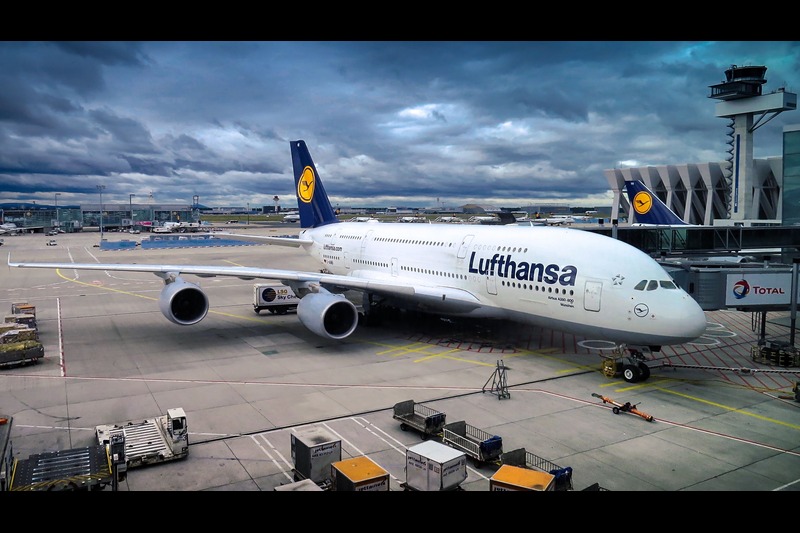
Lufthansa plans to resume Dubai flights from October 2026, restoring vital Europe-Middle East connectivity with up to 36 weekly services.

Official performance indicators confirm that the United Arab Emirates and the wider Gulf Cooperation Council region are demonstrating remarkable strength in capturing global visitor expenditure. Driven by strategic investments in hospitality infrastructure, expanded air connectivity, and targeted visa facilitation, the region has established a strong baseline that positions it among the world’s highest-yielding travel destinations.

Qatar, Bahrain and other Gulf destinations are strengthening their international tourism strategies through inclusive visitor programmes, major sporting events, cultural experiences and more accessible visa systems. The regional push comes during a complex period for Middle East travel. Recent official advisories have warned that escalating tensions could cause flight cancellations, short-notice airspace closures and other

The United Kingdom and Switzerland are strengthening traveller preparedness as renewed military escalation involving Iran creates fresh uncertainty for aviation routes linking Europe with the Middle East, Asia, Africa and Australia. The security environment remains highly unpredictable following renewed strikes and retaliatory activity across the region since July 8, 2026. Governments are warning travellers about

Kenyan travellers, expatriates and aviation stakeholders are facing renewed uncertainty across Middle East routes as the United States and Canada intensify security guidance amid escalating regional tensions, missile and drone risks, and possible disruptions to commercial aviation. The U.S. Department of State issued a worldwide caution on July 22, 2026, warning Americans that the Middle
International travellers face heightened uncertainty across the Middle East as Australia maintains tough travel warnings for Saudi Arabia, Qatar, Bahrain, the United Arab Emirates, Israel and several neighbouring destinations, amid continuing military escalation, aviation risks and possible sudden airspace disruptions. Australia’s official Smartraveller guidance currently places Bahrain, Israel, Jordan, Kuwait, Oman, Qatar, Saudi Arabia and
Australia has significantly strengthened travel guidance across the Middle East, raising its overall advice for Jordan, Oman and Saudi Arabia to Level 3 — “Reconsider your need to travel” as regional security conditions become increasingly unpredictable. The changes expand a group of major Middle Eastern destinations already carrying the same Level 3 warning, including Bahrain,

Australia has intensified its travel warning for the Middle East as Qatar, Iran, Israel, the United Arab Emirates, Bahrain, Lebanon and several other countries face heightened risk from regional conflict, airspace disruption and fast-changing security conditions. The updated Australian Government advice places major aviation and tourism hubs under sharper scrutiny, with “Do not travel” guidance
Canada currently lists the United Arab Emirates, Qatar, Kuwait, Bahrain, Iran, Lebanon, Iraq, and Yemen under its highest-level Avoid All Travel advisory, placing renewed attention on travel safety, airline schedules, and international transit routes across the Middle East. The warning carries major implications for global tourism because several affected destinations serve as essential gateways between

Travelers planning holidays, business trips and connecting flights across the Middle East are being urged to monitor official security updates closely as the United States maintains a worldwide caution with particular emphasis on the region. The warning does not create a single travel ban covering every Middle Eastern destination. Instead, it advises Americans worldwide, especially

An attack on Kuwait International Airport has disrupted regional air travel, raising security concerns across the Gulf and prompting airlines to reassess operations. The incident highlights the critical importance of aviation security, regional stability, and coordinated efforts to protect one of the world’s most important travel and tourism hubs.

Iran’s decision to close most of its western airspace is creating immediate disruption across international aviation networks, forcing airlines to reroute flights, extend travel times, and revise operational strategies across Europe, the Middle East, and Asia. The move is already affecting passengers on long-haul journeys while accelerating shifts in global transit patterns as carriers adapt