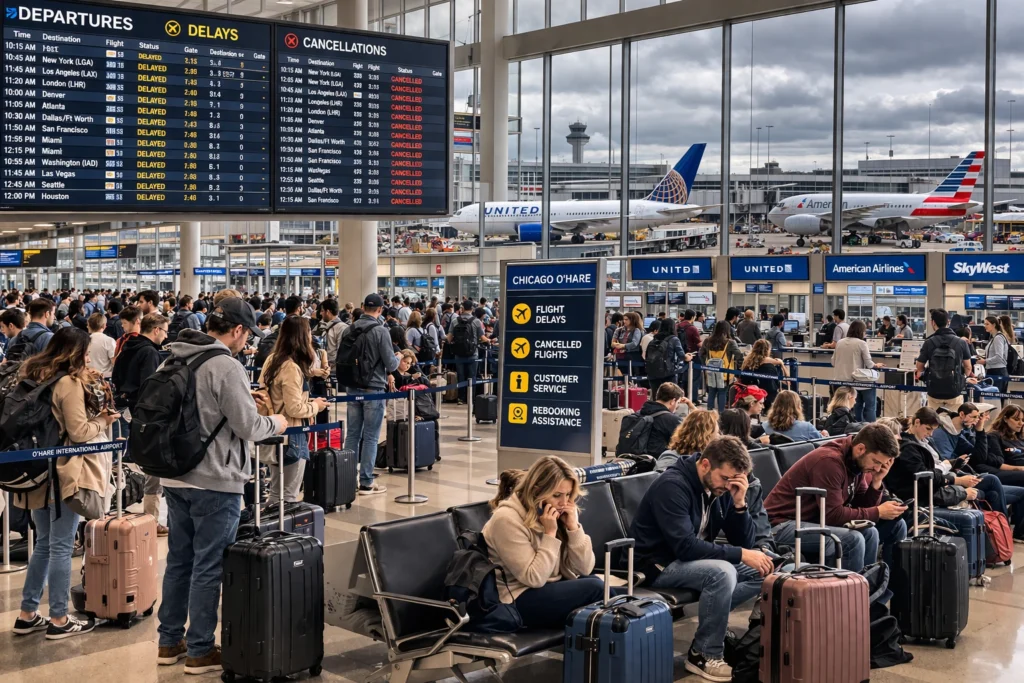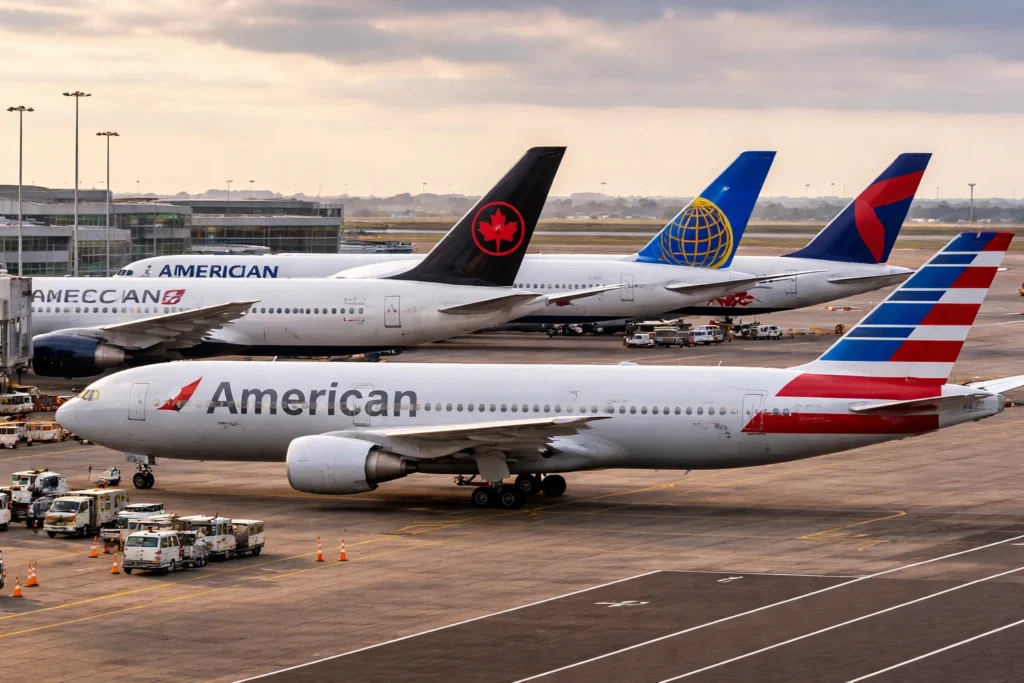
American Airlines has suspended flights to multiple Middle East destinations. The move follows similar decisions by several global carriers due to rising geopolitical tensions and airspace restrictions .
The suspension affects routes to the UAE, Qatar, Iraq, Israel, and nearby regions. It has disrupted travel plans for thousands of passengers worldwide.
Airlines have taken this step to protect passenger and crew safety. Ongoing conflict and restricted airspace have made normal operations difficult.
Global Airlines Halt Middle East Operations
Major airlines have joined the suspension. These include Air Canada, United Airlines, WestJet, and Delta Air Lines.
Each carrier has paused flights to key hubs such as Dubai, Doha, and Tel Aviv. These cities are major gateways for global travel.
The closures have created widespread disruption across international routes. Airlines are now rerouting flights or canceling services entirely.
This situation highlights the importance of the Middle East as a global aviation hub.
Airspace Closures Drive Disruptions
Airspace restrictions have forced airlines to adjust operations quickly. Many routes now require longer detours to avoid conflict zones.
These changes increase flight times and fuel costs. They also reduce schedule reliability.
Some airlines have chosen to suspend services instead of rerouting. This helps avoid operational risks and uncertainty.
Safety remains the top priority for all carriers.
Impact on Key Airlines
Air Canada has canceled flights to Dubai and Tel Aviv. The airline has not confirmed a restart date.
United Airlines has also suspended services to these destinations. Passengers can request refunds or alternative travel options.
WestJet has paused routes to Doha and Dubai. This affects connections through Canadian hubs.
Delta Air Lines has stopped flights to Tel Aviv. It has also adjusted other Middle East routes to avoid restricted airspace.
American Airlines has suspended its Philadelphia–Doha service. It has also halted flights to Tel Aviv and other regional destinations.
Each airline continues to monitor the situation closely.
Passenger Travel Disruptions
The suspension has created major challenges for travelers. Many passengers now face delays, cancellations, and rebooking issues.
Travelers who planned to transit through Middle East hubs must find alternative routes. This often leads to longer journeys and higher costs.
Airlines are offering flexible policies to support affected customers. These include free rebooking and full refunds.
Some passengers are being rerouted through European hubs such as London, Paris, and Frankfurt.
These airports are experiencing increased traffic as a result.
Economic and Tourism Impact
The Middle East plays a key role in global tourism and business travel. Flight suspensions affect hotels, tour operators, and local economies.
Destinations such as Dubai and Tel Aviv rely heavily on international visitors. Reduced connectivity may impact tourism revenue.
Airlines also face financial losses from suspended routes. Long-haul services to the Middle East are often high-value routes.
The disruption extends beyond the region. It affects global travel flows and airline networks.
Airline Support Measures
Airlines have introduced support measures for passengers. Flexible ticket policies allow travelers to change plans without extra fees.
Many carriers offer refunds for canceled flights. They also provide alternative routes where possible.
Some airlines assist with accommodation and meals for stranded passengers.
These measures aim to reduce inconvenience during the disruption.
What Travelers Should Know
Travelers should stay updated on flight changes. Airlines continue to adjust schedules based on the situation.
Passengers should check official airline updates before traveling. Signing up for alerts can help track changes in real time.
Travel insurance may also help cover unexpected disruptions. This is especially important during periods of geopolitical instability.
Flexibility is essential when planning travel to affected regions.
Outlook for Global Aviation
The aviation industry continues to adapt to evolving challenges. Airlines are working to maintain safety while managing disruptions.
The duration of these suspensions remains uncertain. Services will likely resume once conditions improve.
Global travel demand remains strong despite the disruptions. Airlines are focusing on alternative routes and markets to maintain operations.
A Period of Uncertainty for Travelers
The suspension of Middle East flights marks a significant moment for global aviation. It shows how geopolitical events can quickly impact travel.
Airlines, governments, and travelers must navigate this period carefully.
While disruptions continue, the industry remains resilient. Airlines are adjusting strategies to manage risks and maintain connectivity.
Passengers are encouraged to remain informed and flexible. As the situation evolves, travel conditions may change rapidly.
The coming months will be critical for the aviation sector as it works to restore stability and confidence in international travel.
For more travel news like this, keep reading Global Travel Wire