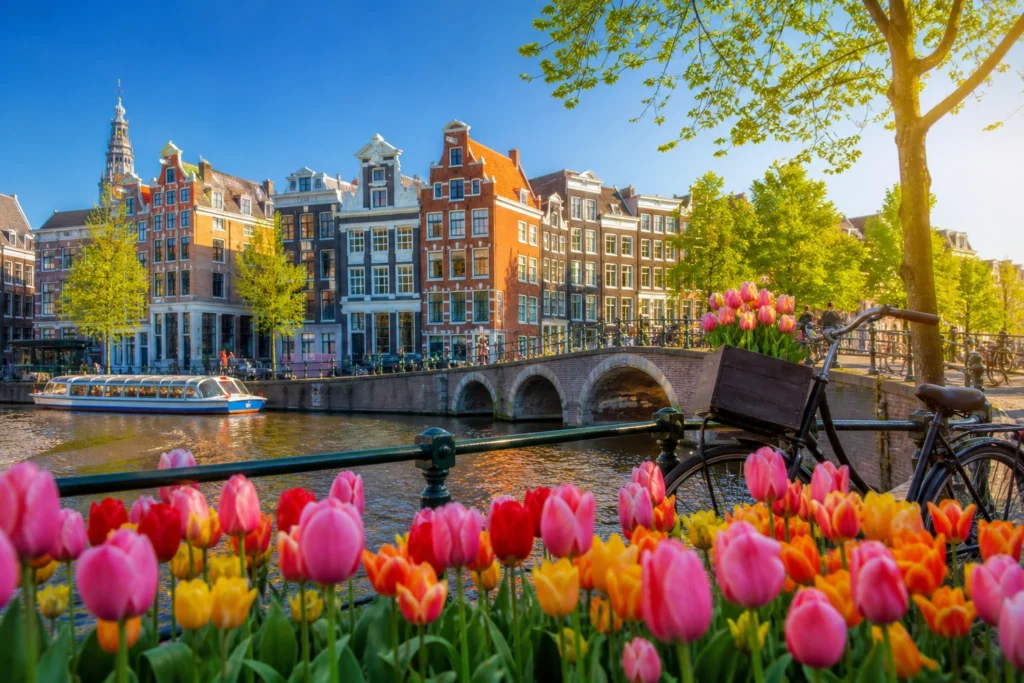
The Netherlands is witnessing a powerful surge in international tourism, with Amsterdam at the forefront, even as the European Union prepares to roll out major digital border reforms that will reshape how travelers enter the region. Official data from Statistics Netherlands confirms a steady rise in international arrivals, reinforcing the country’s position as one of Europe’s leading destinations.
At the same time, new EU-wide systems—the Entry/Exit System (EES) and the European Travel Information and Authorization System (ETIAS)—are set to modernize border controls for non-EU travelers, marking a significant shift toward digital travel regulation across Europe.
Amsterdam Leads Tourism Growth but Faces Pressure
Amsterdam continues to dominate as the Netherlands’ primary tourism hub, drawing millions of visitors annually. According to the Netherlands Board of Tourism and Conventions, the city has recorded sustained increases in hotel occupancy, museum visits, and urban tourism activities.
This surge has delivered strong economic benefits to the hospitality sector, with hotels, restaurants, and cultural attractions reporting high demand. Airlines serving Amsterdam’s Schiphol Airport have also seen consistent passenger growth, strengthening the city’s role as a major European gateway.
However, the rapid rise in visitor numbers has placed increasing strain on infrastructure. Public transport systems, accommodation availability, and historic districts are experiencing mounting pressure. Authorities in Amsterdam are now actively evaluating strategies to manage tourism flows while maintaining quality of life for residents.
Regional Destinations Gain Momentum
While Amsterdam remains the centerpiece, tourism growth is spreading across the Netherlands. Smaller provinces, coastal regions, and rural destinations are emerging as attractive alternatives for travelers seeking less crowded experiences.
This shift reflects a broader national strategy to distribute tourism more evenly. The Netherlands Board of Tourism and Conventions has promoted regional campaigns highlighting cycling routes, cultural heritage, and scenic landscapes beyond major cities.
As a result, local economies in these regions are benefiting from increased visitor spending, with boutique hotels, local attractions, and transport networks seeing rising demand. This diversification is helping to ease congestion in Amsterdam while expanding tourism opportunities nationwide.
EU Digital Border Systems Set to Transform Travel
Parallel to tourism growth, the European Union is implementing significant changes to border management. The Entry/Exit System (EES), confirmed by the European Commission, will digitally record the movements of non-EU travelers, replacing traditional passport stamps with biometric data collection.
The system aims to enhance security, improve efficiency, and ensure accurate tracking of short-term stays within the Schengen Area. For airports and border checkpoints, including those in the Netherlands, this marks a major operational transformation.
Alongside EES, ETIAS will introduce a pre-travel authorization requirement for visa-exempt non-EU visitors. Travelers will need to complete an online application before departure, submitting personal and travel information for electronic approval.
Impact on Airlines, Airports, and Travelers
These new systems are expected to influence travel patterns and airport operations. Airlines may need to adapt check-in procedures to ensure passengers have valid ETIAS approvals before boarding. Meanwhile, airports could experience temporary delays during the early stages of implementation as travelers adjust to biometric verification and digital checks.
Over time, however, the transition is expected to streamline passenger processing. Automated systems and integrated databases should reduce manual inspections, enabling faster and more secure entry procedures across European borders.
For travelers, the changes introduce an additional step in trip planning but promise smoother experiences once fully operational.
Balancing Growth with Sustainability
As visitor numbers rise, Dutch authorities are focusing on sustainable tourism management. Data from Statistics Netherlands is guiding policies aimed at improving infrastructure, managing visitor flows, and protecting local communities.
Efforts include encouraging tourists to explore lesser-known destinations, investing in transport capacity, and promoting environmentally responsible travel practices. These measures are designed to maintain the Netherlands’ appeal while safeguarding its cultural and urban environments.
Urban Planning and Smart Tourism Initiatives
Amsterdam, in particular, is exploring innovative solutions to manage tourism pressure. City planners are considering digital crowd management tools, improved public transport systems, and sustainable mobility initiatives.
These strategies aim to preserve the city’s livability while supporting its global reputation as a top destination. Hotels and tourism operators are also adapting by offering experiences that align with sustainability goals and local community interests.
Europe Moves Toward a Digital Travel Future
The rollout of EES and ETIAS represents a broader shift toward digital governance in European travel. The European Commission has emphasized that these systems will enhance both security and convenience, creating a more efficient and integrated travel environment.
As the Netherlands continues to experience strong tourism growth, these regulatory changes are expected to shape the future of international travel. The combination of rising demand and digital transformation signals a new era for European tourism—one defined by innovation, sustainability, and smarter border management.
For more travel news like this, keep reading Global Travel Wire