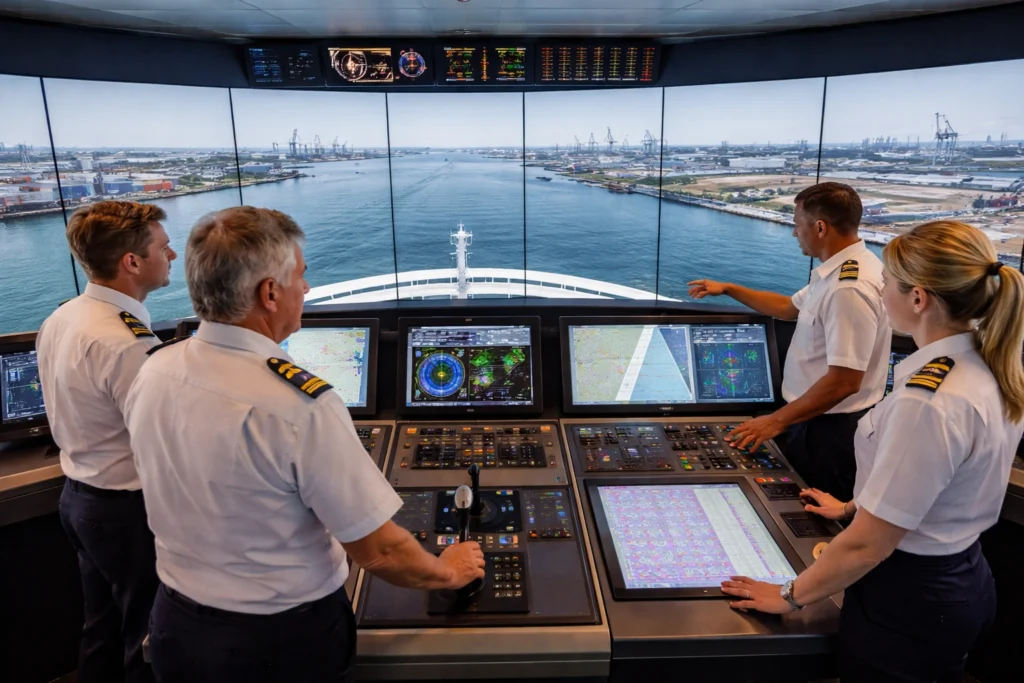
Carnival Corporation has completed a major milestone in cruise and maritime technology after successfully conducting advanced navigation simulator trials for the new S-100 data framework at its Center for Simulator Maritime Training in Almere, Netherlands.
The tests, carried out with international hydrographic offices and maritime technology partners, explored how real-time digital navigation data can improve ship movements, safety, and operational efficiency in busy port environments. Recognized as an official International Hydrographic Organization test bed, the project signals an important step toward smarter navigation systems for the global cruise industry .
A New Era for Cruise Navigation
The S-100 framework is designed to modernize how ships navigate by combining multiple streams of maritime information into one dynamic system. Instead of relying on static charts alone, bridge teams can access integrated data such as water levels, tides, currents, port layouts, and navigational warnings in real time.
For cruise lines, this can be transformative. Large passenger ships often operate in congested ports, narrow channels, and complex coastal areas where timing and precision are critical. Faster access to live information can support safer decision-making and smoother arrivals and departures.
As cruise itineraries expand and vessels grow in size, advanced navigation tools are becoming increasingly important across the sector.
Simulator Trials Focused on Real Ports
The trials recreated real-world scenarios from ports including Rotterdam, Melbourne, Southampton, and Napier. By testing conditions from multiple global destinations, participants could evaluate how the system performs across different waterways, traffic levels, and environmental conditions.
This approach is especially valuable for the travel industry because cruise operations depend heavily on reliable port access. Delays, congestion, or navigational challenges can disrupt itineraries, impact shore excursions, and affect the overall guest experience.
Improved digital navigation may help reduce such risks while enhancing schedule reliability for passengers.
Why It Matters for Cruise Travelers
Although most guests never see the technology guiding a ship, navigation systems directly shape the cruise experience. Safe docking, punctual arrivals, smooth channel transits, and efficient port calls all depend on what happens on the bridge.
If next-generation systems like S-100 become widely adopted, passengers could benefit from fewer operational disruptions, stronger safety margins, and more confidence when visiting challenging or weather-sensitive destinations.
That can be particularly important for expedition cruises, world cruises, and itineraries featuring multiple port calls in a short timeframe.
Advanced Systems Used in Testing
The simulator program combined S-100 capable Electronic Chart Display and Information Systems with Portable Pilot Units used by marine pilots. These tools were connected to full mission bridge simulators, allowing captains, deck officers, pilots, and shore-based managers to work in realistic scenarios.
Such immersive testing helps identify how crews interact with new data, what functions feel intuitive, and where training may be required before broader industry adoption.
For cruise companies, simulator-based development reduces risk by ensuring new systems are refined before deployment onboard operating ships.
Stronger Safety and Efficiency Potential
The successful tests highlighted the potential of S-100 to improve navigational accuracy and reduce human error. In busy harbor environments, where tides, traffic, and local conditions can change quickly, that advantage can be significant.
More accurate navigation can also support operational efficiency. Better route planning, improved arrival timing, and optimized maneuvers may help lower fuel use, reduce waiting times, and improve vessel turnaround in port.
For the cruise sector, those efficiencies can translate into cost savings and more dependable itineraries.
Global Cooperation Drives Innovation
Carnival’s project brought together maritime authorities and industry stakeholders from several countries, demonstrating how international cooperation is shaping the future of marine travel.
This collaboration is essential because shipping and cruising are inherently global industries. Navigation standards need to work across regions, ports, and vessel types to deliver real value.
By aligning regulators, technology firms, and operators early in development, the industry can accelerate adoption while maintaining strong safety standards.
Benefits Beyond Cruising
While the trials are highly relevant for cruise tourism, the wider maritime industry also stands to gain. Cargo vessels, ferries, and port authorities could all benefit from more connected navigation systems.
That matters for tourism destinations as well. Efficient ports support smoother passenger flows, stronger supply chains, and more reliable ferry or cruise access to island and coastal communities.
What Comes Next
Results from the simulator program will contribute to technical reporting, standards development, and future crew training initiatives. Industry presentations later this year are expected to help shape the next phase of S-100 implementation.
For Carnival and the wider cruise sector, the message is clear: the future of travel at sea will be guided not only by larger ships and new itineraries, but also by smarter technology behind the scenes.
As cruise demand continues to rise worldwide, investments in digital navigation systems may become just as important as new ships in defining the next generation of passenger travel.v
For more travel news like this, keep reading Global Travel Wire