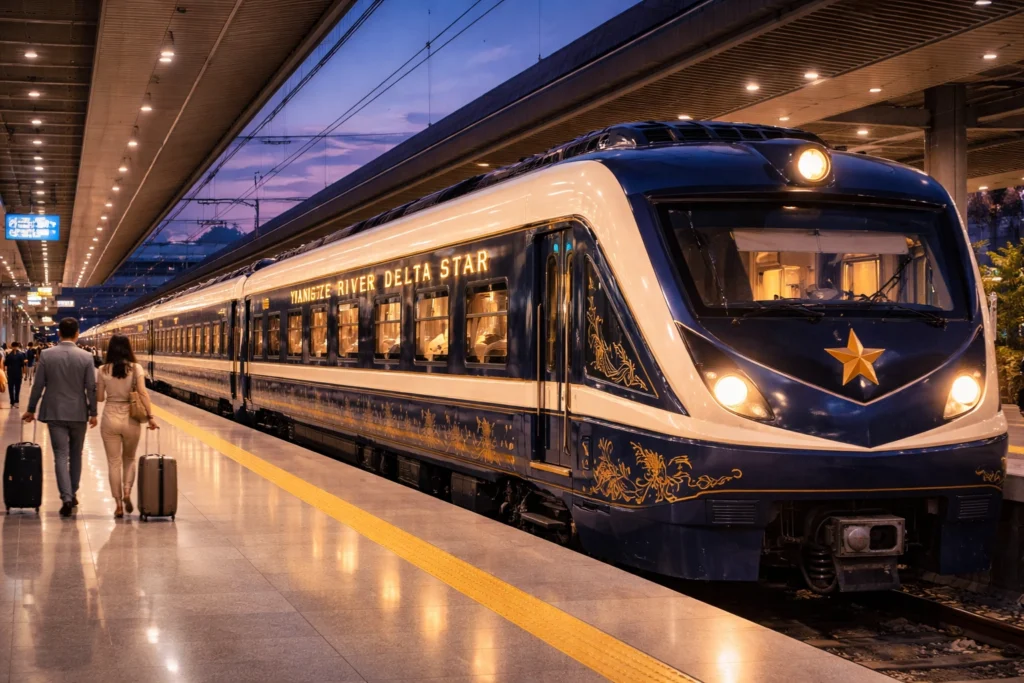
China is set to redefine premium rail tourism with the launch of the Yangtze River Delta Star, a new high-end tourist train linking Shanghai with the dramatic landscapes and cultural heritage of Xinjiang. The inaugural journey departs on May 19, 2026, opening a new chapter for long-distance experiential travel in one of the world’s fastest-growing rail markets.
Designed as a luxury “hotel on rails,” the service combines scenic exploration, upscale accommodation and curated cultural experiences across an 18-day itinerary stretching from eastern China to the far northwest.
For travelers seeking slower, more immersive journeys, the Yangtze River Delta Star arrives at exactly the right time.
A New Vision for Chinese Rail Tourism
China already leads the world in rail infrastructure, yet this launch highlights a different ambition: turning the train itself into the destination.
Rather than focusing only on speed, the new service centers on comfort, discovery and the joy of travel. Passengers can enjoy changing landscapes, onboard experiences and carefully planned excursions without the stress of repeated airport transfers or long road journeys.
That approach reflects a wider global trend toward meaningful travel experiences over rushed itineraries.
For tourism, it opens fresh opportunities in regions that benefit from longer visitor stays.
From Shanghai to the Silk Road
The maiden voyage begins in Shanghai and heads toward Xinjiang, one of China’s most visually striking and culturally diverse regions.
The route will showcase mountain scenery, grasslands, lakes and historic Silk Road cities across northern and southern Xinjiang. By linking the prosperous Yangtze River Delta directly with western China’s tourism markets, the train creates a powerful new bridge between two very different parts of the country.
For domestic travelers, it offers easier access to distant landscapes.
For international visitors already in China, it presents a premium way to see multiple destinations in one seamless trip.
Luxury Accommodation on the Move
Comfort stands at the heart of the experience.
The Yangtze River Delta Star features private cabins in multiple layouts, with en-suite bathrooms and upgraded interiors designed for extended journeys. That level of privacy and convenience can make long-haul rail travel far more attractive to premium travelers.
Guests can settle into their cabins while scenery unfolds outside the window, avoiding the packing and unpacking cycle common on multi-stop holidays.
The concept blends transport and accommodation into one continuous experience.
Dining and Onboard Experiences
The train also aims to deliver a full hospitality product rather than simple transportation.
Dedicated dining cars will serve curated meals, while multifunctional spaces are expected to host entertainment, social gatherings and cultural presentations. These shared areas help transform travel time into a valuable part of the holiday.
Instead of seeing transit hours as lost time, passengers can enjoy cuisine, conversation and destination storytelling while moving across the country.
That model has helped luxury trains succeed worldwide, and China now expands the concept at scale.
Why Xinjiang Appeals to Travelers
Xinjiang offers some of China’s most dramatic travel experiences.
The region is known for alpine lakes, desert landscapes, wide grasslands, mountain ranges and ancient trading cities shaped by centuries of Silk Road history. Its vast geography can make independent travel complex, especially for first-time visitors covering multiple sites.
A guided premium train simplifies that challenge.
Travelers can focus on scenery and culture while logistics, transfers and itinerary coordination are handled as part of the package.
Boost for Regional Tourism
The launch may also deliver important economic benefits.
High-value tourism often supports hotels, restaurants, guides, cultural venues and local transport providers in destination regions. Longer itineraries can increase spending and spread benefits across multiple communities rather than concentrating them in a single city.
By bringing affluent travelers from eastern China to western destinations, the service supports broader regional tourism development.
That balance aligns with long-term goals of distributing travel demand more widely.
Rail Travel’s Sustainable Advantage
The project also arrives during rising interest in lower-impact travel.
Rail journeys often produce fewer emissions per passenger than many comparable flights, particularly when travelers move through multiple destinations in one trip. As sustainability becomes more important in travel choices, premium rail products can appeal to guests who want comfort with a lighter footprint.
Slow travel and sustainable travel increasingly overlap.
The Yangtze River Delta Star is positioned to benefit from both trends.
Could More Luxury Routes Follow?
Success on the Xinjiang route may encourage similar services to other regions.
China’s vast network creates opportunities for future premium trains to Tibet, Yunnan, the southwest or other scenic long-distance corridors. If demand remains strong, rail tourism could become a larger pillar of the national visitor economy.
That would further diversify China’s already dynamic transport and tourism landscape.
Outlook
The launch of the Yangtze River Delta Star signals a major evolution in how travelers experience China by rail.
With luxury cabins, curated dining, immersive sightseeing and an epic route to Xinjiang, the service offers more than transport. It offers a journey designed to be remembered.
For travelers worldwide, China’s new golden age of rail tourism may have just begun.
For more travel news like this, keep reading Global Travel Wire