In a bold step toward modernization and sustainability, Norwegian Cruise Line, Royal Caribbean International, and Carnival Cruise Line are phasing out printed daily schedules in favor of fully digital onboard programs. This move is designed to streamline operations, enrich the guest experience, and align cruise travel more closely with eco-friendly practices—while also reflecting the evolving expectations of tech-savvy travelers.
From Paper to Pixels: What’s Changing
Traditionally, when guests boarded a cruise, they would receive a printed daily newsletter in their stateroom—NCL’s Freestyle Daily, Royal Caribbean’s Cruise Compass, and Carnival’s Fun Times—detailing the next day’s events, dining options, excursions, and entertainment schedules.
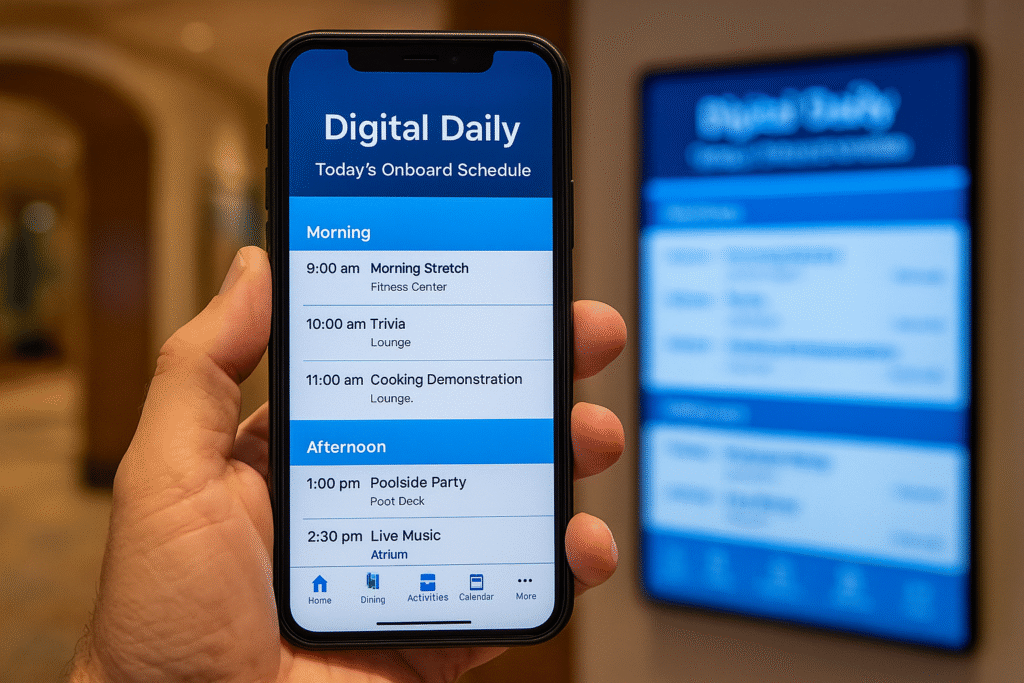
Under the new system, all of that information becomes accessible digitally. Guests will use mobile apps or in-cabin digital displays to view and manage their daily itineraries. Some of the features being introduced include:
- Viewing schedules in real time
- Making or modifying dining, entertainment, or excursion bookings
- Receiving notifications or alerts about changes
- Tracking onboard spending, reservations, and personal preferences
- Communication tools (chat, announcements) embedded in the app
These digital tools are designed to operate without consuming guests’ personal Wi-Fi time, meaning that using the app doesn’t eat into their data allowances.
Rollout Across Fleets & Ships
The transition isn’t limited to a few vessels. Cruises across the fleets of all three lines will adopt these digital systems. Ships already equipped with supporting infrastructure—such as Norwegian Viva, the Oasis-class vessels of Royal Caribbean, and Carnival’s Vista-class ships—are among the first to fully implement the change.
The timing is staggered: NCL officially began phasing out printed schedules in October 2025. Royal Caribbean and Carnival have been upgrading over the past year, with full transition expected by the end of 2026, depending on ship readiness and technology support capacity.
Why Go Digital? Key Drivers
Several motivations lie behind the switch:
- Environmental Impact
Eliminating paper newsletters helps cut down paper waste, printing, and distribution logistics—aligning with broader sustainability goals in the cruise industry. - Operational Efficiency & Agility
Digital platforms allow real-time updates, last-minute adjustments, and dynamic notifications—much harder to manage with printed materials. - Enhanced Guest Experience
Personalization becomes easier—guests can choose which notifications to receive, tailor their day, and stay informed without leafing through print. - Cost Savings
Reducing dependence on printed materials lowers long-term operational costs—including design, production, printing, and delivery aboard each ship. - Data & Insights
With usage metrics and analytics, cruise lines can understand guest behavior better, optimize scheduling, and predict demand for onboard experiences.
Guest Reactions & Transition Challenges
Responses have varied. Many tech-comfortable guests have welcomed the change—appreciating convenience, up-to-date schedules, and reduced clutter in staterooms. But others, especially older passengers or those less familiar with apps, express hesitation or uncertainty about navigating digital tools.
To address this, cruise lines are:
- Ensuring user-friendly interfaces with clear navigation and tutorials
- Training staff to assist passengers who prefer human guidance
- Making limited printed versions available on request during the transition
- Offering onboard workshops or help desks to familiarize guests with the new format
The goal is to make the shift seamless and inclusive, so that no passenger feels left behind.
Broader Impacts & Industry Trends
This digital shift is part of a larger trend across the cruise industry toward technology‐driven guest service. Several lines are already experimenting with innovations such as:
- Voice-enabled assistants in cabins to answer passenger queries
- Wearable devices or smart bands for quick check-ins, purchases, and room access
- Augmented reality (AR) experiences on deck tours or shore excursions
- Contactless and mobile-first operations, from boarding to payments
As Norwegian, Royal Caribbean, and Carnival adopt digital daily programs, others like MSC Cruises, Princess Cruises, and Viking are watching closely or accelerating parallel innovations.
What It Means for Cruisers & the Future
For passengers, the move to digital onboard programs promises:
- Less clutter and waste in staterooms
- Instant updates and transparency in scheduling
- Greater control over their day
- Simpler navigation of dining, entertainment, and activity options
- A more tech-integrated, modern cruise experience
For the cruise lines, the benefits include operational flexibility, stronger guest data insights, cost efficiencies, and a tangible step toward environmental responsibility.
Ultimately, the shift underscores a fundamental transformation in how cruise vacations are designed. Rather than relying on static printed programs, lines will respond dynamically to guest interests, weather shifts, capacity constraints, or schedule changes—all while preserving the luxury and immersive experience of cruising.
As the change spreads across more ships and cruise brands, the industry is redefining what “onboard information” means. In the coming years, a day in the life of a cruise guest may feel less like reading a newspaper and more like engaging with a smart, responsive travel companion—built into every screen, app, and service around them.
For more travel news like this, keep reading Global Travel Wire