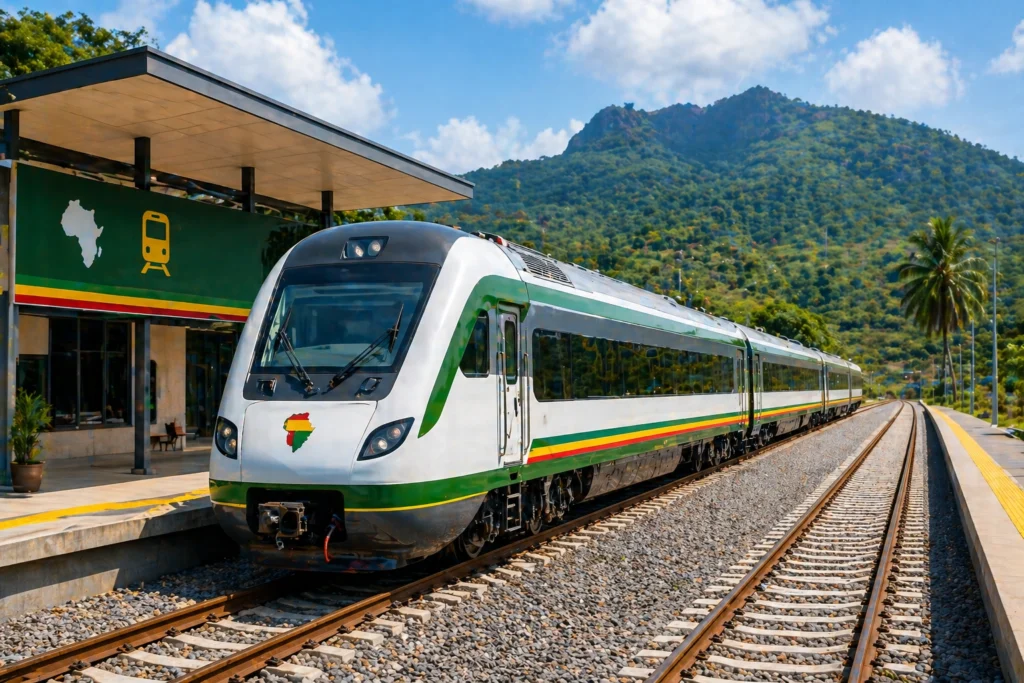
Guinea is preparing to launch passenger services on the new Trans-Guinean Railway, a landmark 650-kilometer line originally developed for iron ore freight that is now set to become a major public transport corridor. With ten planned stations and daily train operations proposed in each direction, the project could transform mobility across the country while strengthening economic links between regions.
The announcement marks a significant moment for transport in West Africa. Large-scale rail investments in the region have often focused on freight and exports, but Guinea’s decision to add passenger operations broadens the project’s impact. For citizens, it promises faster, safer and more reliable travel. For businesses, it creates new access to labor, markets and services. For tourism, it opens fresh possibilities in destinations that have long been harder to reach.
Freight Megaproject Gains Public Travel Role
The Trans-Guinean Railway was designed to connect the Simandou iron ore deposits with a new export port at Morebaya in Forécariah prefecture. Its primary purpose remains the movement of large mineral volumes to global markets, making it one of the most important infrastructure developments in Guinea’s history.
Now, by integrating passenger transport into the same corridor, the railway shifts from an industrial asset to a broader national development tool.
That dual-use model can maximize the long-term value of the investment by serving both international trade and domestic mobility needs.
What Passenger Services Will Offer
According to project plans, the route will feature ten stations positioned across key prefectures served by the railway. Passenger trains are expected to run twice daily in each direction once stations and supporting systems are fully completed.
For travelers, that means a structured alternative to long-distance road journeys, which can be slow and challenging in some areas due to terrain and road conditions.
Rail travel can also bring greater schedule reliability, more comfortable journeys and lower transport stress for regular commuters, students and families.
If fares remain accessible, the line could become an important everyday service rather than only a flagship infrastructure project.
Strong Benefits for Communities and Regional Access
One of the biggest advantages of passenger rail is improved access to essential services.
Residents in regional areas could travel more easily to urban centers for healthcare, education, administration and employment. Businesses may find it easier to move staff and connect with suppliers or customers in other parts of the country.
Better internal connectivity often delivers long-term social gains by reducing geographic isolation and expanding opportunity beyond major cities.
For Guinea, where infrastructure gaps have historically limited movement, the railway could become a catalyst for more balanced national development.
Tourism Potential Across Guinea
Passenger rail can also support the visitor economy. Easier domestic transport often encourages both local tourism and international exploration beyond capital cities.
As access improves, travelers may be more likely to visit cultural sites, natural landscapes and lesser-known communities across the country. Rail journeys themselves can also become part of the travel experience, especially on scenic long-distance routes.
For hotels, guides, restaurants and small businesses, stronger transport links can help generate new visitor demand over time.
Economic Impact Beyond Mining
The wider Trans-Guinean project is already expected to create jobs and strengthen Guinea’s role in global mining exports. Adding passenger operations extends those benefits into sectors beyond extractives.
Rail corridors often stimulate retail activity, property development, logistics services and local enterprise around station areas. Farmers and traders can gain easier access to larger markets, while workers can commute more efficiently between towns and cities.
This diversification is important because it helps infrastructure investments deliver broader returns long after construction is completed.
Safety and Readiness Remain Priority
Authorities have emphasized that passenger services will begin only after station construction, signaling systems, maintenance facilities and access roads are fully ready.
Operational safety protocols are also being developed alongside training programs for rail staff and maintenance teams. That phased approach is essential for building confidence in a new passenger network and ensuring reliable long-term service.
For first-time rail users and international partners alike, safety standards will be central to the success of the launch.
Strategic Step for West African Mobility
Across Africa, governments are increasingly investing in rail to reduce pressure on roads, improve trade efficiency and modernize transport systems. Guinea’s passenger rail move places it within that broader trend while giving the country a major strategic advantage.
A functioning national corridor that supports both exports and public travel can improve resilience, competitiveness and regional integration.
New Era for Travel in Guinea
When passenger operations begin, the Trans-Guinean Railway could redefine how people move across the country. What started as a freight line for iron ore is evolving into a transport network with the potential to connect communities, support tourism and expand economic opportunity nationwide.
For Guinea, it is more than a railway. It is the foundation of a new mobility era.
For more travel news like this, keep reading Global Travel Wire