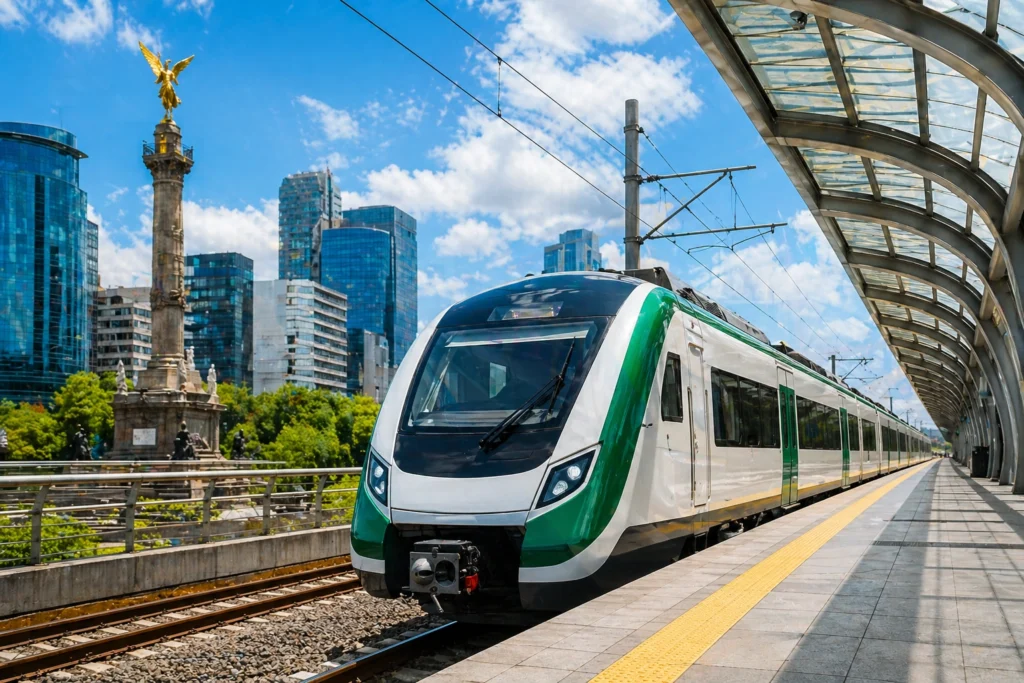
Mexico has launched a major new railway connection linking Felipe Ángeles International Airport (AIFA) with Mexico City, marking a significant step forward in the country’s transport modernization strategy. The new service is designed to deliver faster airport transfers, improved connectivity and lower-emission travel options for tourists, commuters and business travellers.
The rail project strengthens access to one of Mexico’s newest aviation gateways and aims to make airport journeys more efficient while easing pressure on heavily congested roads across the capital region.
Faster Airport Transfers Redefine the Travel Experience
Felipe Ángeles International Airport is located around 45 kilometres north of central Mexico City. Since opening, surface access has been a key consideration for passengers choosing between the city’s airports. The new railway line directly addresses that challenge by offering a journey of under 40 minutes between the airport and key urban areas.
For travellers, predictability is one of the biggest advantages. Rail services reduce exposure to traffic congestion, road delays and peak-hour bottlenecks, creating a more reliable option for catching flights or reaching the city after arrival.
Tourism Benefits as Visitors Gain Easier Access
The launch is expected to strengthen Mexico City’s tourism appeal by simplifying transfers for international and domestic visitors. Faster airport access can significantly improve the first and last stages of a trip, especially for short-break travellers and business visitors working to tight schedules.
Visitors arriving at AIFA will now find it easier to reach major attractions such as the historic centre, the Zócalo, Chapultepec Park and the Frida Kahlo Museum. Improved transport links can also encourage longer stays and higher visitor spending by making travel planning smoother and less stressful.
New Rail Infrastructure Supports Modern Mobility
The project includes upgraded tracks, electrification systems, signalling technology and integrated transport systems designed to improve speed, reliability and passenger comfort. These investments place the new line within a broader trend of smart urban mobility projects being adopted by major cities worldwide.
Modern signalling and communication systems help increase operational efficiency and safety, while integrated design allows smoother connections with other transport networks serving the capital. That means passengers can continue their journey by metro, bus or other services with fewer delays.
Greener Travel Option Advances Sustainability Goals
The new rail connection is also a major environmental milestone. By shifting more passengers from private cars, taxis and buses to electric rail, the project can help lower emissions and reduce road congestion.
Sustainable airport access is becoming increasingly important for global destinations seeking cleaner growth. Rail links often provide one of the most effective ways to balance rising passenger demand with environmental targets, particularly in large metropolitan areas where traffic and air quality remain ongoing concerns.
Daily Commuters Gain a Reliable Alternative
While tourists are a major beneficiary, local commuters may feel the biggest long-term impact. Residents travelling between northern suburbs, employment zones and central Mexico City now have another high-capacity transport option that avoids unpredictable road traffic.
For workers and students, shorter and more dependable travel times can improve daily productivity and quality of life. Expanded rail use may also reduce pressure on existing bus corridors and urban highways, creating wider benefits across the transport system.
Economic Growth Expected Around the New Corridor
Major transport projects often generate benefits far beyond mobility, and the AIFA rail link is expected to support economic activity across the region. Better airport access can stimulate tourism, attract business investment and improve logistics efficiency linked to air travel.
Local businesses near stations and interchange points may benefit from higher footfall, while long-term operations and maintenance of the line can create ongoing employment opportunities. Improved connectivity also strengthens the competitiveness of the airport itself by making it more attractive to airlines and passengers.
Why Airport Rail Links Matter Globally
Around the world, cities are investing in direct airport rail services as travellers increasingly demand speed, convenience and sustainable transport. From Europe to Asia and the Americas, rail-connected airports often outperform road-only hubs in passenger satisfaction and accessibility.
Mexico’s latest launch reflects that global shift. By integrating aviation and rail infrastructure, the country is building a more resilient transport ecosystem capable of supporting future tourism growth and urban expansion.
A New Era for Travel in Mexico
The opening of the railway between Felipe Ángeles International Airport and Mexico City represents more than a new route. It signals a broader commitment to modern, efficient and environmentally responsible travel.
With faster transfers, stronger tourism links and better everyday mobility, the new connection is set to become a key part of how travellers move through one of Latin America’s most dynamic capitals.
For more travel news like this, keep reading Global Travel Wire