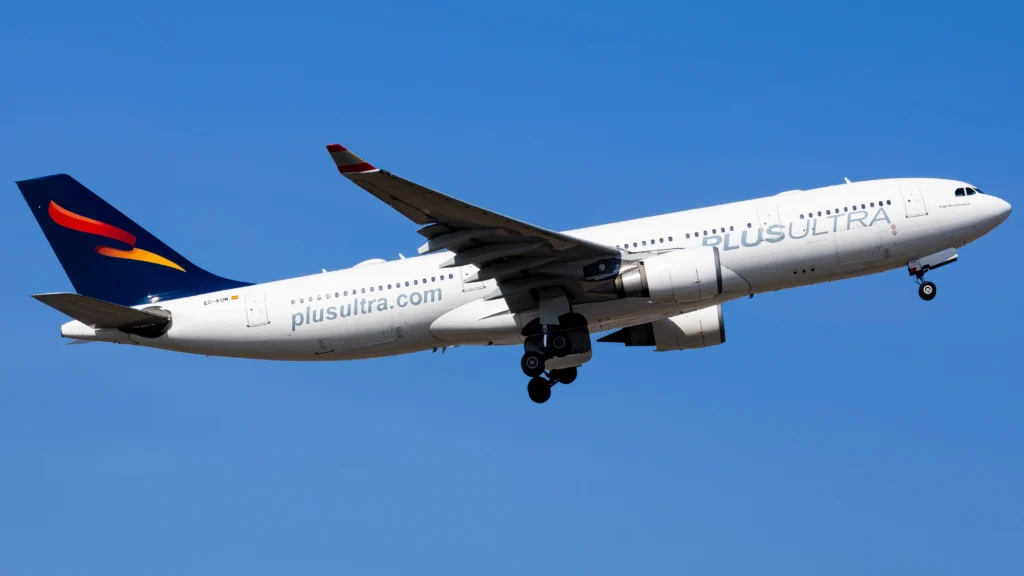
The transatlantic air corridor between Madrid and Havana is emerging as one of the most strategically significant aviation routes in Europe and the Caribbean as Plus Ultra Líneas Aéreas and Cubana de Aviación deepen their operational partnership to maintain nonstop connectivity between Spain and Cuba in 2026.
At a time when geopolitical pressures, operational restrictions, and shifting aviation economics continue reshaping international air travel, the Madrid-Havana route has become a critical lifeline for tourism, commerce, and cultural exchange between Europe and the Caribbean.
The partnership between the Spanish carrier and Cuba’s national airline now plays a central role in preserving one of Cuba’s most important long-haul international gateways, supporting visitor arrivals, cargo movement, and diplomatic connectivity.
Plus Ultra Strengthens Havana Operations Through Wet-Lease Partnership
The backbone of the Madrid-Havana service is a sophisticated wet-lease arrangement that allows Plus Ultra to operate flights on behalf of Cubana de Aviación using Spanish-registered Airbus A330 aircraft and European-certified operational standards.
Under the agreement, Plus Ultra supplies the aircraft, pilots, cabin crew, maintenance services, and insurance coverage while flights continue operating under Cubana de Aviación’s network structure.
The model has become increasingly important for maintaining operational continuity on the route while ensuring compliance with international aviation safety regulations and European oversight standards.
Travelers departing from Adolfo Suárez Madrid-Barajas Airport continue to rely on the service as one of the most important direct connections between Europe and Cuba, particularly for tourism, family travel, and commercial activity.
The route also supports strong demand from Cuban communities in Spain and across Europe, reinforcing Madrid’s role as Cuba’s primary European aviation gateway.
Madrid-Havana Route Remains Vital for Cuban Tourism
Tourism officials continue to view Spain as one of Cuba’s most strategically important international source markets.
The Madrid-Havana air bridge provides direct access for European visitors seeking Cuba’s historic architecture, beaches, cultural heritage, music tourism, and growing hospitality sector. Havana remains a major attraction for international travelers drawn to the city’s colonial districts, classic automotive culture, and UNESCO-recognized heritage areas.
Industry stakeholders believe maintaining reliable nonstop connectivity is essential for supporting Cuba’s broader tourism recovery and sustaining year-round international visitor flows.
Hotels, tour operators, restaurants, cruise partners, and transportation providers all benefit from stable transatlantic air access, particularly as Cuba continues efforts to modernize its tourism infrastructure and improve international arrivals.
The route also supports premium tourism segments, including cultural tourism, luxury travel, and heritage-focused itineraries connecting Spain and the Caribbean.
European Legal Protections Support Route Continuity
The Madrid-Havana corridor continues operating against a backdrop of complex international sanctions and regulatory pressures.
However, European aviation and transport frameworks provide legal protections that allow European airlines to maintain commercial operations linking Spain and Cuba.
The European Union’s Blocking Statute remains a significant component of this framework, reinforcing the ability of European companies to continue lawful operations under EU regulations despite external geopolitical pressures affecting Cuban travel and commerce.
The regulatory environment has elevated the importance of carefully structured aviation partnerships and compliance strategies, particularly for airlines operating in politically sensitive markets.
Industry analysts view the Plus Ultra and Cubana de Aviación partnership as an example of how carriers are adapting operationally and legally to preserve essential international connectivity in challenging environments.
Modern Airbus A330 Fleet Improves Passenger Experience
The deployment of Airbus A330-300 aircraft on the Madrid-Havana route has also enhanced the overall travel experience for passengers.
The widebody aircraft provide increased long-haul comfort, improved fuel efficiency, and quieter cabin operations compared with older-generation aircraft previously associated with some Caribbean routes.
Passengers benefit from larger cabins, upgraded onboard systems, and improved air filtration technologies, helping position the route as a more competitive transatlantic option for both leisure and business travelers.
The modern fleet also supports sustainability goals through lower fuel consumption and reduced emissions, an increasingly important factor as international aviation faces growing environmental scrutiny.
Operational reliability improvements have further strengthened confidence in the route, helping reduce disruptions and delays that historically affected long-haul Caribbean operations.
Havana Airport Infrastructure Continues to Evolve
As international demand stabilizes, Havana’s José Martí International Airport continues implementing upgrades designed to improve the arrival experience for international travelers.
Airport authorities have introduced operational enhancements aimed at streamlining passenger processing and managing larger international arrivals more efficiently.
The Madrid route remains one of the airport’s highest-profile long-haul services, supporting both inbound tourism and critical cargo transport.
In addition to passenger traffic, the corridor plays an important role in transporting commercial goods, medical supplies, technology products, and logistical support tied to Cuba’s evolving private sector economy.
The combination of tourism and cargo demand reinforces the strategic importance of maintaining uninterrupted connectivity between Madrid and Havana.
A Critical Air Bridge for the Future
As airlines worldwide continue reassessing international networks, the endurance of the Madrid-Havana route highlights the continuing value of strategic aviation partnerships in sustaining global connectivity.
For Spain and Cuba, the air bridge represents far more than a transportation link. It remains a crucial channel supporting tourism, economic activity, diplomatic ties, and cultural exchange across the Atlantic.
With Plus Ultra and Cubana de Aviación continuing to reinforce operations in 2026, the route is expected to remain one of the Caribbean’s most symbolically and commercially important transatlantic connections.
For travelers, the continuation of reliable nonstop service ensures Havana remains accessible from Europe. For the aviation industry, it demonstrates how carriers can adapt through operational innovation, regulatory coordination, and strategic resilience in a rapidly evolving global market.
For more travel news like this, keep reading Global Travel Wire