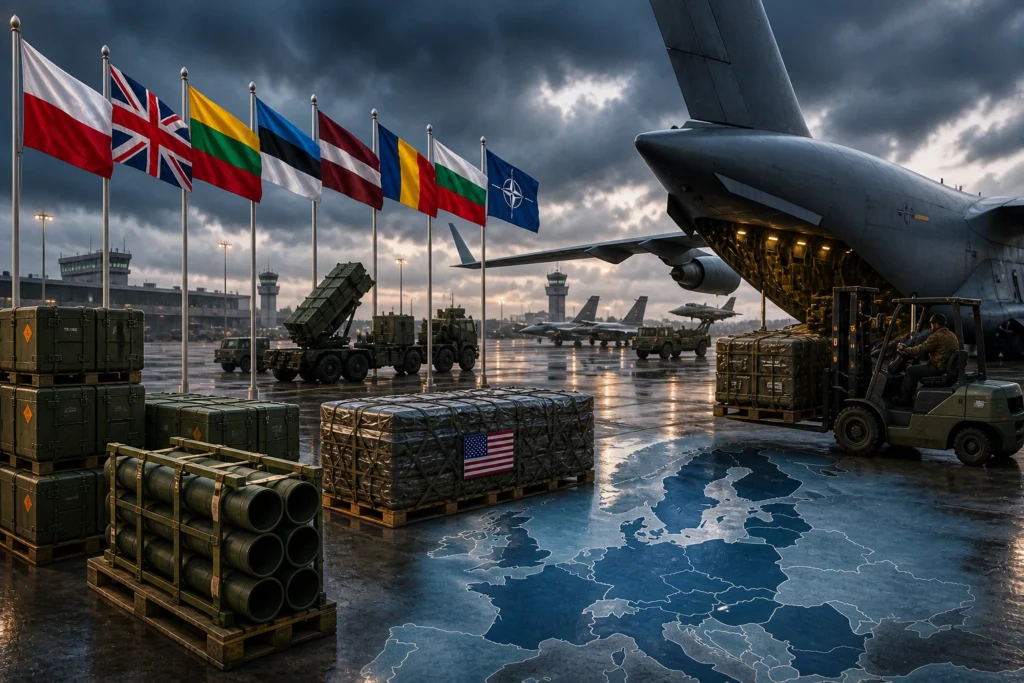
A growing wave of NATO weapon delivery delays is raising serious concerns across Europe, as countries including Poland, United Kingdom, Lithuania, Estonia, Latvia, Romania, and Bulgaria grapple with disrupted defense supply chains. The delays, linked to shifting global military priorities, are affecting critical equipment deliveries and posing challenges to regional security preparedness.
Defense Supply Chains Under Pressure
European nations have long depended on U.S. military supply systems to strengthen their defense capabilities. However, recent developments have led to delays in scheduled deliveries of advanced equipment, including air defense systems, missile platforms, and precision munitions.
These disruptions are impacting defense planning timelines, forcing governments to reassess readiness strategies and adjust procurement schedules.
Eastern Europe Faces Immediate Impact
Countries along NATO’s eastern flank are experiencing the most immediate effects. Poland and the Baltic states—Estonia, Latvia, and Lithuania—have received notifications of potential delays in key defense shipments.
These nations, which play a critical role in regional deterrence, are now facing uncertainty regarding the timing of essential reinforcements.
Strategic Implications for European Security
The delays come at a sensitive time for European security, where maintaining readiness is essential. Defense planners are increasingly concerned about potential gaps in capabilities if scheduled equipment does not arrive as expected.
The situation highlights the interconnected nature of global security dynamics, where developments in one region can have direct consequences for another.
NATO Alliance Faces New Challenges
The evolving situation is prompting broader discussions within NATO about supply chain resilience and strategic planning. Member states are evaluating how to maintain operational readiness while adapting to changing global conditions.
While the alliance remains committed to collective defense, the current challenges underscore the need for flexibility and coordination among member nations.
Europe Explores Defense Alternatives
In response to the delays, European countries are exploring options to diversify their defense procurement strategies. This includes increasing investment in domestic defense industries and strengthening collaboration within the region.
However, transitioning to alternative systems requires time, resources, and integration efforts, making it a longer-term solution rather than an immediate fix.
Broader Economic and Strategic Effects
The disruption in defense supplies is also influencing broader economic and industrial sectors. Increased defense spending and shifts in procurement strategies could reshape Europe’s defense industry landscape in the coming years.
Additionally, uncertainty in supply chains may affect long-term planning for infrastructure, logistics, and military operations.
A Turning Point for Defense Strategy
The current situation is prompting European leaders to reconsider long-standing assumptions about defense supply reliability. Greater emphasis is being placed on self-sufficiency and resilience to ensure that future disruptions can be managed more effectively.
This shift may lead to increased investment in regional production capabilities and new partnerships within Europe.
Looking Ahead
As NATO members navigate these challenges, maintaining stability and readiness remains a top priority. Governments are working to address immediate gaps while planning for long-term solutions that enhance resilience.
The coming months will be critical in determining how effectively Europe adapts to these changes and ensures continued security across the region.
For more travel news like this, keep reading Global Travel Wire