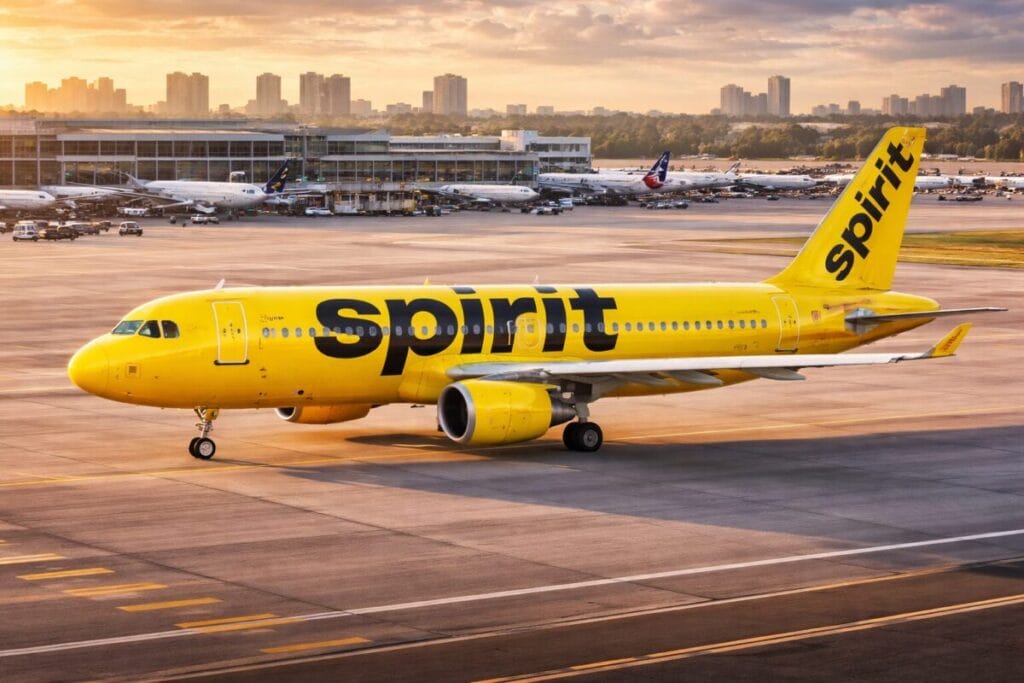
Spirit Airlines has launched a major restructuring effort that could reshape budget travel across the United States. The Florida-based airline is adjusting routes, fleet size, and fare options to remain competitive.
Airlines across the world face rising fuel prices and operational costs. Spirit Airlines now aims to adapt its ultra-low-cost model to changing travel trends.
The airline plans to reduce unprofitable routes and concentrate operations in popular leisure markets. Industry analysts are watching this transformation closely.
Many travelers rely on Spirit for affordable flights across the country. Therefore, these operational changes could affect travel choices in several U.S. cities.
The airline hopes to build a smaller and stronger network by focusing on high-demand routes.
Route Reductions Reshape Spirit Airlines’ U.S. Network
Spirit Airlines has begun removing several routes across its domestic network. The airline will exit several secondary airports that produced weak passenger demand.
Cities such as St. Louis, Phoenix, Milwaukee, and Rochester will lose Spirit Airlines service. The airline believes these markets cannot sustain profitable operations.
Instead, Spirit plans to concentrate flights in its strongest hubs. These hubs include Fort Lauderdale, Orlando, Las Vegas, and the New York metropolitan area.
Leisure travelers continue to drive demand in these regions. Popular beach destinations and entertainment cities attract consistent passenger traffic.
By focusing on fewer airports, the airline hopes to improve aircraft utilization. Higher demand routes allow airlines to operate more efficient schedules.
Travel experts believe this strategy may stabilize the airline’s finances.
Spirit Shifts Toward Comfort with New Fare Options
Spirit Airlines built its reputation on extremely low fares and basic service. However, the airline now plans to introduce upgraded seating experiences.
The airline recently launched new fare categories designed for comfort. These include Spirit First and Premium Economy style seating.
Travelers can now select larger seats and extra legroom options. These seats appear on many aircraft within the airline’s Airbus fleet.
Spirit also offers bundled travel options such as “Go Big” and “Go Comfy.” These packages include benefits like priority boarding and dedicated overhead space.
Some bundles also include blocked middle seats for additional comfort. The airline hopes these upgrades will attract travelers seeking better in-flight experiences.
Budget airlines increasingly introduce similar upgrades to compete with traditional carriers.
Fleet Downsizing Becomes a Core Part of the Plan
Spirit Airlines also plans to reduce its aircraft fleet significantly. Before restructuring, the airline operated more than two hundred aircraft.
The airline now plans to operate between seventy-six and eighty aircraft by late 2026. This reduction represents a major change in operational scale.
The company has already sold or returned many Airbus A320 and A321 aircraft. These aircraft formed the backbone of Spirit’s previous network.
Reducing fleet size will lower leasing and maintenance costs. Company leaders estimate savings of hundreds of millions of dollars each year.
Airline restructuring also affects staffing levels. Spirit has already adjusted its workforce to match the smaller fleet.
Some pilots and cabin crew received furlough notices during the restructuring. However, the airline has also recalled several pilots after staffing shortages emerged.
International Routes Also Face Significant Changes
Spirit Airlines has also reduced several international routes. The airline will eliminate several destinations in the Caribbean and Central America.
Flights to locations such as Grand Cayman and Managua will no longer operate. San Salvador also appears among the affected destinations.
These changes mainly affect routes from South Florida. Spirit historically relied on these routes for leisure travel demand.
However, rising operational costs have reduced profitability on several routes. The airline has decided to prioritize its strongest international markets.
Travelers in some U.S. cities may now have fewer direct flights to tropical destinations. Other airlines may fill these gaps with higher ticket prices.
Industry analysts believe this step reflects financial caution rather than long-term withdrawal.
Leisure Destinations Remain the Airline’s Priority
Spirit Airlines now focuses strongly on leisure travel routes. Beach destinations and resort areas remain central to the airline’s network.
Florida continues to play a major role in Spirit’s strategy. Cities such as Fort Lauderdale and Orlando attract millions of tourists each year.
Las Vegas also represents a strong leisure travel market. The city’s entertainment industry drives constant demand for flights.
The airline also maintains routes to Caribbean destinations with strong passenger demand. Vacation travelers often choose budget airlines for affordable trips.
By concentrating on these markets, Spirit aims to maintain strong seat occupancy rates.
Industry Challenges Continue to Pressure Budget Airlines
The global airline industry currently faces several challenges. Fuel costs have increased significantly due to geopolitical tensions and supply constraints.
Budget airlines operate with thinner profit margins than traditional carriers. Therefore, sudden cost increases can affect financial stability.
At the same time, travelers now expect more comfort during flights. Airlines must balance affordability with improved passenger experiences.
Spirit Airlines hopes its hybrid approach will address both concerns. The airline wants to maintain low fares while offering optional comfort upgrades.
This strategy reflects wider changes across the airline industry.
Future Success Will Depend on Cost Control and Passenger Demand
The success of Spirit Airlines’ restructuring plan remains uncertain. The airline must carefully manage costs while rebuilding passenger confidence.
A smaller network could help the airline maintain stable operations. However, competition remains strong from both low-cost and traditional airlines.
Fuel price volatility also creates long-term financial uncertainty. Airlines must adapt quickly to changing global conditions.
Spirit Airlines believes its new strategy offers a path forward. The company hopes to become a leaner and more flexible airline.
If the plan succeeds, Spirit may emerge stronger by 2027. The airline could also reshape how budget carriers operate in the modern travel industry.
For travelers, the changes signal a new era for low-cost flights in the United States.
For more travel news like this, keep reading Global Travel Wire