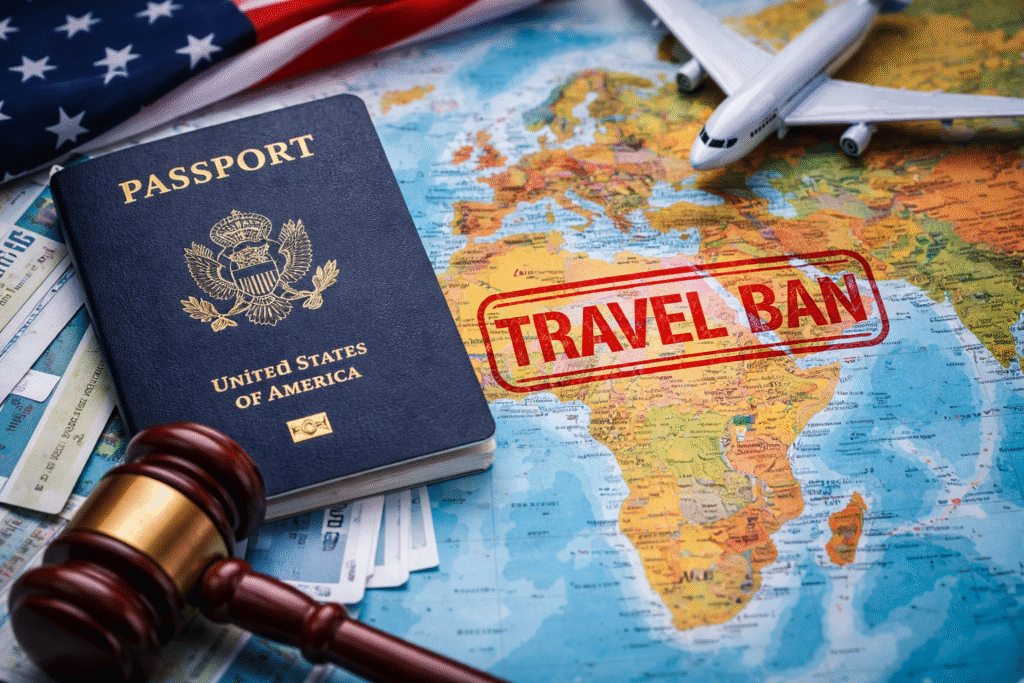
The United States has announced a major expansion of its travel ban, adding seven more countries—Syria, Burkina Faso, Mali, Niger, South Sudan, Laos, and Sierra Leone—to its list of nations facing full entry restrictions. The new rules take effect on January 1, 2026, and signal a major shift in U.S. tourism, mobility, and international engagement.
The move has drawn global attention due to its broad impact on international travelers, tourism markets, and diplomatic relations. With the updated policy, travelers from 22 countries now face full or partial restrictions when seeking entry to the U.S.
Why the U.S. Expanded Its Travel Restrictions
The White House cited concerns over insufficient security cooperation, limited traveler-screening capacity, and instability in several regions. The administration stated that the newly added nations lack reliable systems for verifying identity documents and supporting international information-sharing norms.
Countries like Syria and South Sudan continue to face internal conflict and political strain, which complicates passport management and border-control functions. Meanwhile, nations such as Burkina Faso and Mali are navigating rising security threats that have disrupted regional stability.
Full Travel Ban Countries: Who Is Affected?
The updated list imposes full bans on nationals of:
- Syria
- Burkina Faso
- Mali
- Niger
- South Sudan
- Laos
- Sierra Leone
A full ban restricts travel for tourism, business, education, and most family-based visas. It halts all non-essential travel and sharply limits global mobility for millions of people in affected regions.
Syria remains one of the most scrutinized countries due to its prolonged conflict and weakened administrative structure. Similar concerns apply to the Sahel region, where several nations face fragile political conditions and ongoing security challenges.
Partial Restrictions on Additional Nations
Fifteen other countries now face partial restrictions rather than full bans. These include:
- Nigeria
- Eritrea
- Iran
- Somalia
- Yemen
Travelers from these nations may still apply for certain visas, but screening will be stricter, documentation requirements heavier, and approval rates lower. These measures reflect U.S. concerns over identity verification, border-control capacity, and information-sharing practices.
Tourism Impact: Reduced Mobility and Economic Ripples
The United States is one of the most visited countries in the world. The expanded travel ban will significantly reduce visitor flows from Africa, the Middle East, and parts of Asia. Many travelers from the affected nations visit the U.S. for leisure, higher education, conferences, medical treatment, and business development. The ban disrupts all these pathways.
International tourism analysts expect:
- Reduced tourist arrivals from emerging markets
- Lower educational enrollment from restricted nations
- Economic impacts on U.S. cities that rely on long-haul visitors
- Increased rerouting of global travel toward alternative destinations
For affected travelers, the ban closes off one of the world’s most sought-after routes for cultural exchange, entrepreneurship, and global connection.
Diplomatic Strain and Regional Reactions
Governments of the affected countries have voiced concerns about the long-term effects on bilateral relations. Many nations already face development challenges, and the ban further complicates their diplomatic outreach, global partnerships, and international engagement.
African nations, now heavily represented on the list, may interpret the ban as a signal of reduced cooperation from the U.S. Regions already dealing with conflict, climate-driven displacement, and economic strain may face deeper isolation.
Global Tourism Shift: New Routes and New Hubs
With the U.S. tightening entry for millions of potential travelers, other destinations may see a rise in demand. Countries with flexible visa policies, expanding tourism sectors, and stable political environments may attract travelers who previously prioritized the U.S.
Destinations likely to benefit include:
- Canada
- Western Europe
- Southeast Asia
- Gulf nations
- Australia and New Zealand
The redirection of global mobility could reshape international tourism patterns for years.
A Reflection of Wider U.S. Immigration Trends
The expanded travel ban aligns with broader U.S. policy trends emphasizing strong borders, national security, and controlled migration pathways. Recent years have seen stricter visa vetting, adjustments to refugee programs, and heightened screening measures at entry points.
The 2026 expansion demonstrates the administration’s continued focus on risk-based traveler assessment and restrictive immigration practices.
What Comes Next for International Travelers?
As 2026 approaches, travelers from restricted nations are exploring alternative pathways for global mobility. International students and business travelers are especially impacted, as the U.S. is a leading destination for innovation, research, and investment opportunities.
Travel analysts expect rising demand for digital visas, regional mobility agreements, and travel corridors that allow smooth entry to other global hubs.
Conclusion: A Transformative Move with Worldwide Impact
The U.S. travel ban expansion will reshape tourism, global travel patterns, and diplomatic relations. While the stated goal is national security, the ripple effects reach far beyond U.S. borders. Economies, families, international students, and business networks will feel the impact.
As the world adapts to these new restrictions, global mobility is entering a period of significant change—one that may redefine how people move, connect, and explore across borders.
For more travel news like this, keep reading Global Travel Wire