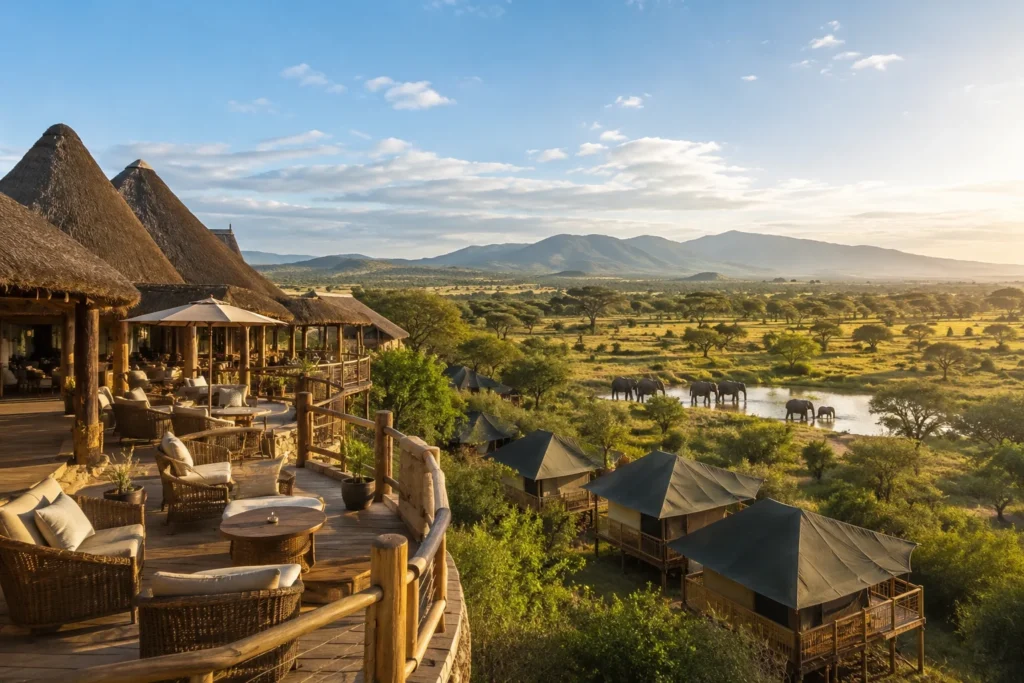
As global travelers increasingly seek high-value experiences without paying top-tier prices, the future of African tourism is shifting toward a crucial yet historically overlooked sector: the mid-market hospitality segment.
For decades, the broader travel narrative surrounding the continent centered on ultra-luxury safari lodges, exclusive reserves, and niche expedition travel. While those offerings successfully positioned the region as a premier luxury destination, they also created a stark divide in accommodation options. The market has largely consisted of high-end resorts on one side and basic, unstandardized lodging on the other.
Recent official data demonstrates that global demand for international travel remains strong, yet consumer spending habits are evolving. International tourism statistics published by UN Tourism indicate that the African continent welcomed 81 million international arrivals, marking an 8% increase and solidifying its position as one of the world’s fastest-growing destination regions. However, sustaining this momentum requires addressing structural gaps in lodging, regional transportation, and multi-destination travel services.
Establishing a professionally managed, standardized middle tier has become a vital priority for regional development agencies, tourism ministries, and commercial operators across the continent.
Unlocking Growth Through Mid-Market Hospitality Development
While hotel development pipelines across key African financial hubs continue to expand, institutional investment has historically leaned toward luxury assets. This focus has left a distinct shortage of mid-scale, reliably branded accommodations.
The lack of consistent mid-market supply limits the industry’s ability to attract budget-conscious international visitors, business travelers, and regional tourists. Much of the continent’s existing mid-tier inventory consists of independent properties that often struggle with distribution visibility, variable service standards, and limited access to international booking systems.
Addressing this shortage is essential for dispersing tourism revenue beyond traditional flagship destinations. High-end luxury travel tends to concentrate economic impact within isolated geographic corridors, such as specific national parks or primary coastal cities. A robust mid-market encourages longer stays, self-drive itineraries, and exploration of secondary cities and regional heritage sites, driving broader economic distribution.
The Demographic Engine Driving Regional African Travel
The push for mid-tier travel infrastructure is also being fueled by internal demographic trends across the continent. Official benchmarks from the African Development Bank estimate Africa’s growing middle class at between 170 million and 350 million people. Combined with a rapidly growing, tech-savvy youth demographic, this rising consumer base is creating unprecedented demand for intra-African travel.
Younger regional travelers prioritize authentic, localized cultural experiences over standardized luxury environments. They expect modern digital amenities, clear pricing, flexible booking processes, and reliable service delivery.
Meeting the needs of this demographic requires hybrid operational models. Hospitality providers must combine the technological efficiency, loyalty frameworks, and quality assurance of international networks with authentic local management and localized design.
Addressing Cross-Border Friction and Travel Infrastructure Bottlenecks
Expanding mid-market accommodations is only one part of building a mature travel ecosystem. The long-term growth of African tourism depends equally on improving travel infrastructure and eliminating operational friction between destinations.
Travelers rarely view accommodations, transit, and excursions as isolated transactions; they experience them as a single, continuous journey. Moving smoothly across national borders within the continent remains complex.
Data from the African Visa Openness Index published by the African Development Bank shows that African travelers still require advance visas for approximately 47% of intra-African trips. While several nations have implemented visa-on-arrival policies, e-visa systems, or bilateral travel agreements, regulatory barriers continue to constrain seamless regional mobility.
Air connectivity is gradually improving through expanded regional routes and international flight corridors, particularly linking African hubs with the Middle East and Europe. However, flight schedules between neighboring countries can be limited and costly, making multi-country itineraries difficult to organize for mid-budget travelers. Inconsistent ground transport, fragmented booking channels, and varying border protocols further complicate cross-border transit.
Connecting the Ecosystem to Build Long-Term Visitor Trust
To capture the next wave of global and regional demand, the sector must transition from isolated property development to fully integrated ecosystem planning. Modern travelers increasingly seek end-to-end reliability when planning trips to emerging markets.
Building interconnected tourism networks requires close collaboration between public agencies and private operators. Forward-looking hospitality groups are expanding their operational scope beyond hotel management by partnering with vetted local tour operators, organizing ground logistics, and facilitating multi-destination regional packages.
When destinations provide consistent standards across accommodations, transport, and guided services, they reduce consumer uncertainty and build long-term destination trust. Simplifying the traveler journey through integrated booking tools and verified ground services makes multi-stop African itineraries easier to purchase and execute.
The future competitiveness of African tourism will not depend solely on expanding luxury capacity. Destinations and operators that successfully build reliable mid-market infrastructure, improve regional connectivity, and deliver seamless travel experiences will lead the next major era of sustainable tourism growth across the continent.
For more travel news like this, keep reading Global Travel Wire