Artificial intelligence and advanced digital technologies are rapidly transforming global economic sectors, offering vital pathways to optimise energy consumption, enhance operational efficiency, and shrink environmental footprints. According to official remarks by Ciyong Zou, Deputy to the Director General and Managing Director of the Directorate of Technical Cooperation and Sustainable Industrial Development at the United Nations Industrial Development Organization (UNIDO), digitalisation provides practical, scalable tools to transition resource-heavy sectors toward greener models. For the global hospitality and travel industry—a sector closely tied to energy infrastructure, supply chains, and local ecosystems—these technological shifts present major opportunities for sustainable tourism development.
Speaking during the AIM Global Action Forum 2026 in Vienna, a flagship gathering organised by UNIDO to mark the organisation’s 60th anniversary, Zou emphasised that smart technologies are reshaping how industries manage resources. While the discussions centred on broader industrial modernisation, the principles of energy optimisation, circular resource management, and clean infrastructure directly underpin the future of eco-friendly travel destinations and hospitality operations.
Bridging the Green Transition Gap in Developing Destinations
A central theme of UNIDO’s current mandate is ensuring that developing economies are not left behind as global industries adopt low-emission frameworks. Many emerging travel destinations rely heavily on traditional energy grids, water-intensive hospitality operations, and carbon-heavy transport networks. Transitioning these local economies toward sustainable tourism development requires both technical expertise and accessible capital.
Zou underscored the critical role of international cooperation in facilitating this shift. By delivering targeted technological solutions alongside financial mechanisms, multilateral organisations aim to help developing nations pivot away from carbon-intensive practices toward low-emission, environmentally resilient growth paths. For tourism-dependent regions, upgrading local power grids, waste management facilities, and agricultural supply chains through clean industrial practices ensures that destination growth does not come at the expense of natural heritage.
Measuring Real-World Impact: Emissions, Water, and Circularity
As global travellers and policymakers place greater scrutiny on environmental accountability, the focus of development agencies has shifted from simple project volume to measurable ecological and socioeconomic outcomes. According to UNIDO’s strategic framework outlined during the Vienna forum, successful modernisation is evaluated through concrete indicators:
Carbon Dioxide Reduction: Deploying smart energy management systems across hospitality properties, transport hubs, and regional manufacturing suppliers to lower greenhouse gas emissions.
Water Conservation: Implementing automated monitoring and recycling technologies to reduce freshwater consumption in water-stressed tourist destinations.
Circular Economy Integration: Encouraging hotels, resorts, and local service providers to adopt circular principles that minimise single-use waste, repurpose materials, and generate higher economic value using fewer raw resources.
Local Employment Generation: Creating skilled green jobs within local communities, ensuring that technological upgrades directly benefit regional workforces.
By embedding circular economy standards into local supply chains—from food production and textile manufacturing to construction—destinations can significantly reduce the ecological footprint associated with visitor arrivals.
Practical AI Applications Transforming Hospitality and Travel Supply Chains
During expert sessions at the AIM Global Action Forum 2026, specialists examined how artificial intelligence is already streamlining operations across businesses of all sizes. For the tourism and hospitality ecosystem, which relies heavily on small and medium-sized enterprises (SMEs) such as boutique hotels, tour operators, and artisanal suppliers, accessible AI tools are proving particularly transformative.
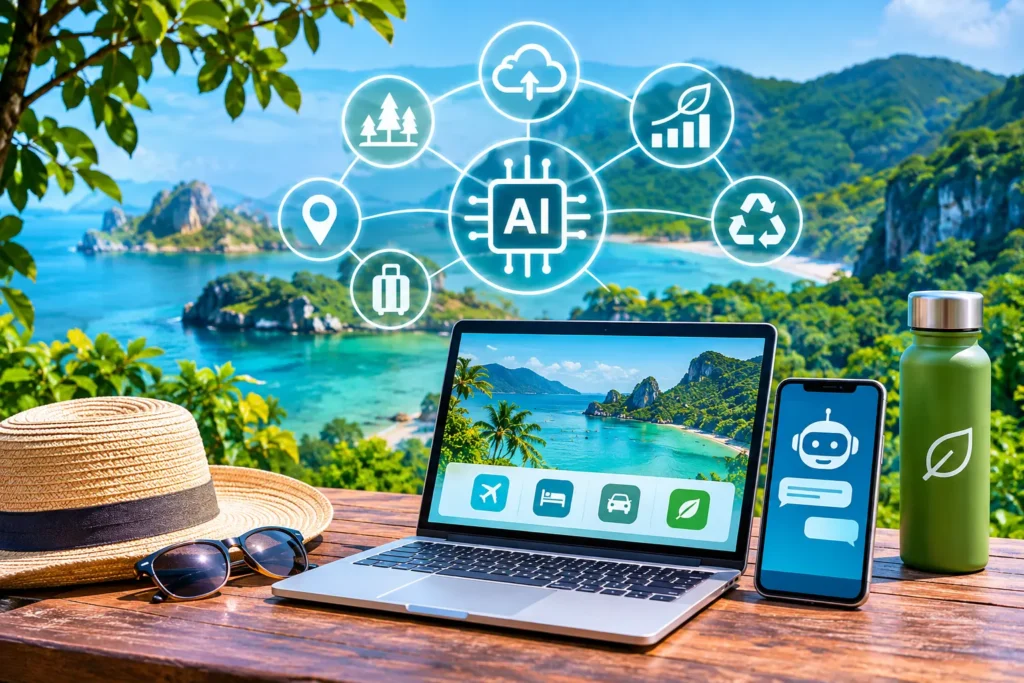
Automated resource management systems now allow hospitality facilities to predict occupancy patterns and adjust heating, cooling, and lighting in real time, cutting unnecessary energy waste. In parallel, AI-driven supply chain optimisation helps tourism operators source local goods more efficiently, reducing food spoilage and lowering transportation emissions. Automated quality control and predictive maintenance further extend the lifespan of infrastructure, aligning daily business operations with long-term sustainability goals.
However, experts at the Vienna forum noted that widespread adoption depends on strong foundational support. Expanding digital infrastructure, investing in workforce training, securing green financing, and enacting supportive government policies remain essential prerequisites for enabling small tourism enterprises to harness digital tools effectively.
Multilateral Cooperation and the Road to 2027
Strengthening cross-border partnerships remains vital to scaling these innovations globally. Zou highlighted UNIDO’s ongoing collaboration with the BRICS group of nations as a key driver for advancing sustainable development goals. Building on foundational initiatives established during the consecutive presidencies of India, Brazil, and Russia, UNIDO looks forward to deepening its technical cooperation under China’s upcoming BRICS chairmanship in 2027.
Because BRICS nations represent major global tourism markets as well as vital engines of technological innovation, coordinated policies among these economies carry substantial weight. Joint efforts in clean energy deployment, digital infrastructure expansion, and sustainable supply chain standards create a blueprint that can be adapted across emerging travel markets worldwide.
As the global travel sector continues to expand, aligning tourism growth with environmental stewardship is no longer optional. Through the strategic integration of artificial intelligence, circular economy practices, and international financial support, sustainable tourism development is evolving from an aspirational goal into an achievable operational standard for destinations across the globe.
For more travel news like this, keep reading Global Travel Wire