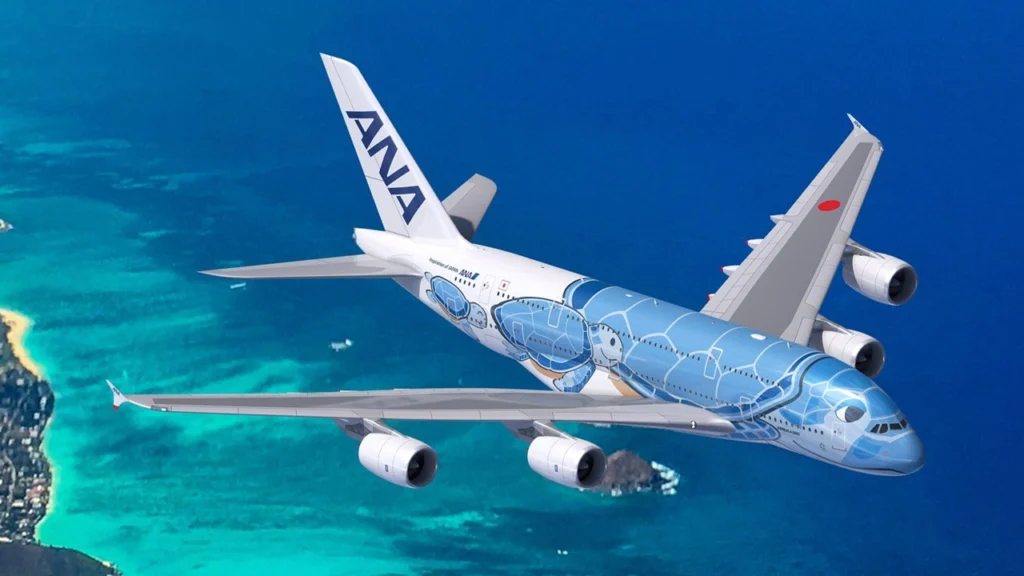
All Nippon Airways has introduced an artificial intelligence-powered scheduling system designed to improve flight crew planning, operational efficiency and workforce management across its extensive aviation network.
The Japanese airline began full-scale operation of the new technology in April 2026. ANA jointly developed the system with R&D Co., Ltd., a technology startup originating from the University of Tokyo.
Known as AI Scheduler, or AIS, the platform creates monthly schedules for approximately 2,000 ANA flight crew members. It processes complex aviation regulations, safety standards, professional qualifications, rest requirements and individual leave requests.
The system follows around four years of proof-of-concept testing and development. Its introduction represents another important step in ANA’s wider digital transformation strategy.
For passengers, the technology will largely remain invisible. However, more efficient crew planning may support reliable flight operations, faster operational decision-making and improved responses when schedules change.
AI processes complex crew requirements
Crew scheduling is one of the most demanding planning activities within an airline.
Every flight requires properly qualified pilots who comply with aviation laws, duty-time limitations, training requirements and fatigue-management standards. Airlines must also consider aircraft types, route qualifications, rest periods and employee availability.
A small change involving one flight can affect multiple crew assignments. This creates a complex chain of operational adjustments across an airline network.
Previously, ANA scheduling specialists manually balanced thousands of conditions when developing monthly rosters. The work depended heavily on professional experience and could take several weeks to complete.
AIS automatically checks standard restrictions and produces roster proposals that meet the necessary conditions. It can analyse many possible crew combinations significantly faster than a traditional manual process.
ANA expects the system to reduce crew scheduling work by approximately 6,300 hours annually. This equals around 525 working hours each month.
Human expertise remains central
ANA has designed the platform as a hybrid system rather than a complete replacement for experienced scheduling employees.
The artificial intelligence manages structured requirements that can be clearly defined within the system. These include aviation regulations, qualification conditions, duty limits and other recurring operational restrictions.
Human specialists remain responsible for circumstances that cannot easily be converted into numerical rules. These may include unexpected exceptions, individual requirements or sensitive operational decisions.
This division of responsibilities allows employees to concentrate on complex cases while the AI performs large-scale calculations and routine checks.
The system also reproduces elements previously managed through human experience. These include balancing workloads between crew members and considering fatigue when creating schedules.
Therefore, ANA aims to combine the speed of artificial intelligence with the judgement of experienced aviation professionals.
Better planning may support passengers
Travellers will not directly interact with AIS when booking flights, checking in or boarding aircraft.
Nevertheless, crew availability remains essential to every passenger journey. Airlines cannot operate a service unless qualified crew members are available within legal duty and rest limitations.
Improved scheduling can help an airline use its workforce more efficiently while maintaining strict safety requirements. It may also make it easier to adjust crew assignments when operational conditions change.
Weather events, aircraft substitutions, airport restrictions and unexpected absences can all disrupt carefully prepared rosters.
Although ANA’s new system focuses primarily on monthly planning, stronger digital foundations may support quicker and more informed operational responses.
For passengers, these improvements could contribute to smoother services and greater operational stability. However, artificial intelligence cannot prevent every cancellation or delay, particularly when external conditions affect flights.
Safety and fatigue remain priorities
ANA stated that the platform considers aviation regulations and the airline’s advanced safety standards when preparing schedules.
Fatigue risk is particularly important because flight crew members work across early departures, overnight services, long-haul flights and changing time zones.
Schedules must provide sufficient rest while ensuring qualified personnel are available for each service. Poorly balanced rosters can affect employee wellbeing and operational resilience.
The AIS algorithm incorporates fatigue considerations and workload distribution into its proposals. Scheduling teams can then review the results and make additional adjustments where necessary.
ANA’s approach reflects the airline industry’s growing interest in using data-based tools without removing human accountability from safety-related decisions.
Airlines expand artificial intelligence investment
The launch highlights the increasing use of artificial intelligence behind the scenes of global air travel.
Airlines already use advanced technology for demand forecasting, aircraft maintenance, flight planning, revenue management and customer support. Workforce scheduling has become another major area for digital investment.
Large aviation networks generate substantial volumes of operational data every day. Intelligent optimisation tools can process this information more quickly and identify solutions that would be difficult to calculate manually.
ANA has also established group-wide principles for the responsible use of artificial intelligence. Its governance framework focuses on safety, fairness, privacy, cybersecurity and human oversight.
These safeguards are becoming increasingly important as airlines introduce AI into operational and employee-related systems.
Digital systems shape future air travel
ANA’s AI crew scheduling system demonstrates how technology can improve airline efficiency without changing the fundamental responsibility to maintain safe operations.
By automating routine restrictions and large-scale calculations, the airline can reduce manual workloads while allowing specialists to focus on decisions requiring professional judgement.
The technology may also help ANA manage workforce resources as its network evolves and passenger demand changes.
As airlines face operational complexity, labour pressures and rising traveller expectations, intelligent planning systems are likely to play a larger role across aviation.
For international travellers, the benefits may not appear on a booking screen. Instead, they may be reflected in more organised operations, stronger workforce planning and a more reliable journey from departure to arrival.
For more travel news like this, keep reading Global Travel Wire