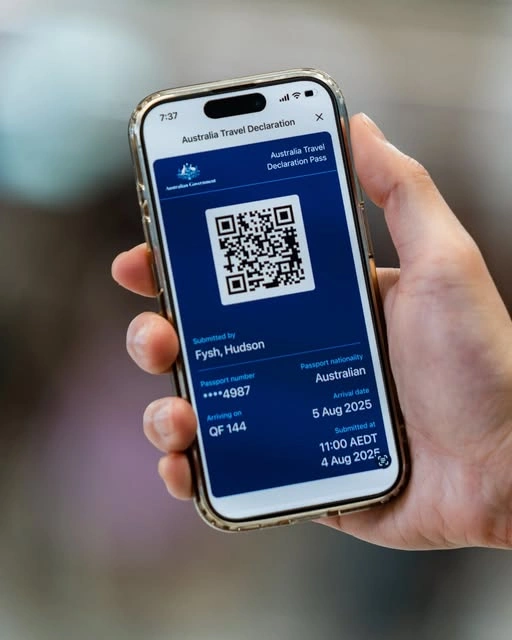
Australia has expanded its digital arrivals pilot to Melbourne Airport, giving eligible international passengers a simpler way to complete travel declarations before landing. The move introduces the Australia Travel Declaration to selected Qantas flights arriving from New Zealand and marks another step towards modernising border processing at major Australian gateways.
From 26 May 2026, eligible passengers travelling on Qantas flight QF154 from Auckland and QF178 from Queenstown can complete the declaration through the Qantas app up to 72 hours before departure. Once the form is submitted, travellers receive a digital pass with a unique QR code by email.
Passengers present the QR code to Australian Border Force and biosecurity officers after arrival, removing the need to fill out the traditional paper incoming passenger card. The system is designed to improve passenger flow while maintaining Australia’s strict customs, security and biosecurity procedures.
Melbourne Becomes Third Major Airport in Pilot
Melbourne is the third Australian gateway included in the pilot. The program first launched for selected Brisbane-bound flights in October 2024 and expanded to Sydney in August 2025.
More than 380,000 passengers have used the digital declaration since the trial began. The latest Melbourne rollout broadens access for trans-Tasman travellers while giving border agencies another opportunity to test how digital processing performs at a busy international airport.
Additional Qantas flights arriving in Melbourne are expected to join the program in the coming weeks. However, the digital card is not yet available to every passenger or every airline. Travellers who are not invited to use the Australia Travel Declaration must continue completing the standard paper arrival card.
How the Digital Arrival Declaration Works
Eligible passengers receive an invitation to complete the declaration through the Qantas app. They can submit the required information during the 72-hour period before travel and receive a QR code for presentation after landing.
The declaration supports customs and biosecurity processing by allowing relevant information to be provided before arrival. This can help officials engage with passengers earlier while streamlining clearance for travellers who comply with entry requirements.
The system does not remove Australia’s biosecurity rules. Passengers must still declare risk goods, including certain food, plant materials and animal products. Travellers carrying items that may pose a biosecurity concern should declare them even when uncertain.
Australia’s strict biosecurity controls protect agriculture, wildlife and the environment from pests and diseases. Digital processing aims to make compliance easier, not reduce the level of scrutiny applied at the border.
Faster Arrivals Could Improve Visitor Experience
The rollout has practical implications for Melbourne’s tourism sector. International arrivals are often the first experience visitors have after landing in Australia. A smoother declaration process can reduce paperwork, support more efficient passenger movement and improve the overall welcome at the airport.
Melbourne is a major tourism gateway, serving visitors travelling to the city’s cultural attractions, restaurants, events and shopping districts. The airport also supports onward journeys to regional Victoria, including coastal routes, wine regions and nature-based destinations.
For hotels, tour operators and transport providers, a more efficient arrivals process can contribute to a better visitor experience. Travellers who spend less time managing paperwork may find it easier to continue towards accommodation, tours and connecting services.
Collaboration Supports Border Modernisation
The trial brings together Qantas, the Australian Government, the Australian Border Force and the Department of Agriculture, Fisheries and Forestry. Melbourne Airport is also working with authorities and airline partners as the pilot expands.
The partnership reflects a wider trend across international aviation. Airports and governments are increasingly using digital tools to simplify passenger journeys while improving border management. Mobile declarations, automated processing and pre-arrival data can help reduce friction at airports without weakening security.
Qantas remains the only Australian airline offering the digital declaration capability through its app. The Melbourne rollout gives the carrier another opportunity to test customer demand and support future expansion.
What Travellers Need to Know
Passengers should check whether their flight is eligible before departure. Travellers invited to complete the declaration can use the Qantas app and should keep the emailed QR code accessible after landing.
Those not included in the pilot must fill out the paper incoming passenger card as usual. All arrivals should continue reviewing Australia’s biosecurity rules before packing and declare any items that may require inspection.
The Qantas digital passenger card is still a pilot, but its expansion to Melbourne Airport signals a clear direction for Australian travel. By combining convenience with strong border controls, the program could shape a faster and more traveller-friendly arrivals experience across additional airports in the future.
For more travel news like this, keep reading Global Travel Wire