France’s road-trip experience is changing as electric cars and hybrid SUVs become increasingly practical options for visitors exploring the country’s cities, coastlines, mountains and rural regions.
Cleaner-transport policies, expanding charging infrastructure and urban emission controls are influencing which vehicles travellers choose. The shift is particularly important for international visitors planning journeys that combine motorways, historic towns and remote countryside destinations.
Electric vehicles now offer a realistic option for many long-distance itineraries. Meanwhile, hybrid SUVs provide added flexibility for travellers concerned about charging availability, luggage capacity or journeys through less-connected areas.
The right choice depends on route length, accommodation, driving environment and planned city visits.
France expands its charging network
France has accelerated the installation of public charging infrastructure to make electric driving easier across the country.
By 30 April 2026, France had 194,996 publicly accessible charging points, representing annual growth of 16%. The network recorded a technical availability rate of 90%, while immediate access was available at 94% of charging stations.
This expansion is reducing one of the main concerns associated with electric road trips: finding reliable charging facilities during longer journeys.
Government planning is also focusing on major national road corridors. France intends to expand the number and power of chargers along motorways and other important routes through 2027, 2030 and 2035.
The long-term programme envisages around 22,000 rapid charging points for light vehicles across nearly 900 motorway rest and service areas by 2035. These chargers are expected to provide approximately 150 kW of power, allowing many vehicles to recharge in around 20 to 25 minutes.
Electric vehicles become road-trip ready
Modern electric cars are increasingly capable of supporting journeys between major French tourism regions.
Travellers can now consider electric itineraries linking Paris with Normandy, the Loire Valley, Bordeaux, Lyon, Provence or the Mediterranean coast. Alpine routes are also becoming more accessible as charging facilities expand near motorways, towns and accommodation providers.
Electric vehicles offer quiet operation and smooth acceleration, which can improve comfort during extended journeys. Their lower operating emissions also align with France’s effort to reduce the environmental impact of transport.
However, successful electric road trips still require planning. Drivers should identify charging stops, check charging speeds and confirm whether hotels or holiday rentals provide overnight facilities.
Motorway driving, cold weather, steep terrain and heavy luggage can also affect vehicle range.
Hybrid SUVs provide greater flexibility
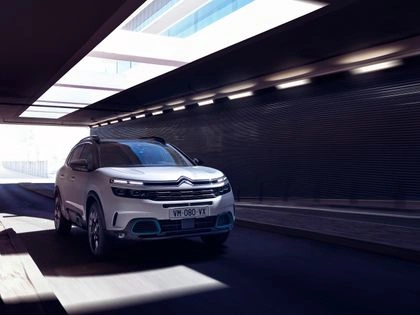
Hybrid SUVs remain a practical alternative for visitors who want cleaner driving without depending entirely on charging stops.
These vehicles combine an electric motor with a petrol engine, providing flexibility across motorways, rural roads and mountainous areas. They can be particularly useful for itineraries covering several regions or destinations where public charging may be less convenient.
Compact hybrid SUVs also provide raised seating, comfortable passenger space and useful luggage capacity.
Their smaller dimensions can make them easier to manage than large SUVs in medieval towns, narrow village streets and restricted parking areas.
Families, couples carrying sporting equipment and travellers combining cities with countryside destinations may find this category especially suitable.
Estate cars remain strong contenders
Hybrid estate cars offer another efficient option for long-distance journeys.
They generally provide large luggage areas, stable motorway handling and lower profiles than SUVs. This can improve energy efficiency while maintaining space for passengers and belongings.
Estate cars are well suited to journeys such as Paris to Bordeaux, Lyon to Provence or Normandy to Brittany.
They may also appeal to visitors planning extended holidays with several hotel stops, particularly when luggage capacity matters more than higher ground clearance.
Low-emission zones affect city access
Vehicle selection is increasingly influenced by France’s low-emission zones, known as Zones à Faibles Émissions mobilité.
Vehicles entering regulated areas may need to display a Crit’Air certificate indicating their emissions category. Local restrictions can vary by city, vehicle type and pollution level.
Electric vehicles receive the cleanest classification, while newer hybrids generally qualify for favourable categories. Older diesel vehicles may face greater limitations, reducing their usefulness for travellers who plan to enter several urban destinations.
Visitors renting vehicles should confirm the Crit’Air classification and ask whether the required sticker is already displayed.
They should also check current local rules before entering cities because regulations can change between metropolitan areas.
Road-trip planning becomes essential
Electric drivers should plan charging breaks around meals, attractions or overnight stays. This approach can turn charging time into part of the holiday rather than an inconvenience.
Travellers should also compare charging speeds because not every charging point provides rapid service. A vehicle capable of fast charging may still recharge slowly when connected to a lower-powered unit.
Hybrid drivers need less charging preparation but should consider fuel costs, parking conditions and city restrictions.
Regardless of vehicle type, travellers should review motorway tolls, parking access and seasonal traffic before departure.
Cleaner mobility reshapes French tourism
The growth of electric cars and hybrid SUVs is changing how visitors experience France.
Electric vehicles provide the strongest option for travellers seeking lower-emission journeys with carefully planned routes. Hybrid SUVs offer broader flexibility for mixed itineraries covering motorways, villages and remote destinations.
As France continues strengthening its charging network, electric road trips will become increasingly convenient.
For now, vehicle choice should reflect the journey itself. Travellers who match their car with their route can enjoy France’s landscapes, heritage cities and regional attractions with greater comfort, confidence and environmental awareness.
For more travel news like this, keep reading Global Travel Wire