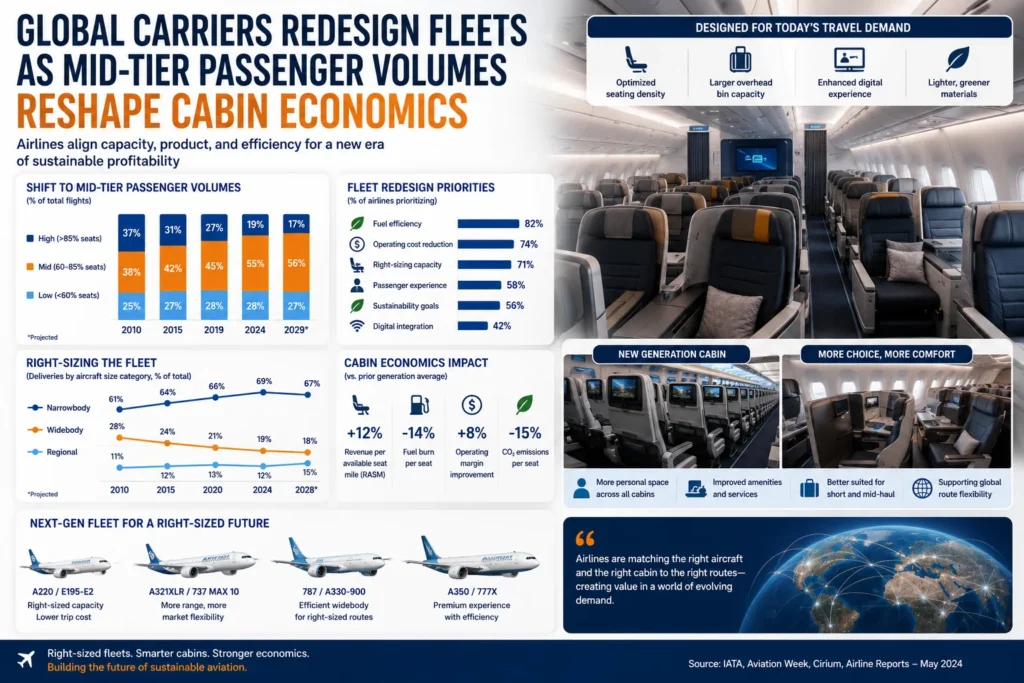
A structural transformation is sweeping through the international aviation sector as passenger preferences undergo a definitive shift toward optimized onboard space. Official fleet configuration records and carrier schedule releases for the mid-2026 travel season demonstrate that airlines worldwide are aggressively expanding their premium economy cabins. Driven by a monumental surge in mid-tier travel demand from both self-funding corporate commuters and comfort-seeking holidaymakers, this multi-billion-dollar product evolution is fundamentally altering long-haul aircraft layouts and setting new competitive benchmarks across the industry.
Statistical analysis published by global air transport boards indicates that premium seating tiers have moved from secondary luxury upgrades to essential revenue drivers. Following years of volatile demand patterns, contemporary travelers are demonstrating a persistent willingness to upgrade beyond standard economy ticket classes. By opting for mid-tier experiences, passengers are successfully securing enhanced comfort without incurring the steep pricing structures typically associated with lay-flat business class suites.
Strategic Capital Deployments and Structural Layout Overhauls
To capture this highly profitable passenger demographic, major legacy carriers are executing comprehensive cabin retrofit initiatives. Airline interior market indices reveal that specialized seating infrastructure now commands the largest individual investment share within fleet modernization portfolios. This structural reallocation of cabin space directly addresses a crucial market gap, providing commercial aviation networks with an elite revenue engine that maximizes financial yields per square foot of available cabin area.
Internal carrier revenue evaluations demonstrate that premium economy cabins generate roughly 150 to 200 percent of standard economy fares. Concurrently, they require a fraction of the capital expenditure and physical floor space demanded by business class suite retrofits. Financial tracking data underscores this efficiency, with certain major carriers noting that mid-tier cabin yield margins have officially outpaced baseline economy returns on core international routes. This unique profitability profile has triggered a competitive race among network planners to optimize seat specifications, widen row arrangements, and enhance mid-cabin hospitality configurations.
The current global deployment is highlighted by major multi-million-dollar fleet overhauls across key strategic corridors:
Emirates: The airline is aggressively reconfiguring its landmark Airbus A380 fleet, systematically reducing total seat counts to integrate sprawling 56-seat premium economy sections across its high-density widebody networks.
Air India: As part of its broad multi-year fleet transformation strategy, the carrier is executing a 400-million-dollar cabin retrofit program, systematically deploying newly configured three-class widebody jets on essential long-haul segments to London, Toronto, and New York.
Lufthansa: The European group continues to scale its dedicated mid-tier seating installations across its primary long-haul fleet, explicitly terming the cabin architecture a vital revenue-generating mechanism that produces up to 33 percent more revenue per square foot than standard seating.
Delta Air Lines: Ongoing network data reveals that expanded premium cabin offerings continue to deliver record-breaking ancillary revenues, outperforming baseline coach returns as corporate travel policies increasingly permit mid-tier flight bookings.
Driver Mechanics: The Rise of the Affluent Leisure Traveler
Civil aviation authority research associates this sustained capacity growth with a profound shift in consumer psychology. In the current economic environment, the traditional corporate travel market has evolved. While strict corporate budgeting frameworks often restrict the use of premium business class tickets for mid-level executives, current travel guidelines frequently approve premium economy cabins as an acceptable compromise that ensures workforce readiness upon arrival.
Simultaneously, affluent leisure travelers are acting as a primary growth catalyst. Driven by a desire for increased physical space during extended international flights, these passengers are viewing mid-tier ticketing as an affordable luxury. The inclusion of priority check-in privileges, accelerated security lane access, and enhanced baggage handling services—collectively grouped under premium airport support programs—adds substantial tangible value that justifies the higher ticket cost.
Technical Specifications and Cabin Comfort Benchmarks
The physical evolution of the mid-tier cabin relies on distinct engineering and spatial standard adjustments. While standard economy configurations are typically limited to an industry-average seat width of 17 to 18 inches, modern premium economy cabins feature specialized seating systems that exceed 19 inches in width.
Furthermore, passengers benefit from an additional five to seven inches of critical legroom, accompanied by multi-way adjustable ergonomic headrests, integrated leg rests, and dedicated foot support structures. Positioned strategically ahead of the aircraft wings and engines, these mid-tier cabins naturally enjoy reduced ambient noise levels, creating a quieter, more relaxing environment that enables passengers to arrive at their final destinations feeling thoroughly refreshed.
Long-Term Outlook for Global Fleet Management
As international regulatory bodies introduce increasingly stringent weight-optimization and fuel-efficiency standards, aircraft manufacturers are prioritizing lightweight, high-comfort cabin materials. Industry projections from global aviation bureaus indicate that the expansion of mid-tier cabin capacity will continue on an upward trajectory through the end of the decade, establishing it as a permanent pillar of modern multi-class aircraft configurations.
Aviation supply chain data confirms that out of the hundreds of new commercial widebody aircraft deliveries anticipated globally by the close of 2026, the vast majority are rolling off production lines with factory-installed premium economy layouts. As carriers continuously monitor cabin load factors and refine their interior allocations, the ability to deliver high-value, intermediate travel options will remain a central factor in sustaining airline profitability and meeting the expectations of the modern global traveler.
For more travel news like this, keep reading Global Travel Wire