Riyadh, Saudi Arabia, November 24, 2026 — The international travel and hospitality sector stands on the brink of a major labour challenge that could constrain its long-term expansion, according to a comprehensive white paper unveiled by TOURISE, the global tourism platform powered by the Saudi Ministry of Tourism. Titled “The Talent Imperative: How Travel and Tourism Will Build Its Next Generation Workforce,” the study outlines urgent strategies needed to attract, train, and retain skilled professionals over the coming decade.
Developed using research data and executive insights spanning aviation, hospitality, cruise lines, destination marketing organisations, online travel platforms, and higher education, the report evaluates whether the industry’s human capital can keep pace with rising global travel demand.
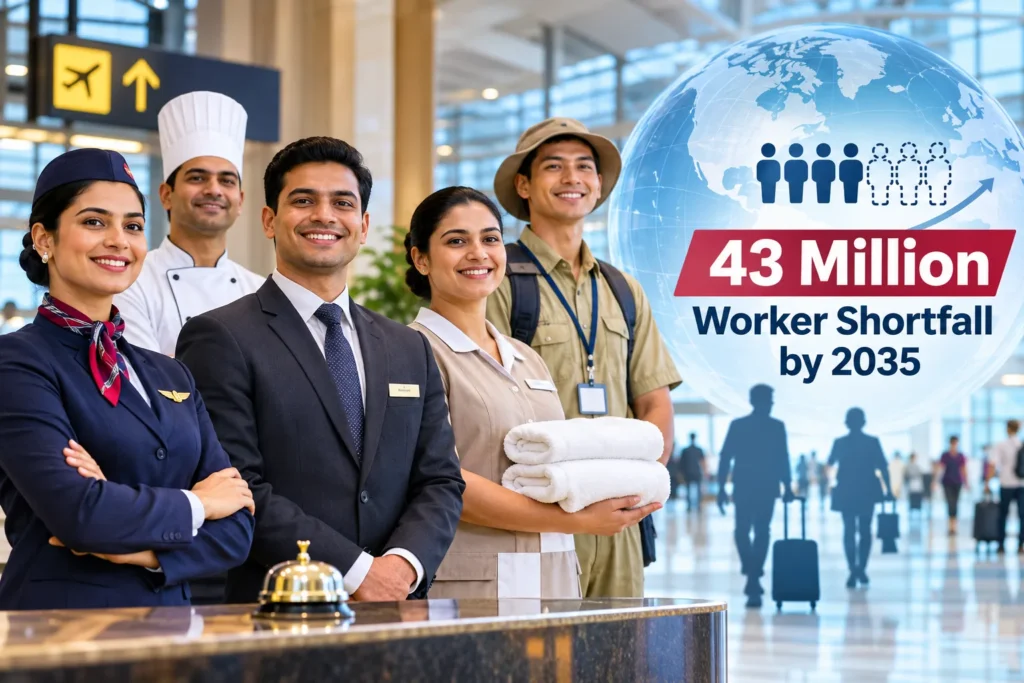
According to the official findings, the travel and tourism sector supported an all-time high of 366 million jobs worldwide in 2025. Over the next decade, the industry is forecast to generate 91 million additional roles by 2035, accounting for one out of every three net new jobs created across the global economy. Despite this robust job creation engine, labour supply is projected to fall 16% short of demand, leaving the sector facing a potential deficit of more than 43 million workers by 2035.
Investing in People Alongside Destinations
Addressing the findings, His Excellency Ahmed Al Khateeb, Minister of Tourism of Saudi Arabia and Chairman of TOURISE, emphasised that physical infrastructure alone cannot sustain the visitor economy. He noted that the next era of tourism will be shaped just as much by its people as by its destinations, calling the projected labour gap an unmistakable signal for coordinated action.
Minister Al Khateeb urged national governments, private sector operators, and academic institutions to collaborate on building clearer entry pathways into the sector, accelerating vocational skills training, and offering young professionals rewarding, long-term career trajectories. While emerging technologies will inevitably reshape daily operations, he underscored that human hospitality remains the irreplaceable core of travel.
Five Pillars Reshaping Tourism Employment
The report identifies five critical realities that public policymakers and industry employers must address to close the projected talent deficit:
Talent Shortages Threaten Sector Expansion: With a potential gap exceeding 43 million workers globally by 2035, human capital infrastructure has become just as vital to economic growth as airport capacity or hotel development.
Onboarding Speed Dictates Operational Readiness: Recruiting new staff is only the first hurdle. Survey data within the report shows that 42% of hiring managers observe new recruits requiring between four and six months to reach full operational productivity, highlighting an urgent need for structured onboarding and targeted upskilling.
Evolving Expectations of Younger Workers: Generation Z professionals place high value on workplace flexibility, clear organisational purpose, and transparent upward mobility. Tourism employers must redesign traditional roles into structured career ladders with visible advancement opportunities to improve retention.
Alignment of Local and Global Talent Pipelines: Bridging the labour gap requires stronger partnerships linking local communities, secondary schools, universities, and hospitality employers. Building accessible local training ecosystems ensures sustainable recruitment pipelines while expanding economic opportunity within host communities.
Artificial Intelligence as a Force Multiplier: Rather than replacing service professionals, artificial intelligence and automation tools can handle repetitive administrative tasks and streamline employee training. Freeing staff from routine processes enables workers to focus on empathy, cultural exchange, and high-touch guest service.
Policy Alignment and the Road to TOURISE 2027
Beyond private sector recruitment reforms, the white paper calls for closer alignment between national workforce policies, educational curricula, and evolving industry requirements. By modernising training standards and elevating the perception of hospitality careers, destinations can position themselves to capture future visitor growth without suffering service bottlenecks.
As a year-round agenda-setting platform backed by the Saudi Ministry of Tourism, TOURISE continues to convene public and private stakeholders to turn strategic research into actionable industry initiatives. Following its inaugural gathering in November 2025, the next TOURISE Summit is scheduled to take place in Riyadh from 23 to 25 March 2027, where workforce development, sustainable investment, and sector transformation will remain central priorities for global tourism leaders.
For more travel news like this, keep reading Global Travel Wire