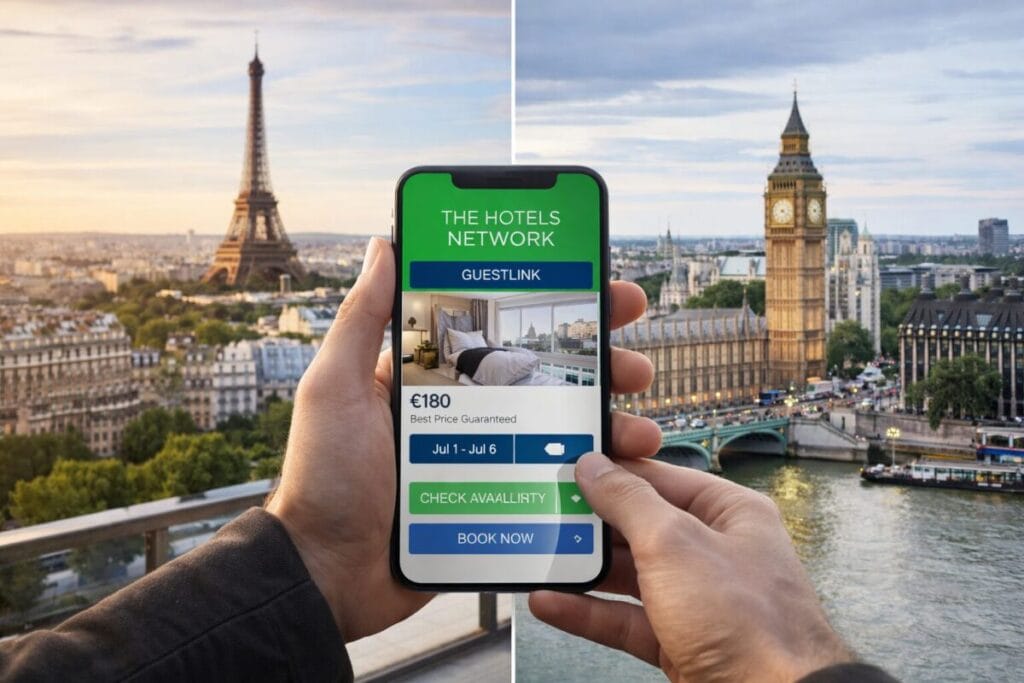
The global tourism industry is undergoing a major digital transformation as travelers increasingly rely on technology to plan and book their journeys. In this evolving landscape, The Hotels Network has introduced a new app designed to simplify hotel reservations and strengthen direct connections between travelers and hotels in two of Europe’s most popular destinations—Paris and London.
The app integrates advanced technology with direct booking systems, allowing travelers to interact directly with hotel brands rather than relying solely on third-party booking platforms. By prioritizing direct engagement, the platform aims to enhance transparency, reduce booking costs, and strengthen relationships between guests and hospitality providers.
Industry analysts say the approach reflects a growing shift in tourism, where digital tools are being used not only to improve convenience but also to support sustainable economic benefits for local businesses.
Supporting Direct Connections Between Travelers and Hotels
Direct bookings have become an increasingly important strategy for hotels around the world. Traditionally, many travelers have used online travel agencies or comparison websites to reserve accommodation. While these platforms provide convenience, they often charge significant commission fees that can reduce hotel revenue.
The Hotels Network app addresses this challenge by connecting travelers directly with hotels through their official reservation systems. This direct interaction allows hotels to present their rooms, services, and experiences in their own voice while offering travelers accurate information about pricing and availability.
For travelers planning visits to major tourism hubs such as Paris and London, the system can help simplify the booking process while potentially offering more competitive rates. Without intermediary commissions, hotels have greater flexibility to provide attractive prices and customized offers.
A Digital Shift in the Tourism Industry
Tourism organizations around the world have emphasized the importance of digital innovation in strengthening the hospitality sector. Technology platforms that support direct bookings are increasingly viewed as tools that help local businesses retain more revenue and invest in improved guest services.
By encouraging travelers to book directly with hotels, more of the revenue generated by tourism remains within the destination. This can contribute to local economic development, support job creation in hospitality, and enable hotels to enhance facilities and services for visitors.
Cities such as Paris and London welcome millions of international tourists every year, making them ideal locations for testing new digital tools that improve the travel experience. With their diverse hotel landscapes—ranging from luxury properties to boutique accommodations—both cities offer travelers a wide range of options that can benefit from direct booking technology.
Real-Time Travel Data and Accurate Booking Information
One of the key features of the Hotels Network platform is its use of advanced technology to provide real-time hotel information. The system integrates artificial intelligence tools designed to update pricing and availability instantly, ensuring travelers receive accurate data when searching for accommodation.
Real-time information helps prevent issues such as outdated listings or unavailable rooms that sometimes appear on traditional booking websites. By linking directly to hotel systems, the platform allows travelers to view current rates and secure reservations without uncertainty.
Accurate pricing transparency also builds greater trust between travelers and hospitality providers. Guests can confidently book knowing the information they see reflects the latest availability.
AI Technology Enhancing Travel Discovery
Artificial intelligence is playing an increasingly important role in how travelers discover destinations and plan their trips. Studies across the tourism sector suggest that a growing percentage of travelers now use AI-powered tools to research destinations, compare accommodations, and build travel itineraries.
The Hotels Network app uses AI to analyze travel behavior and recommend suitable accommodations based on user preferences. By understanding traveler interests and search patterns, the system can present hotel options that match individual needs.
For boutique hotels and independent properties in cities like Paris and London, this technology helps them reach global audiences who may not otherwise discover them through traditional booking platforms.
This creates new opportunities for smaller hotels to compete with large international chains while showcasing unique experiences that reflect local culture and heritage.
Strengthening Multichannel Travel Planning
The platform also reflects broader trends in digital travel planning, where travelers rely on multiple channels to research trips. Social media, travel blogs, booking apps, and artificial intelligence tools all play roles in how people choose destinations and accommodations.
By integrating directly into digital planning tools, the Hotels Network platform allows travelers to move seamlessly from travel inspiration to confirmed bookings. This streamlined process reduces complexity while maintaining a direct link between travelers and hotels.
The system’s integration with AI travel planning tools also expands its potential reach, connecting hotel brands with hundreds of millions of global users who rely on digital platforms to organize their trips.
Supporting Local Hospitality Businesses
For hotel owners and operators, direct booking technology can play a crucial role in strengthening financial sustainability. Commission fees from third-party booking platforms can sometimes reach significant percentages of the room rate, reducing the revenue hotels receive from each reservation.
By using subscription-based technology rather than commission-based systems, platforms like the Hotels Network app allow hotels to retain more income from bookings. These additional resources can then be invested in staff training, facility improvements, and enhanced guest services.
Local hiring, cultural experiences, and hospitality upgrades all contribute to stronger tourism ecosystems within major cities.
In destinations such as Paris and London, where tourism supports thousands of jobs and businesses, innovations that strengthen the financial health of hotels can have a meaningful economic impact.
Building Trust and Transparency in Travel
Trust and transparency have become key priorities for travelers in the digital age. Government consumer protection guidelines increasingly emphasize the importance of accurate information, secure transactions, and verified booking channels.
The Hotels Network app supports these principles by allowing hotels to present official descriptions, photos, and booking options directly through their own reservation systems. Travelers can see authentic information about accommodations without relying on third-party content or manipulated rankings.
This approach helps reduce confusion and ensures that travelers understand exactly what they are booking before confirming their reservations.
The Future of Direct Booking Technology
The introduction of AI-powered direct booking tools marks an important milestone in the evolution of travel technology. As the tourism industry continues to adopt digital solutions, platforms that combine accurate data, artificial intelligence, and direct hotel engagement are expected to play a larger role in how travelers plan their journeys.
For cities like Paris and London, where hospitality is a central part of the tourism economy, these innovations offer opportunities to strengthen relationships between travelers and local hotels.
By enabling more transparent pricing, personalized recommendations, and seamless booking experiences, the Hotels Network platform represents a new generation of travel technology focused on both efficiency and authenticity.
As global travel continues to expand, tools that support direct connections between guests and hosts may become an essential part of the modern tourism landscape—helping travelers create meaningful experiences while supporting the businesses that make those journeys possible.
For more travel news like this, keep reading Global Travel Wire