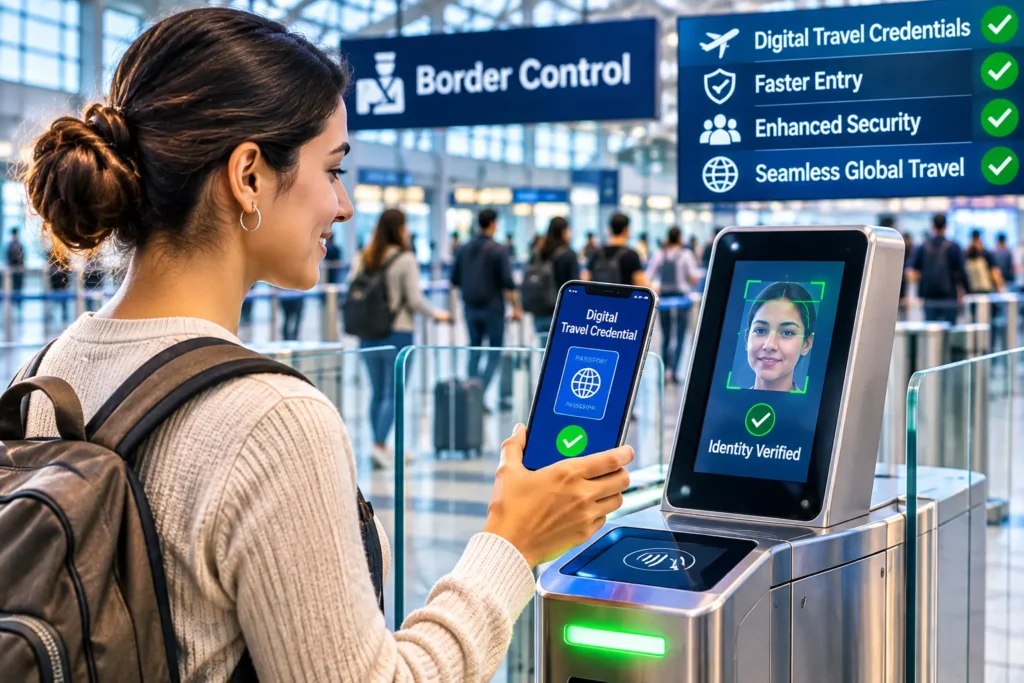
Digital travel credentials and trusted identification frameworks are becoming essential pillars of international aviation and leisure travel infrastructure. As governments, cross-border transport agencies, and travelers navigate an interconnected environment, establishing authentic traveler identity has emerged as a central operational challenge for the global visitor economy. By developing verified, privacy-compliant identification mechanisms, national immigration authorities and global travel stakeholders aim to reduce administrative friction, accelerate terminal throughput, and curb sophisticated transnational fraud.
The modernization of passenger processing comes at a pivotal moment for worldwide connectivity. Official United Nations tourism assessments confirm that annual international tourist arrivals have climbed beyond 1.5 billion visitors, while global commercial civil aviation networks transport nearly five billion air passengers annually. Furthermore, statistical reports from the International Labour Organization establish that international migrant personnel comprise over 167 million workers globally, representing close to five percent of the worldwide workforce. Managing cross-border movement at this unprecedented scale requires structural modernization that replaces cumbersome physical inspections with decentralized, reusable digital identity frameworks.
The Fragmented Nature of Cross-Border Identity Checks
Traditional international tourism and global relocation frameworks rely heavily on disjointed verification steps. Whether boarding an international flight, booking accommodations, applying for an electronic travel authorization, or registering for right-to-work permits, voyagers are required to submit identical identification materials repeatedly.
Passports, proof of address, financial declarations, and health records are routinely collected, photocopied, and stored across multiple independent administrative silos. This fragmented documentation structure introduces operational inefficiencies at primary transport gateways, increases processing queues, and multiplies data security exposures. Every individual repository that archives personal identity data represents an additional target for unauthorized intrusion, complicating compliance with international data privacy mandates.
Standardized digital identity architectures resolve this duplication by establishing a unified verification cycle. Travelers can establish their credentials once with an authoritative issuing body, such as a national passport office or civil registration authority, and subsequently share verified digital attributes with approved border control agencies and hospitality operators without exposing unnecessary underlying records.
Biometric Automation and Passenger Convenience
International civil aviation authorities, regional immigration agencies, and tourism ministries are steadily incorporating biometric verification and smart travel standards into border checkpoints. International Civil Aviation Organization frameworks for digital travel credentials define protocols where cryptographic proofs stored securely on personal mobile devices match travelers to their biometric profiles.
These automated systems create touchless, accelerated transit channels at international border terminals. By replacing manual document handling with secure electronic validation and high-precision facial matching, airport processing times decrease substantially. Official aviation trials across pioneering international hubs demonstrate that biometric verification gates can authenticate passenger credentials in just a few seconds, clearing queues and improving overall airport terminal navigation.
Moreover, integrating identification credentials into digital wallets aligns directly with consumer preferences. Modern leisure vacationers and business executives increasingly expect seamless, smartphone-oriented interactions across the entire travel journey, from airline check-in and automated baggage drops to duty-free clearance, rental vehicle collection, and hotel check-in.
Mitigating Advanced Fraud in the Era of Synthetic Identity
While digital channels streamline passenger flows, border control services and security agencies face increasingly complex fraudulent practices. The rapid proliferation of automated digital manipulation tools has lowered barriers to document counterfeiting, identity theft, and synthetic persona creation.
Public safety and border protection bodies emphasize that identity verification can no longer rely solely on visual inspection of standard plastic or paper credentials. Digital image manipulation, modified biographic text lines, and artificial intelligence-generated credentials challenge conventional detection methods. Consequently, sovereign border authorities require cryptographic verification mechanisms that confirm both the physical document’s authenticity and the uncompromised digital integrity of the credential’s source.
Trusted digital architecture addresses these risks by anchoring identity claims in cryptographically signed certificates issued directly by national governments. When a traveler presents a digital travel credential at an international border or transport checkpoint, the verification system validates the issuing authority’s digital signature against official public key directories. This process ensures that credentials cannot be altered, forged, or cloned without immediate detection by automated border gates.
Reusable Credentials and the Evolution of Seamless Border Crossings
The long-term development of global tourism depends heavily on building mutual trust between international border agencies and traveling publics. Cross-border recognition of digital credentials allows international visitors to complete pre-travel vetting and electronic visa applications before departing their home country.
Advance clearance protocols enable border agencies to assess low-risk travelers prior to flight takeoffs, allowing border officers to concentrate operational attention on higher-risk transit movements. For international tourists, this advance clearance transforms the airport experience into an uninterrupted, stress-free progression through terminal corridors.
As international aviation agreements, privacy regulations, and technological standards mature, trusted digital identity credentials will form the foundational backbone for international mobility. By harmonizing strict border security protocols with modern traveler convenience, digital travel frameworks ensure that global tourism can expand sustainably, safely, and efficiently across international borders.
For more travel news like this, keep reading Global Travel Wire