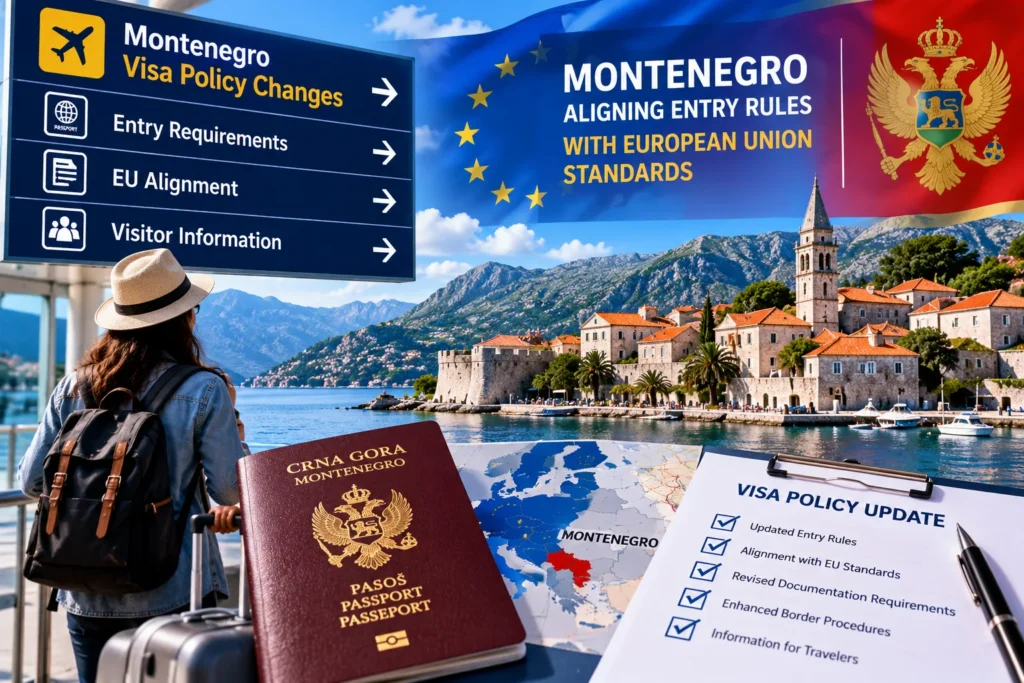
Official announcements from Montenegro’s Ministry of Foreign Affairs confirm that Montenegro will end visa-free travel arrangements for citizens of five nations starting November 1, 2026. The updated regulations introduce mandatory entry visa requirements for visitors holding passports from Russia, Belarus, China, Saudi Arabia, and Türkiye.
The policy shift represents a fundamental step in Montenegro’s broader geopolitical strategy to harmonize its border management, immigration protocols, and visa regimes with European Union standards ahead of potential EU membership. By aligning its visa protocols with European benchmarks, the Montenegrin government fulfills key criteria under Chapter 24 of the EU accession process, which governs justice, freedom, and security, while unlocking access to approximately four million euros in EU Growth Plan funding for the Western Balkans.
The upcoming changes directly impact travelers visiting popular Adriatic coastal destinations, including Budva, Kotor, Tivat, and Herceg Novi, alongside northern alpine tourism zones. Existing visa-free agreements remain operational through October 31, 2026, after which standard visa application procedures will apply across all five designated source markets. Official confirmation from foreign diplomatic missions, including statements from diplomatic representatives inFocus Keyword Identified: Montenegro Visa Policy Changes
Meta Description: Montenegro visa policy changes take effect November 1, 2026 for five countries to align with EU standards. Read essential Adriatic travel rules.
Montenegro Visa Policy Changes: New Travel Entry Rules Take Effect November 1, 2026
Montenegro is preparing to end visa-free travel arrangements for citizens of five non-EU countries starting November 1, 2026. Official confirmations released by Montenegro’s Ministry of Foreign Affairs outline mandatory visa requirements for passport holders from Russia, Belarus, China, Saudi Arabia, and Türkiye. The regulatory update forms a crucial step in aligning the nation’s border controls with European Union standards as part of ongoing EU accession negotiations.
The updated rules will directly impact visitors traveling to popular Adriatic coastal destinations, including Budva, Kotor, Tivat, and Herceg Novi. Travelers who previously enjoyed visa-free privileges must obtain an official Montenegrin visa prior to departure, unless they meet specific exemption criteria detailed under national travel guidelines.
Existing visa-free arrangements will remain active through October 31, 2026. Official statements from diplomatic representatives confirm that formal notifications have been dispatched to the affected governments, finalizing the conclusion of bilateral visa-free agreements.
Border Policy Realignment Supports European Union Accession Targets
The Ministry of Foreign Affairs confirmed that aligning national visa policies with EU standards satisfies a critical benchmark under Chapter 24 of the EU accession process, which covers justice, freedom, and security. The government noted that implementing these border management controls also unlocks access to approximately €4 million in funding allocated under the EU Growth Plan for the Western Balkans.
While Montenegro continues to synchronize its border management and immigration frameworks with European directives, official statements clarify that the country remains outside the European Union. Consequently, the entry changes do not signal Montenegro’s entry into the Schengen Area. A Montenegrin visa does not permit automatic access to Schengen member countries.
Schengen Exemptions and Alternative Travel Permissions
The implementation of new visa rules does not require every traveler from the five designated nations to secure a separate Montenegrin entry visa. Official regulations establish key exemptions for travelers holding valid multi-entry credentials from designated international jurisdictions.
Exemption guidelines outlined in official public announcements include:
Valid Schengen Visas: Travelers holding valid, multi-entry Schengen visas may enter Montenegro for short stays.
UK, US, and Irish Credentials: Foreign nationals possessing valid visas or residence permits issued by the United States, the United Kingdom, or Ireland qualify for short-term entry.
Duration Constraints: Permitted stays under qualifying foreign visas cannot exceed 30 days or surpass the remaining validity period of the primary travel document.
Travelers are advised to verify passport requirements through official diplomatic channels prior to booking travel, particularly when using residence permits or visas issued by third countries.
Expanded Application Processing via VFS Global and Digital Upgrades
To handle the transition and maintain efficient tourist processing, Montenegro has expanded cooperation with VFS Global. Applicants can submit visa applications through authorized application centers across participating countries or directly through Montenegrin embassies.
Key administrative details for international applicants include:
Application Submissions: Russian citizens can process requests through designated VFS Global centers or directly via Montenegro’s embassy in Moscow. Applicants from China, Belarus, Saudi Arabia, and Türkiye must consult regional diplomatic missions to confirm local submission locations.
Supporting Documentation: Submissions must include verified itinerary details, accommodation bookings, proof of financial support, and standard identity documentation.
Visa Information System: The government is constructing a modernized Visa Information System designed to meet European digital standards, paving the way for a fully integrated electronic visa application portal in future operational phases.
Impact on Adriatic Tourism and Regional Travel Planning
The introduction of formal visa requirements introduces new considerations for Montenegro’s tourism sector, which has historically benefited from streamlined entry procedures for Eastern European and Middle Eastern markets. Montenegro’s coastal cities, national parks, and mountain resorts draw significant international visitors year-round.
Travel operators and regional tourism boards advise prospective visitors from affected regions to build extra lead time into their travel itineraries to complete visa processing before purchasing non-refundable flights or hotel packages. However, official travel statistics suggest that the overall impact on arrival numbers may be buffered, as a notable percentage of international visitors already hold multi-entry Schengen visas or regional residence permits that fulfill exemption requirements.
For more travel news like this, keep reading Global Travel Wire