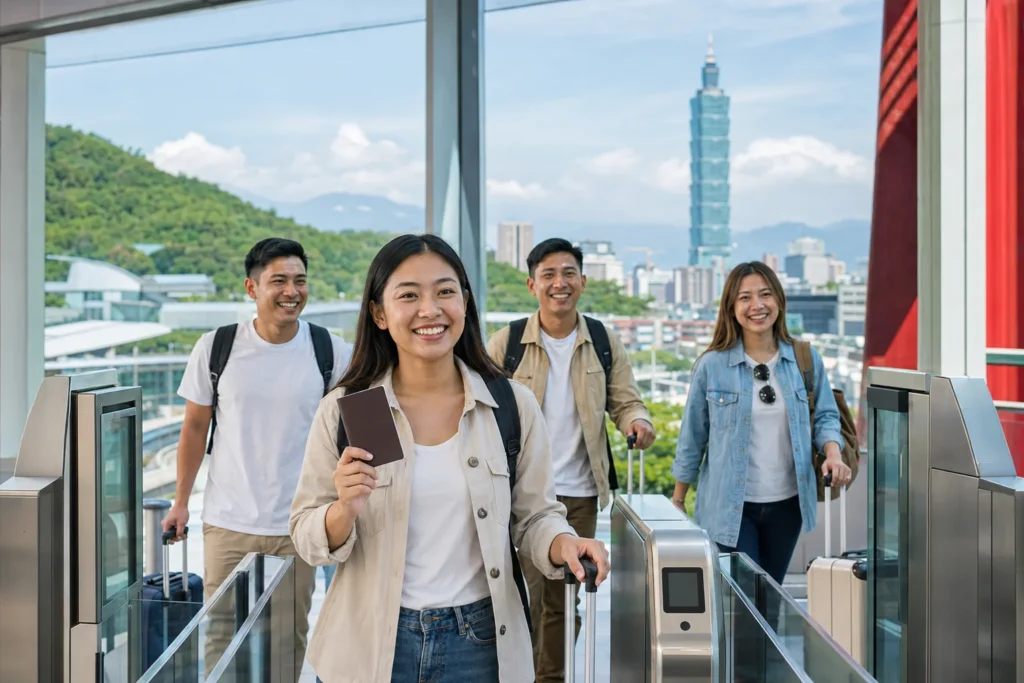
Global travel across East Asia is experiencing a massive surge, and tourism between the Philippines and Taiwan is set to climb even higher. The Ministry of Foreign Affairs in Taipei has officially announced a one-year extension of its trial visa-exempt entry policy for Philippine passport holders. This sweeping policy update ensures that leisure travelers, business personnel, and cultural groups from the Philippines can continue exploring the diverse attractions of Taiwan without the administrative burden of traditional embassy filings.
According to formal ministry advisories released following an inter-agency review board meeting, the highly successful entry framework has been officially locked in for another year. The new implementation cycle takes effect immediately upon the expiration of the current phase, running seamlessly from August 1, 2026, all the way through July 31, 2027. The milestone announcement preserves a critical aviation and holiday corridor, promising to stimulate bilateral arrival numbers and strengthen institutional connections between the neighboring nations.
Strengthening the New Southbound Policy Framework
The strategic decision to renew the trial travel program aligns directly with broader regional development programs. The Ministry of Foreign Affairs clarified that the visa-exemption review forms part of the ongoing New Southbound Policy, a comprehensive government strategy crafted to deepen economic cooperation, cultural exchanges, and human mobility with Southeast Asian neighbors.
During the multi-agency evaluations, official statistics confirmed that the trial entry privileges have consistently yielded robust results over past years. By systematically reducing border friction, the region has transformed into an accessible, high-priority destination for international leisure seekers. Beyond the extension granted to the Philippines, immigration authorities synchronized the program parameters to simultaneously renew identical one-year privileges for passport holders originating from Thailand and Brunei, creating a unified approach to regional holiday mobility.
Understanding Key Conditions of the Visa Exempt Entry Privilege
While the extension represents excellent news for the international travel market, incoming passengers must remain fully compliant with standard immigration conditions to secure entry at the border. Under the current trial framework, eligible travelers are granted a maximum duration of stay reaching up to 14 days from the day after physical arrival in the territory.
Border control authorities emphasize that this 14-day privilege is strictly non-extendible and completely non-convertible to alternative stay categories. Visitors entering under the visa-exempt path must arrive with an ordinary passport book possessing a remaining validity timeline of at least six months from the day of landing. Furthermore, travelers must be prepared to present confirmed return air or sea tickets demonstrating an explicit departure date within the legal 14-day window, along with verified proof of local accommodation bookings and sufficient individual travel funds to support their stay. The privilege is designed exclusively for short-term tourism, family visits, business meetings, and standard sightseeing tours. Anyone intending to engage in local employment, long-term educational studies, or missionary work must still secure specialized, pre-approved credentials from a designated overseas economic and cultural office prior to boarding their flight.
A True Model of Bilateral Tourism Reciprocity
The timing of this regional update reflects a shared, institutional commitment to reciprocal border access. The announcement follows a parallel policy update implemented by the Philippine government via the Manila Economic and Cultural Office. In that cooperative measure, the Philippines extended its own visa-free entry privileges for Taiwanese passport holders, allowing short-term stays of up to 14 days until June 30, 2027.
This double-sided relaxation of border rules highlights a growing partnership aimed at maximizing mutual economic health through travel. Official tourism statistics indicate that the transit corridor between Manila and Taipei is one of the busiest in the region, driven by short flight times, affordable low-cost carrier options, and a high demand for experiential city breaks and nature tours. With formal travel exemptions active on both ends of the flight path, aviation partners and regional hospitality brands are anticipating historic highs in dual-route passenger traffic.
Managing Security and Optimizing the Inbound Visitor Mix
Even as borders become more open, the Ministry of Foreign Affairs reassured the public that state security and immigration integrity remain major priorities. The government stated that visa policies undergo constant review and fine-tuning to strike a precise balance between drawing international capital and protecting public security.
The systematic, year-by-year trial extensions allow border management teams to track behavior patterns, monitor overstay statistics, and make data-driven adjustments to passenger screening protocols at national ports of entry. Concurrently, the government is extending the Project for Simplifying Visa Regulations for High-end Group Tourists from Southeast Asian Countries through December 31, 2027, ensuring that high-value tour groups continue to enjoy smooth, organized access channels.
Looking toward the upcoming travel season, international holiday seekers from the Philippines are encouraged to plan their vacations early to enjoy the benefits of this modern travel era. From the vibrant street food scenes of night markets in Taipei to the serene alpine views of Sun Moon Lake, the continuation of visa-free travel makes organizing a quick escape easier than ever, giving travelers more reasons to explore the cultural and scenic landmarks of Taiwan.
For more travel news like this, keep reading Global Travel Wire