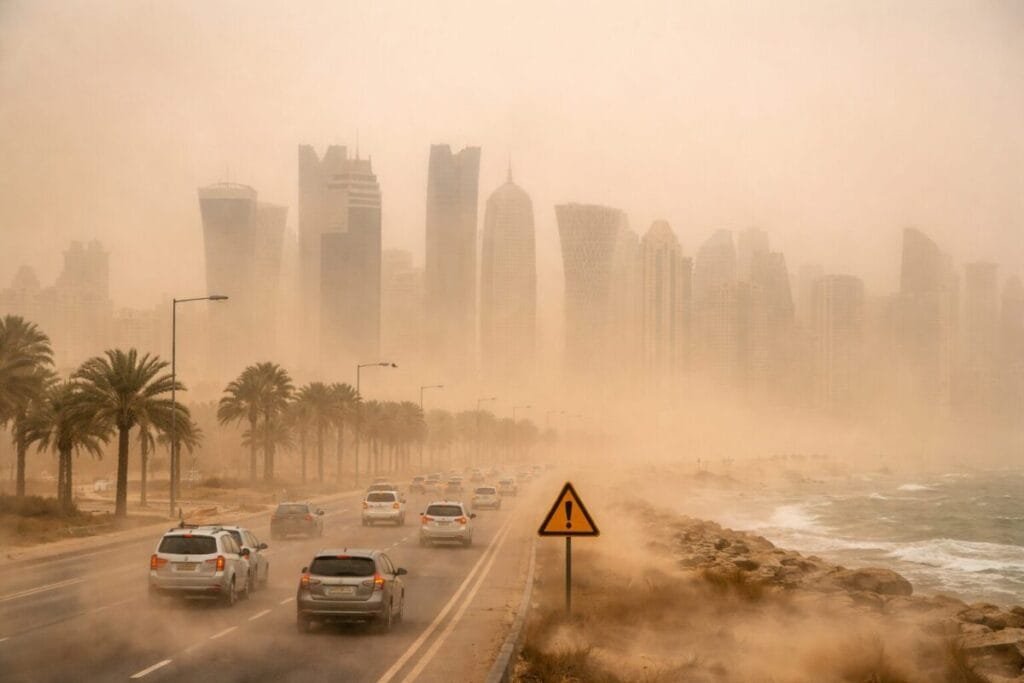
Qatar is preparing for a turbulent week of weather marked by strong winds, blowing dust, falling temperatures, and travel disruptions. The national meteorological authority has issued alerts targeting both residents and travelers, urging caution as visibility drops and outdoor conditions become unsafe.
This weather system will influence transportation, outdoor tourism, and maritime activities across the country. Visitors planning to explore Doha’s cultural attractions, desert tours, or coastal activities should prepare for sudden changes and adjust schedules where needed.
Strong Winds and Sandstorms to Dominate the Skies
A surge of northwesterly winds is forecast to sweep across the Arabian Peninsula and into Qatar. These winds, locally known as “Shamal,” often occur during winter and are known for lifting dust from the desert into urban areas. Regions such as Doha, Al Wakrah, Al Khor, and Mesaieed are likely to experience reduced visibility, especially during peak wind hours.
The sand and dust will create difficult driving conditions. Open highways and inland desert routes could become hazardous. Travelers planning dune safaris or desert camping trips are advised to delay activities until conditions improve. Dust can also irritate the eyes and respiratory system, making masks and protective eyewear useful for those who must venture outside.
Temperature Drop: Expect Chilly Mornings and Evenings
The incoming winds will not only bring dust but also cooler air. Daytime temperatures are expected to fall, and nighttime readings will dip several degrees below seasonal averages. Winter in Qatar is typically mild, but strong winds amplify the chill, especially after sunset.
Tourists who arrived expecting warm winter days may need extra layers for outdoor dining, evening walks, or water activities. Cold mornings may also affect sightseeing plans at popular attractions such as Katara Cultural Village, Souq Waqif, and the Corniche promenade. Dressing in layers and checking outdoor conditions before heading out can make excursions more comfortable.
Marine Advisory: Unstable Conditions Along the Coast
Qatar’s coastline will also be affected by the system. Strong winds will generate higher waves and rough seas, prompting marine warnings. Yacht cruises, fishing trips, kayaking tours, and island excursions may be postponed. Operators often suspend activities during high-wind periods for safety reasons, so tourists are encouraged to confirm bookings directly with tour providers.
With maritime infrastructure playing an important role in Qatar’s leisure tourism, especially around The Pearl and Lusail Marina, early awareness helps reduce inconvenience for travelers with evening cruise or yacht charter plans.
Travel Disruptions: Expect Delays on Roads and in the Air
Weather conditions may influence travel across different transportation sectors:
Road Travel:
Drivers should expect poor visibility as dust reduces line of sight. This can increase braking distance and slow traffic on highways. Local authorities often urge motorists to reduce speed, switch on headlights, and maintain extra distance between vehicles during sandstorms.
Air Travel:
Flights at Hamad International Airport may face delays or schedule changes during intense sandstorms. Aviation authorities sometimes adjust operations for safety when visibility drops. Travelers should monitor updates and allow extra time when heading to the airport.
Public Transport:
Buses, taxis, and ride services may also run slower due to traffic congestion caused by weather. Planning ahead can reduce last-minute stress for visiting tourists.
Tourism Advisory: Adjust Outdoor Plans Wisely
Qatar has become a growing tourism hub, especially during winter when temperatures normally attract visitors to outdoor events, cultural festivals, and desert excursions. However, during sandstorm periods, many of these activities shift indoors.
Museums, entertainment centers, and shopping destinations provide good alternatives while waiting for weather to clear. Attractions such as the National Museum of Qatar, Msheireb Downtown, and indoor family venues allow tourists to continue experiencing the country without exposure to blowing dust.
Health and Safety Tips for Travelers
Visitors unfamiliar with desert climates may not immediately recognize sandstorm hazards. Health professionals recommend the following precautions during dusty conditions:
- Limit prolonged outdoor exposure during peak dust hours
- Wear masks if sensitive to dust or if respiratory conditions exist
- Keep hydrated as dry winds can cause dehydration
- Use moisturizers to prevent skin dryness
- Protect eyes with glasses if outdoors
These small adjustments improve comfort and safety, especially for tourists spending long days exploring.
Why This Alert Matters for Tourism
While sandstorms are common in Qatar, the combination of strong winds, dust, temperature drops, and marine instability makes this week uniquely disruptive. Awareness allows travelers to reorganize schedules and minimize disturbance to their plans.
Warnings such as these also highlight the value of checking local weather before booking excursions, desert trips, or coastal tours during the winter months.
Final Outlook
The ongoing weather alert is a timely reminder that Qatar’s winter climate can shift quickly. For visitors and residents, staying informed, adjusting travel plans, and taking simple safety steps will ensure a smoother and more enjoyable week, even if outdoor adventures pause temporarily.
For more travel news like this, keep reading Global Travel Wire