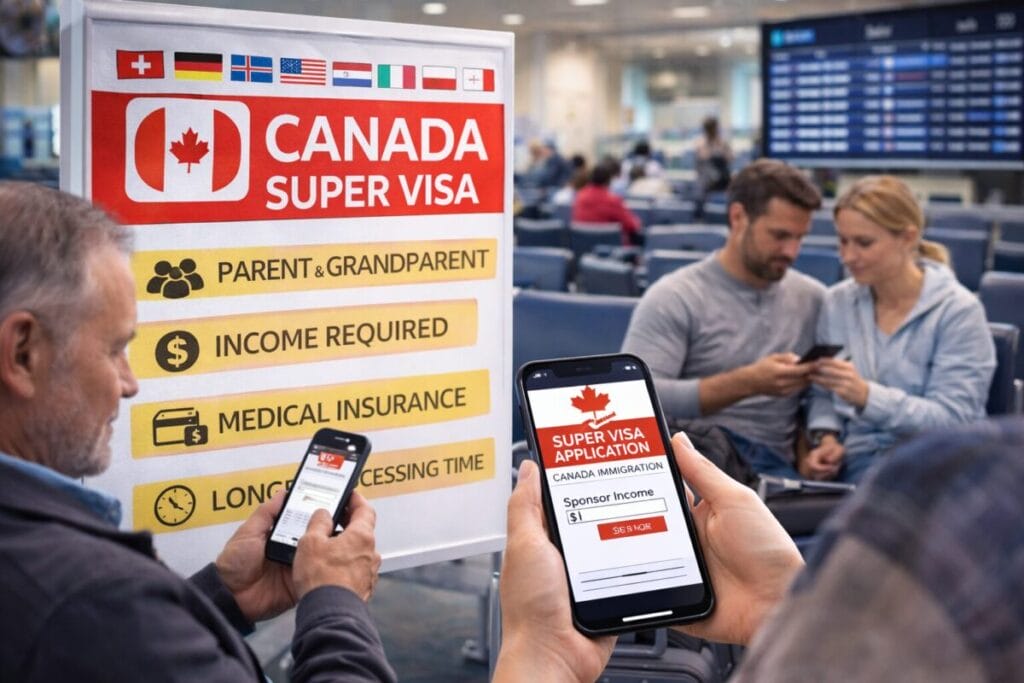
Canada’s decision to suspend the Parents and Grandparents Program in 2026 has created significant travel and immigration challenges for families across Europe. Switzerland, Germany, the United Kingdom, Iceland, Italy, Luxembourg, Poland, and more than thirty other European nations now face new restrictions that affect long-term family reunification travel.
The Canadian government paused the program to address immigration backlogs and prioritize other pathways. While officials aim to improve system efficiency, the change has disrupted travel plans for thousands of families who expected to reunite through permanent residence sponsorship.
Tourism experts warn that these policy changes may reshape family travel patterns between Europe and Canada.
End of PGP Changes Long-Term Travel Planning
The Parents and Grandparents Program allowed Canadian citizens and permanent residents to sponsor older family members for permanent residence. Families used this pathway to reunite permanently and maintain strong cross-border connections.
With the suspension in place, applicants no longer have access to this route. Many families now face uncertainty because authorities have not announced a clear timeline for reopening the program.
European travelers who prepared documentation or waited for application invitations must reconsider their plans. Immigration advisers report increased demand for alternative solutions.
Canada Super Visa Emerges as Primary Option
The Canada Super Visa now serves as the main pathway for parents and grandparents seeking extended visits. This visa allows stays of up to five consecutive years and provides multiple entries over a ten-year period.
Although the Super Visa offers flexibility, it does not grant permanent residence. Families must adjust expectations because long-term settlement options remain limited during the program suspension.
Travel industry analysts believe the shift will increase demand for longer temporary visits rather than permanent relocation.
Eligibility Requirements Introduce New Challenges
The Super Visa includes strict eligibility criteria for both applicants and sponsors. Applicants must prove family relationships, meet medical requirements, and demonstrate admissibility to Canada.
Sponsors must provide financial guarantees through income thresholds based on household size. These requirements create barriers for families who do not meet financial benchmarks.
Mandatory private medical insurance adds another layer of complexity. Applicants must purchase insurance coverage that meets minimum financial limits before submitting applications.
These conditions raise overall travel costs, which may discourage some families from applying.
Processing Times Affect Travel Planning
Processing timelines for Super Visa applications vary widely depending on country of residence. Waiting periods can extend several months, creating uncertainty for travel planning.
Families often delay flight bookings and accommodation arrangements until visa approval arrives. This uncertainty affects airlines, tour operators, and hospitality providers that rely on predictable travel demand.
Immigration consultants across Europe report increased inquiries about documentation preparation and processing expectations.
European Countries Experience Widespread Impact
More than 38 European countries feel the effects of Canada’s policy change. Switzerland, Germany, France, Italy, Spain, Poland, and the United Kingdom represent some of the most affected markets.
Citizens from these countries must now navigate stricter financial and health insurance requirements. Some regions face limited access to approved insurance providers, which further complicates the application process.
The ripple effect extends to travel agencies that specialize in family visits. Agencies report a shift toward short-term visitor visas and flexible travel arrangements.
Tourism Sector Adjusts to Changing Travel Patterns
The suspension of permanent sponsorship pathways may alter travel demand between Europe and Canada. Short-term family visits could decline due to higher costs and longer preparation timelines.
However, extended temporary stays may increase because the Super Visa allows longer continuous visits. Families may choose fewer but longer trips instead of frequent short visits.
Tourism boards monitor these changes closely because family travel contributes significantly to international tourism revenue.
Airlines and accommodation providers may adjust pricing strategies to accommodate longer stays.
Financial Requirements Influence Accessibility
Higher income thresholds for sponsors represent one of the most significant barriers. Families must demonstrate sufficient financial capacity to support visiting relatives.
Mandatory insurance coverage also raises overall expenses. Insurance policies must include comprehensive healthcare protection, hospitalization coverage, and repatriation benefits.
These financial demands may reduce accessibility for middle-income families. Travel analysts predict that wealthier households may dominate Super Visa applications in the near term.
Broader Immigration Trends Shape Travel Landscape
Canada continues to manage high immigration demand across multiple categories. Authorities prioritize skilled worker programs, refugee pathways, and other economic immigration streams.
Government officials emphasize that reducing processing backlogs will improve long-term efficiency. However, families affected by the suspension must adapt to temporary solutions.
European governments and immigration experts advise travelers to monitor updates closely as policies evolve.
Future Outlook for Family Travel Between Europe and Canada
The suspension of the Parents and Grandparents Program marks a significant shift in how families approach cross-border travel and reunification. While the Super Visa provides a viable alternative, its stricter requirements reshape travel decisions.
Tourism experts expect continued demand for family visits despite new challenges. Flexible planning and early preparation will become essential for successful travel arrangements.
Canada remains a popular destination for European travelers due to cultural connections and strong family ties. However, evolving immigration policies will continue to influence travel patterns in the coming years.
As families navigate the new landscape, cooperation between immigration authorities, travel providers, and applicants will play a crucial role in maintaining strong international connections.
For more travel news like this, keep reading Global Travel Wire