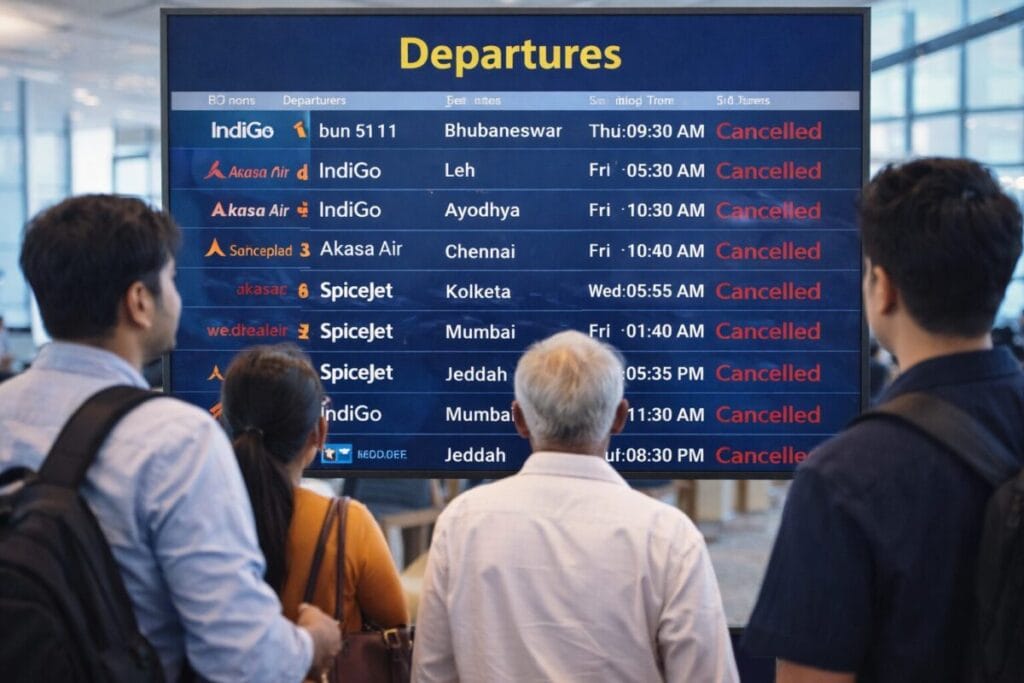
India flight cancellations triggered widespread disruption across key aviation hubs. Airlines including IndiGo, SpiceJet, Akasa Air and Drukair cancelled 22 flights across eight airports.
The affected airports included Delhi, Mumbai, Chennai, Kolkata, Hyderabad, Pune, Goa and Bengaluru. Several cancellations occurred on consecutive days along identical routes.
This pattern suggests operational strain rather than isolated incidents. Repeated suspensions disrupted both domestic and regional international connectivity.
Delhi Airport Faces Early Morning Suspensions
Indira Gandhi International Airport in Delhi recorded multiple cancellations. IndiGo cancelled two consecutive early morning flights to Bhubaneswar.
SpiceJet also suspended a scheduled service to Leh. Akasa Air cancelled its departure to Ayodhya during peak mid morning hours.
Early morning departures often serve business travelers and same day connections. Therefore, these suspensions created significant inconvenience.
Passengers traveling onward from Bhubaneswar and Leh faced cascading delays. Many travelers had to rebook or reschedule meetings.
Mumbai Records Highest Concentration of Disruptions
Mumbai emerged as the most affected hub. Chhatrapati Shivaji Maharaj International Airport recorded repeated cancellations on the Mumbai Chennai corridor.
IndiGo cancelled three consecutive late night departures to Chennai. SpiceJet also suspended services to Kolkata, Bagdogra, Delhi and Kochi.
Delhi Mumbai flight disruption extended across multiple time slots. Both late night and afternoon departures faced suspension.
Mumbai remains a critical commercial center. Therefore, cancellations impacted corporate travel and regional tourism alike.
Chennai and Mumbai Corridor Under Pressure
The Chennai to Mumbai route experienced persistent cancellations. IndiGo suspended late night departures on three consecutive days.
This corridor ranks among India’s busiest metro connections. Airlines operate high frequency services to meet strong demand.
When repeated suspensions occur, passengers lose scheduling flexibility. Many rely on overnight flights for early morning meetings.
Operational adjustments on such routes signal broader network recalibration.
Kolkata Airport Sees Domestic and Regional Impact
Netaji Subhas Chandra Bose International Airport in Kolkata also faced disruption. SpiceJet cancelled flights to Mumbai and Hyderabad.
Drukair suspended a scheduled service to Gelephu. These cancellations affected both domestic and cross border travel.
Kolkata airport delays disrupted leisure travelers heading toward eastern hill destinations. Business travelers also faced itinerary revisions.
Regional connectivity plays a vital role in tourism development. Therefore, route suspensions affect local economies.
Hyderabad, Pune and Goa Experience Ripple Effects
Rajiv Gandhi International Airport in Hyderabad saw SpiceJet cancel a Kolkata departure twice.
Pune Airport recorded an Akasa Air suspension to Kolkata. Manohar International Airport in Goa experienced a cancelled flight to Ahmedabad.
These cancellations reflect broader Indian airline route suspensions. Secondary cities depend on consistent connectivity to metro hubs.
When airlines adjust schedules, passengers face limited alternatives.
International Routes Also Impacted
Akasa Air cancelled a Bengaluru to Jeddah service. International disruptions often create greater complications.
Travelers on overseas routes must coordinate visas, transit permissions and connecting flights. A cancelled departure can lead to missed international connections.
Airlines typically provide rebooking options. However, limited seat availability during peak seasons complicates recovery.
Operational Strain and Network Rebalancing
Aviation experts note that repeated cancellations often indicate network balancing measures. Airlines may adjust schedules due to aircraft availability or crew rotation requirements.
Fleet maintenance schedules and supply chain delays can also influence operations. Indian carriers continue expanding capacity while managing resource constraints.
Government aviation data shows strong domestic passenger growth. Increased demand places pressure on aircraft utilization rates.
Airlines must therefore balance frequency with operational reliability.
Passenger Impact and Travel Planning Challenges
Passengers experienced missed connections and overnight delays. Early morning and late night flights carried higher risk of disruption.
Business travelers faced delayed meetings and rescheduled appointments. Leisure travelers adjusted hotel bookings and ground transport plans.
Tour operators reported itinerary changes for group tours. International passengers faced potential visa revalidation issues.
Travel advisors recommend monitoring flight status closely. Allowing buffer time between connections reduces disruption risk.
Economic and Tourism Implications
Air travel supports tourism growth across India. Metro hubs connect visitors to cultural, coastal and hill destinations.
Repeated India flight cancellations can affect traveler confidence. Consistent connectivity encourages domestic and inbound tourism.
The aviation sector contributes significantly to economic activity. Airlines, airports and ancillary services depend on stable operations.
As carriers recalibrate schedules, maintaining transparency becomes essential. Clear communication helps reduce passenger uncertainty.
Outlook for Indian Aviation Stability
Indian airline route suspensions may continue in the short term as carriers optimize networks. Airlines often review performance metrics and adjust underperforming routes.
Seasonal demand fluctuations also influence frequency decisions. With strong passenger growth projected, airlines aim to stabilize schedules quickly.
Aviation authorities encourage improved operational resilience. Investments in infrastructure and fleet modernization support long term reliability.
Conclusion
India flight cancellations across Delhi, Mumbai, Chennai, Kolkata and other cities highlight mounting operational pressure. Repeated suspensions on identical routes point toward strategic schedule adjustments.
Major carriers including IndiGo, SpiceJet and Akasa Air recalibrated services amid network challenges.
Passengers should plan flexibly and verify departure details before travel. Until schedule stability improves, Delhi Mumbai flight disruption and related route suspensions may continue affecting India’s busiest air corridors.
For more travel news like this, keep reading Global Travel Wire