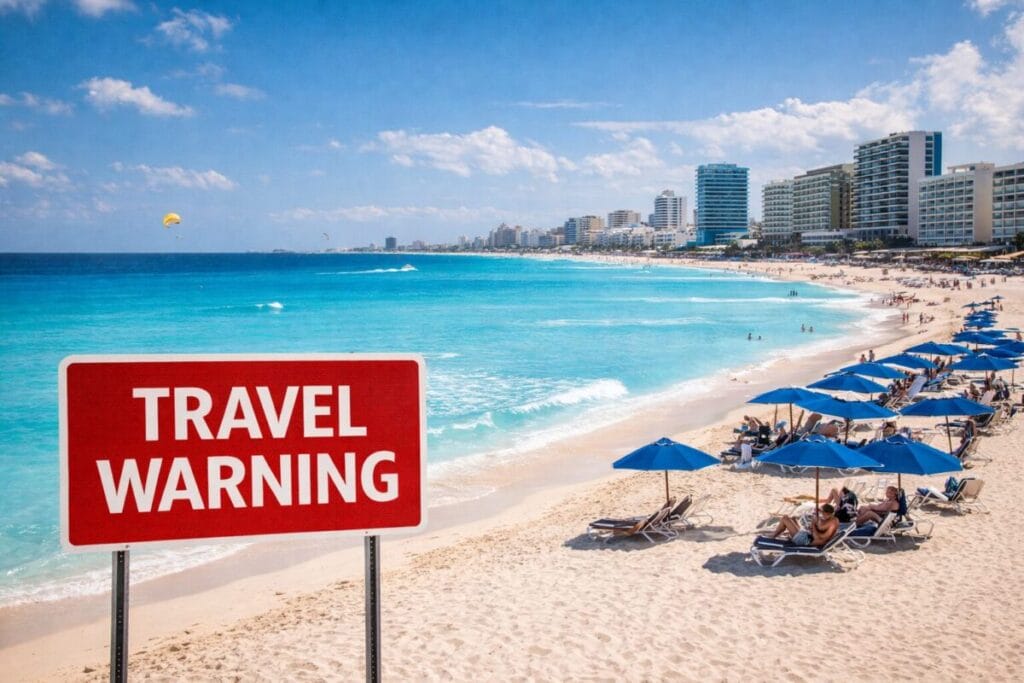
Mexico has entered the spotlight after the U.S. State Department issued a travel advisory citing rising security concerns in certain regions. The alert highlights violent crime, cartel activity, and instability in specific states.
The advisory follows intensified clashes linked to organized crime groups. Authorities reported spikes in violence in select areas after a major security operation targeting cartel leadership.
While the advisory focuses on high-risk regions, popular beach destinations continue to welcome visitors. Still, spring break travelers should reassess plans carefully and stay informed.
What Triggered the 2026 Travel Advisory
The U.S. government updates travel advisories based on security assessments and local developments. In recent months, officials recorded increased cartel-related violence in several Mexican states.
Some incidents involved armed confrontations and temporary highway closures. These events prompted stricter guidance for U.S. citizens considering travel to affected areas.
Mexico’s federal government continues security operations in high-risk regions. Authorities deploy military and national guard units to restore order and protect infrastructure.
However, risk levels vary significantly by location. The advisory does not apply uniformly across the country.
Are Popular Spring Break Destinations Affected?
Major tourism hubs such as Cancún, Playa del Carmen, and Los Cabos remain operational. These destinations sit far from the regions most impacted by violence.
Cancún benefits from a strong tourism security framework. Federal and local authorities maintain visible patrols in hotel zones and tourist corridors.
Los Cabos also operates under heightened security protocols. Resorts coordinate with local law enforcement to protect visitors.
These cities depend heavily on international tourism. As a result, authorities prioritize traveler safety in resort districts and airport zones.
Still, travelers should avoid venturing outside well-monitored areas without local guidance.
Impact on Mexico’s Tourism Industry
Tourism contributes significantly to Mexico’s economy. Government tourism agencies report millions of international arrivals annually.
Travel advisories can influence booking patterns. Visitors may cancel trips to lesser-known regions while favoring established resorts.
Beach destinations along the Caribbean and Pacific coasts may continue to perform strongly. Meanwhile, rural and remote areas could experience slower visitor recovery.
Tour operators are adjusting marketing strategies. Many now emphasize secure transportation and vetted excursion providers.
Mexico’s tourism ministry continues to promote safe travel practices and transparent communication.
What Travelers Should Do Before Booking
Spring break travelers should review official advisories carefully. The U.S. State Department publishes region-specific risk levels rather than blanket warnings.
Travelers should enroll in official alert programs to receive real-time updates. These services notify visitors of security developments or policy changes.
Experts also recommend booking accommodations within recognized hotel zones. Resorts typically maintain private security and controlled access points.
Avoid independent travel through unfamiliar rural regions. Use licensed transportation services and follow hotel guidance for excursions.
Changing Travel Trends in 2026
The advisory may shift travel patterns across Latin America. Some tourists may choose alternative destinations perceived as lower risk.
Luxury resorts and all-inclusive properties may see increased demand. Travelers often associate these environments with higher safety standards.
Adventure tourism in remote areas could slow temporarily. Backpackers and independent explorers may delay plans until stability improves.
Airlines and tour companies monitor demand closely. Flexible cancellation policies now play a central role in booking decisions.
Government Response and Safety Measures
Mexico’s federal government has pledged continued security coordination. National authorities work alongside state governments to combat organized crime.
Tourism police units patrol major beach destinations. Surveillance systems and rapid response teams operate in high-traffic areas.
International visitors should rely on verified information from official sources. Social media reports may exaggerate localized incidents.
Local tourism boards emphasize that many resort areas maintain normal operations. Airports in Cancún and Los Cabos continue to handle high passenger volumes.
How This Affects Spring Break Planning
Spring break remains one of the busiest travel seasons for Mexico. Universities across the United States schedule vacations during March and April.
Students often choose beach destinations for convenience and affordability. However, safety awareness now plays a larger role in decision-making.
Travel experts recommend sticking to organized group activities. Avoid isolated nightlife districts outside hotel zones.
Visitors should also maintain situational awareness and limit alcohol-related risk behavior.
The Broader Global Impact
Travel advisories often influence regional tourism beyond one country. Latin American destinations may see increased scrutiny from cautious travelers.
However, risk perception does not always match on-the-ground realities. Security levels differ greatly between Mexican states.
Mexico remains one of the most visited countries in the world. Its cultural heritage, beaches, and cuisine continue to attract millions annually.
Final Thoughts for Travelers
Mexico’s 2026 travel alert highlights genuine concerns in specific regions. However, it does not signal a nationwide tourism shutdown.
Spring break travelers can still visit established destinations safely with proper precautions.
Stick to well-protected tourist zones, monitor official updates, and follow local safety guidance.
Mexico’s tourism sector has weathered past challenges and adapted quickly. While caution remains essential, informed travelers can continue to enjoy the country’s beaches, culture, and hospitality responsibly.
For more travel news like this, keep reading Global Travel Wire