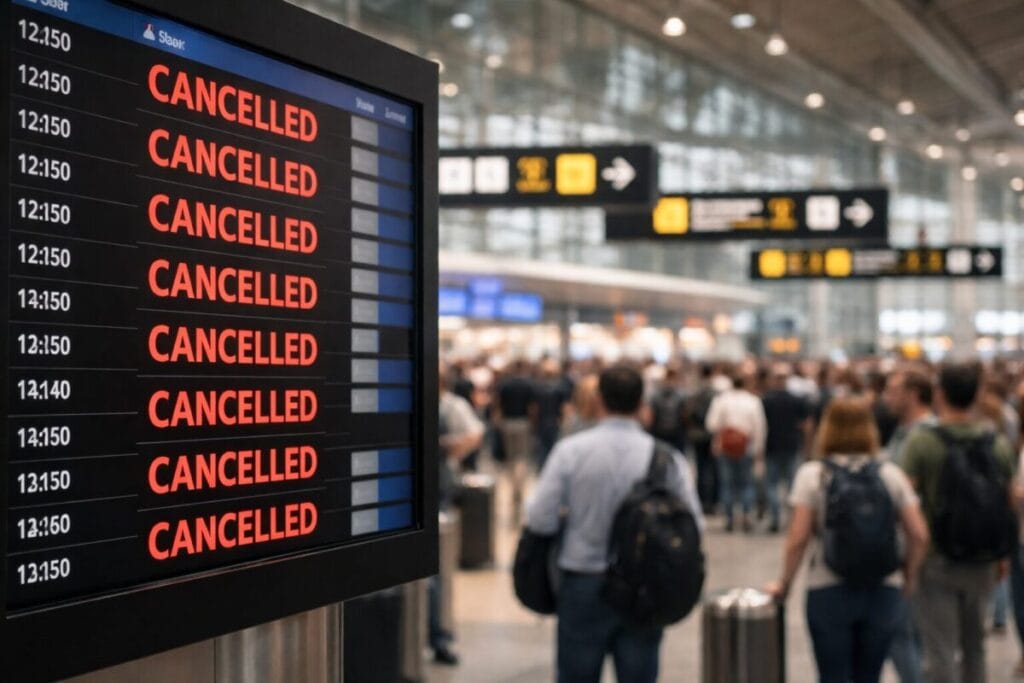
Germany’s aviation network experienced widespread travel disruptions after more than 30 scheduled flights were cancelled across several major airports. The operational changes affected departures from Munich International Airport, Berlin Brandenburg Airport, Düsseldorf International Airport, and Hamburg Airport, creating uncertainty for both international and regional travelers.
The cancellations impacted routes linking Germany with major global destinations including Doha, Tel Aviv, London, Amsterdam, Riyadh, Bahrain, and Paris. Several international carriers adjusted their schedules during the same period, resulting in delays, rebookings, and itinerary changes for passengers traveling through these major European aviation hubs.
Airlines involved in the disruptions included major global and regional carriers operating long-haul and short-haul routes. Many of the cancelled services connected Germany with key international transfer hubs in the Middle East and Europe, increasing the ripple effect across international airline networks.
Munich Airport Records Highest Number of Cancellations
Munich International Airport experienced one of the most significant disruptions among German airports during the latest round of cancellations. A total of 11 scheduled departures were removed from the airport’s flight schedule.
A large share of these affected flights were long-haul routes connecting Munich with Doha. Several services on this route were cancelled across multiple days, indicating operational adjustments that extended beyond a single-day disruption.
Other international routes from Munich were also impacted. Flights connecting the Bavarian capital with Riyadh, Tel Aviv, and Bahrain were cancelled during the same period. These long-distance routes are often operated by wide-body aircraft and require extensive coordination between aircraft rotations, flight crews, and airport operations. When disruptions occur on these complex routes, the effects can quickly spread across airline schedules.
Munich serves as a major European hub for both leisure and business travelers, meaning changes to its flight schedules can impact international travelers connecting to destinations across Europe, Asia, and the Middle East.
Berlin Brandenburg Airport Sees the Largest Overall Disruption
Berlin Brandenburg Airport reported the highest number of cancelled departures among the affected airports. A total of 14 flights were removed from the airport’s schedule during the disruption period.
Several flights connecting Berlin with Doha were cancelled across multiple days. However, the disruptions in Berlin extended beyond long-haul travel. European routes linking the German capital with major aviation hubs also experienced cancellations.
Flights to London, Amsterdam, and Tel Aviv were among those affected. These routes are essential connections for both tourism and business travel, and they serve as important gateways for passengers connecting to long-haul flights in other parts of Europe.
The mix of long-distance and short-haul cancellations highlights how operational challenges in aviation can affect multiple airline networks simultaneously. When flights to major transfer hubs are cancelled, travelers may face missed connections or longer travel times.
Düsseldorf Flights Primarily Impacted on Middle East Routes
Düsseldorf International Airport experienced six flight cancellations during the same period. Most of these disruptions involved flights scheduled to operate between Düsseldorf and Doha.
These long-haul routes serve as important connections for travelers heading to Asia, Africa, and Australia through Middle Eastern airline hubs. When flights on these routes are cancelled, passengers often need to be rebooked onto alternative services departing from other European airports.
In addition to the Doha services, a regional European flight connecting Düsseldorf with Paris was also cancelled. Although the total number of cancellations at Düsseldorf was smaller than in Munich or Berlin, the affected routes play a significant role in connecting Germany’s western region with global destinations.
Hamburg Airport Experiences Limited but Important Changes
Hamburg Airport reported the fewest disruptions among the four airports, but the cancelled flights still had an impact on travelers in northern Germany.
Two departures were cancelled, including a long-haul route connecting Hamburg with Doha and a European route linking the city with Amsterdam. These flights often serve as feeder services that connect passengers to long-haul international networks.
Even a small number of cancellations at regional airports can create scheduling challenges for travelers who rely on these connections to reach global destinations.
Wider Impact on European Travel
The recent wave of flight cancellations across Germany demonstrates how aviation disruptions can quickly affect broader travel networks across Europe and beyond.
Germany’s major airports function as key transit points for travelers moving between Europe, the Middle East, Asia, and North America. When airlines adjust schedules at these hubs, passengers across multiple regions may experience delays or itinerary changes.
Industry experts note that flight cancellations can occur for several reasons, including operational adjustments, aircraft availability, staffing considerations, weather conditions, or evolving global travel demand. Long-haul routes in particular require precise scheduling and coordination, making them more vulnerable to disruption when operational challenges arise.
What Travelers Should Expect
Passengers traveling through Germany’s major airports during periods of disruption may experience longer waiting times, rescheduled departures, or additional connections as airlines reorganize their schedules.
Travel experts recommend several steps for passengers navigating busy aviation periods:
Travelers should regularly check their flight status before heading to the airport. Airlines often notify passengers of schedule changes through email, text messages, or mobile apps.
Allowing extra time for international transfers can also help minimize stress if flights are delayed or rescheduled. Flexible travel plans and early communication with airline representatives can make rebooking easier when disruptions occur.
Germany’s Role in Global Aviation
Germany remains one of Europe’s most important aviation markets, handling millions of passengers every year through its major international airports. Cities such as Munich, Berlin, Düsseldorf, and Hamburg serve as gateways connecting Europe with global tourism and business destinations.
While temporary disruptions are not uncommon in large aviation networks, airports and airlines continue working to stabilize schedules and ensure passengers reach their destinations safely.
For travelers planning international trips, staying informed and flexible remains the best strategy when navigating periods of airline schedule changes and airport operational adjustments.
For more travel news like this, keep reading Global Travel Wire