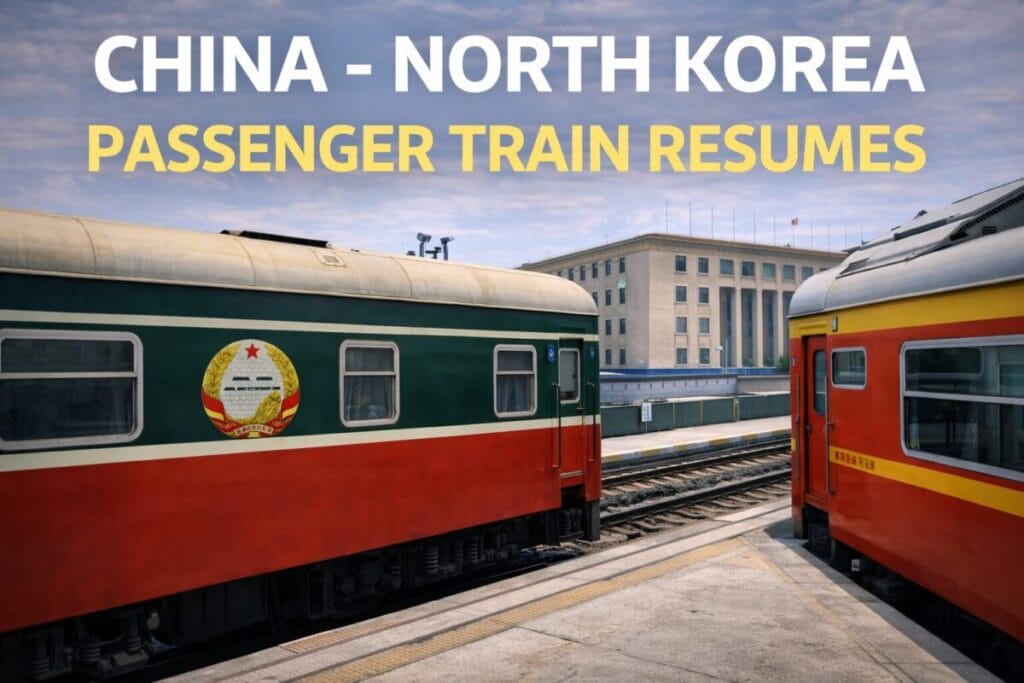
Passenger train services connecting China and North Korea have resumed after a six-year suspension, marking a significant step toward rebuilding travel and economic ties between the two countries. The return of the Beijing–Pyongyang railway route represents one of the most important developments in regional transportation since international travel disruptions began in early 2020.
The train service, which had been halted during pandemic-related border closures, now provides a renewed link between the Chinese and North Korean capitals. Operating several times each week, the route offers a steady travel connection for approved passengers and is widely seen as a signal that cross-border movement between the two nations is gradually recovering.
Although the service is currently limited to selected travelers, tourism experts believe the railway could eventually play a key role in reopening North Korea to international visitors.
A Strategic Rail Connection Reopens
The railway linking Beijing and Pyongyang has long served as a major transportation corridor between China and North Korea. Historically, the route has facilitated business travel, diplomatic visits, and organized tourism groups traveling between the neighboring countries.
When the global pandemic began in early 2020, North Korea implemented strict border closures to prevent the spread of disease. These measures led to the suspension of most international transportation links, including passenger trains.
The resumption of rail service represents one of the first major steps toward restoring travel connectivity after years of isolation.
Trains now depart Beijing several times each week, providing a reliable route for passengers traveling to Pyongyang. The service allows travelers to move between the two capitals without relying on air travel, offering an alternative form of transportation that has historically been important for regional mobility.
Limited Access During Initial Reopening
Despite the return of passenger trains, travel access remains tightly controlled. At present, the majority of passengers permitted to use the route are individuals traveling for official business or those holding invitations issued by North Korean authorities.
This cautious approach reflects the country’s careful strategy toward reopening international travel. Authorities are gradually restoring transportation links while maintaining strong oversight over visitor entry.
Tourism analysts note that this phased reopening allows governments to monitor travel conditions before expanding access to broader groups of visitors.
Speculation continues that if early operations run smoothly, the railway service could eventually accommodate organized tourist groups in the future.
Potential Gateway for Tourism Growth
For many travel industry observers, the reopening of the Beijing–Pyongyang train route could serve as a foundation for rebuilding North Korea’s tourism sector. Before travel restrictions were introduced, tourism had been viewed as an important potential source of foreign revenue for the country.
Chinese travelers historically made up the majority of foreign visitors to North Korea due to geographic proximity and established diplomatic ties. The restoration of railway travel makes it easier for tour operators to organize group visits once tourism restrictions are eased.
Visitors interested in North Korea often participate in guided travel programs that include visits to historical monuments, museums, and major landmarks in Pyongyang.
The capital city features impressive architecture, large public squares, and memorial sites that highlight the country’s modern history and cultural identity.
If tourism expands again in the future, rail travel could provide a practical and structured entry route for international visitors.
Business and Economic Cooperation
While tourism remains uncertain, the immediate benefits of the railway reopening are expected to be seen in business travel and economic cooperation.
China has long been North Korea’s largest trading partner and one of its closest economic allies. The restoration of passenger rail services makes it easier for business representatives and officials from both countries to travel for meetings and commercial activities.
Cross-border transportation infrastructure plays a critical role in maintaining trade relationships, and the railway route supports broader economic engagement between the two nations.
Improved travel connectivity may also benefit cities along the route by supporting local transportation services and regional commerce.
Tourism Infrastructure Under Development
In recent years, North Korea has invested in several tourism development projects as part of long-term economic planning. One of the most prominent initiatives is the construction of large coastal tourism zones designed to attract international visitors.
These projects include resort complexes, hotels, and recreational facilities intended to position the country as a future tourism destination.
Although international tourism remains limited, infrastructure improvements suggest that authorities are preparing for potential growth in visitor numbers over time.
Transportation links such as the Beijing–Pyongyang railway will likely play an important role in supporting these tourism ambitions if travel policies expand.
Cultural Exchange and Regional Relations
The reopening of the passenger train route also carries symbolic significance beyond tourism and business travel. Transportation connections often play an important role in strengthening diplomatic and cultural ties between neighboring countries.
Rail travel encourages people-to-people exchanges, academic visits, and cultural programs that help build mutual understanding.
For China and North Korea, maintaining reliable travel corridors reinforces long-standing diplomatic relations and promotes cooperation in areas such as trade, infrastructure, and regional development.
The railway also connects travelers to broader transportation networks within China, making it easier for visitors arriving in Beijing to continue their journeys to other parts of the country.
Looking Ahead
Although the Beijing–Pyongyang passenger train has returned to service, the future of international tourism in North Korea remains uncertain. The country continues to maintain strict controls on foreign travel and visitor activities.
However, the restoration of rail connectivity represents a meaningful step toward rebuilding cross-border travel after years of isolation.
Tourism experts believe that transportation infrastructure is often one of the first elements restored during travel recovery periods. As rail routes resume and travel policies evolve, additional opportunities for tourism may gradually emerge.
For now, the reopening of the Beijing–Pyongyang train service stands as a symbolic milestone in regional travel, offering a glimpse of how cross-border connections between China and North Korea may develop in the years ahead.
For more travel news like this, keep reading Global Travel Wire