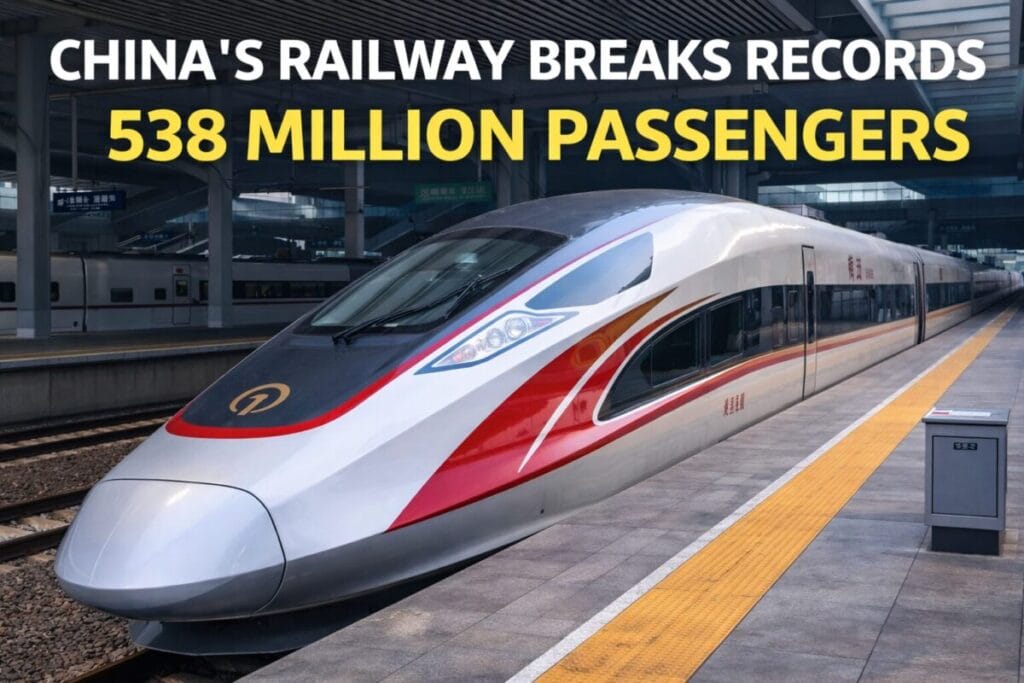
China’s railway system achieved unprecedented milestones during the 2026 Spring Festival travel season, setting new records for both passenger journeys and freight transportation. The annual travel period, often regarded as the largest seasonal migration in the world, once again demonstrated the scale and efficiency of China’s expanding rail network.
During the approximately 40-day holiday travel period, the railway system handled an extraordinary surge in demand as millions of people traveled across the country to reunite with family and celebrate the Lunar New Year. According to transportation authorities, the network recorded more than 538 million passenger trips, marking the highest figure ever reached during the festival season.
Alongside the impressive passenger numbers, railways also transported massive volumes of goods across the country, highlighting the critical role the rail network plays in both mobility and economic activity.
Massive Passenger Movement Across the Country
The Spring Festival is traditionally the busiest travel season in China. Each year, millions of workers, students, and families journey from major cities to their hometowns to celebrate the holiday with relatives.
In 2026, the railway network handled this enormous demand with remarkable efficiency. More than half a billion passenger trips were completed during the travel period, representing steady growth compared with previous years.
To manage the surge, railway operators significantly increased the number of daily train services across the country. On average, more than twelve thousand passenger trains ran each day throughout the travel season. On the busiest day, the system recorded over fourteen thousand train departures, demonstrating the network’s capacity to accommodate peak demand.
These figures reflect the growing reliance on rail travel among Chinese citizens. For many travelers, trains provide the most convenient and reliable option for long-distance journeys, especially during national holidays when highways and airports experience heavy congestion.
Rail Freight Keeps the Economy Moving
While passenger transport captured most public attention during the holiday rush, freight services also played an essential role. Railways moved approximately 424 million metric tons of goods during the same travel period, reflecting a steady increase in freight activity compared with the previous year.
China’s railway freight system supports a wide range of industries, transporting materials such as coal, steel, agricultural products, and manufactured goods between regions. Efficient cargo transportation ensures that factories, businesses, and supply chains continue operating smoothly even during peak holiday periods.
The ability to handle both passenger and freight transport simultaneously highlights the strategic importance of China’s rail network as a backbone of national infrastructure.
Expansion of High-Speed Rail Lines
One of the major factors behind the record-breaking performance of the railway system is the continued expansion of China’s high-speed rail network. Over the past decade, the country has invested heavily in building new rail lines that connect major cities and regional centers.
Several new high-speed routes were introduced or expanded ahead of the 2026 travel season, allowing passengers to reach destinations faster and increasing the overall capacity of the network.
High-speed rail lines significantly reduce travel time between major cities, making rail travel more attractive than other transportation options. Journeys that once required several hours or even an entire day can now be completed in a fraction of the time.
The rapid development of these high-speed corridors has helped transform domestic travel patterns and strengthen connections between different regions of the country.
Advanced Bullet Trains Improve Travel Experience
China’s modern bullet trains, known as the Fuxing series, have also contributed to the efficiency of the railway system. These trains are designed for high-speed operation while providing improved comfort and reliability for passengers.
Fuxing trains feature advanced technology that allows them to operate at speeds exceeding 300 kilometers per hour. Their aerodynamic design, modern interiors, and digital monitoring systems ensure smooth journeys even during periods of heavy traffic.
The introduction of these trains has helped increase the overall capacity of the rail network while improving the travel experience for passengers during peak travel seasons.
Digital Ticketing Simplifies Travel
Another important factor behind the successful management of the Spring Festival travel rush is the widespread use of digital ticketing technology.
China’s online railway ticketing platform allows passengers to purchase tickets through mobile apps and websites, reducing the need for long queues at station counters. The system processes millions of ticket requests daily and has become an essential tool for managing travel demand during major holidays.
During the 2026 travel period, the digital ticketing system reached a new milestone by selling more than twenty-three million tickets in a single day. This achievement reflects the growing reliance on online services to manage large-scale transportation networks.
Passengers can now book tickets, check schedules, and access travel information through mobile devices, making rail travel more convenient than ever before.
Strengthening National Connectivity
The record-breaking performance of the railway system demonstrates how modern rail infrastructure continues to strengthen connectivity across China.
By linking major cities with smaller towns and rural regions, the railway network enables people to travel efficiently for work, education, tourism, and family visits. It also supports regional economic development by making transportation faster and more accessible.
The success of the Spring Festival travel season highlights the effectiveness of ongoing investments in rail infrastructure and technology.
Looking Toward the Future
China’s railway system is expected to continue expanding in the coming years as authorities invest in additional high-speed lines, upgraded stations, and advanced train technology.
Future projects aim to further reduce travel times, increase network capacity, and enhance the passenger experience. New rail corridors are expected to connect more cities and regions, improving national mobility and economic integration.
With demand for both passenger travel and freight transport continuing to grow, railways will remain a central element of China’s transportation strategy.
The record-breaking achievements during the 2026 Spring Festival demonstrate not only the scale of China’s rail network but also its ability to handle massive travel demand efficiently. As infrastructure continues to evolve, the railway system is likely to play an even greater role in shaping the country’s transportation future.
For more travel news like this, keep reading Global Travel Wire