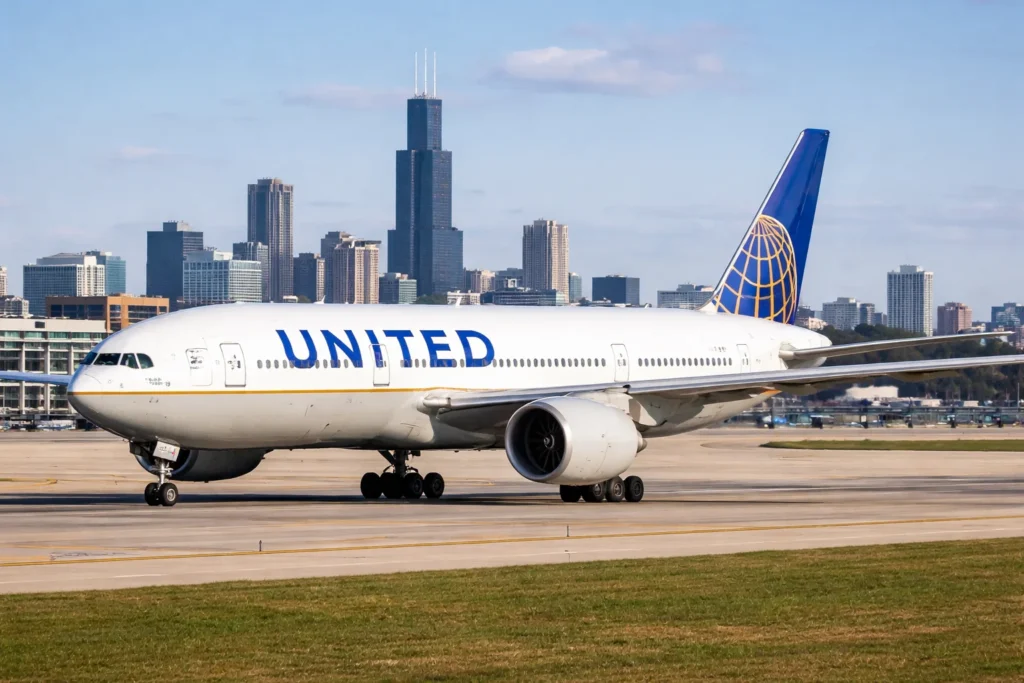
A significant shift is underway in the United States aviation landscape as United Airlines restructures its domestic operations. The airline is set to reduce its widebody aircraft usage on domestic routes by 26% in 2026, a move that is expected to influence travel patterns, seat availability, and tourism flows across major American cities.
This strategic adjustment comes at a time when global tourism demand continues to evolve, and airlines are optimizing fleets to align with operational efficiency, sustainability goals, and maintenance realities.
United Airlines has traditionally deployed widebody aircraft—such as the Boeing 777 and Boeing 787 Dreamliner—on high-demand domestic routes. These aircraft have been particularly prominent on hub-to-hub connections and premium transcontinental services linking major destinations across the United States. Routes connecting key aviation hubs like Chicago O’Hare International Airport and Denver International Airport have historically relied on these high-capacity jets to accommodate strong passenger demand.
However, recent operational data indicates a sharp decline in domestic widebody usage. During the peak summer travel period, the airline is expected to operate nearly 1,400 fewer widebody flights compared to the previous year. This marks a notable reduction in capacity, particularly affecting routes that previously benefited from larger aircraft.
A closer look reveals that the majority of this reduction is tied to the airline’s older Boeing 777-200 fleet. These aircraft have long served as the backbone of United’s domestic widebody operations due to their high seating capacity. A subset of these planes was specifically configured for domestic routes, enabling the airline to transport large volumes of passengers efficiently between major cities.
The decision to scale back is not primarily driven by declining demand. Instead, it reflects broader operational challenges and fleet management considerations. According to official aviation industry updates and airline statements, the availability of engine components has emerged as a key constraint.
The affected aircraft are powered by engines from Pratt & Whitney, specifically the PW4000 series. While these engines have a long-standing reputation in commercial aviation, sourcing replacement parts and maintaining older units has become increasingly complex. A limited global fleet of similarly equipped aircraft means fewer available components, creating logistical hurdles for ongoing maintenance.
As a result, several of United’s older widebody jets have been placed into long-term storage. These aircraft are not formally retired, but their return to active service remains uncertain. Aviation authorities and airline fleet reports indicate that some of these planes are being used as sources of spare parts to support the remaining operational fleet.
This development has broader implications for tourism and travel planning. With fewer widebody aircraft operating domestically, there may be a shift toward narrower aircraft on certain routes. While this can improve fuel efficiency and reduce operational costs, it may also lead to tighter seat availability during peak travel seasons.
Tourism boards and travel authorities are closely monitoring these changes. The reduction in capacity on high-demand routes could influence pricing dynamics and traveler choices, particularly for long-distance domestic journeys. Destinations that rely heavily on air connectivity—such as coastal cities and island regions—may experience subtle shifts in visitor flows.
At the same time, United Airlines continues to modernize its fleet. The airline is increasing its reliance on newer, more fuel-efficient aircraft like the Boeing 787 Dreamliner, which are primarily used for international routes but offer improved performance and sustainability benefits. This aligns with broader industry trends supported by aviation regulators and environmental guidelines aimed at reducing carbon emissions.
From a tourism perspective, the transition reflects a balancing act between operational efficiency and maintaining connectivity. While fewer widebody flights may slightly reduce capacity on certain routes, airlines are expected to optimize schedules and deploy alternative aircraft to meet demand.
Government aviation authorities in the United States have emphasized the importance of maintaining robust domestic connectivity to support tourism and economic activity. Official transportation policies continue to encourage airlines to modernize fleets while ensuring reliable service across major travel corridors.
For travelers, the key takeaway is to plan ahead, especially during peak seasons. With adjustments in aircraft deployment, early booking and flexible travel dates may become increasingly important for securing preferred itineraries.
Looking ahead, the evolution of United Airlines’ domestic flight strategy highlights the dynamic nature of the aviation sector. As airlines adapt to technical, economic, and environmental factors, these changes will continue to shape the travel experience for millions of passengers.
Ultimately, while the reduction in widebody flights marks a notable shift, it also signals a broader transformation in how airlines approach efficiency and sustainability—factors that will play a crucial role in the future of global tourism.