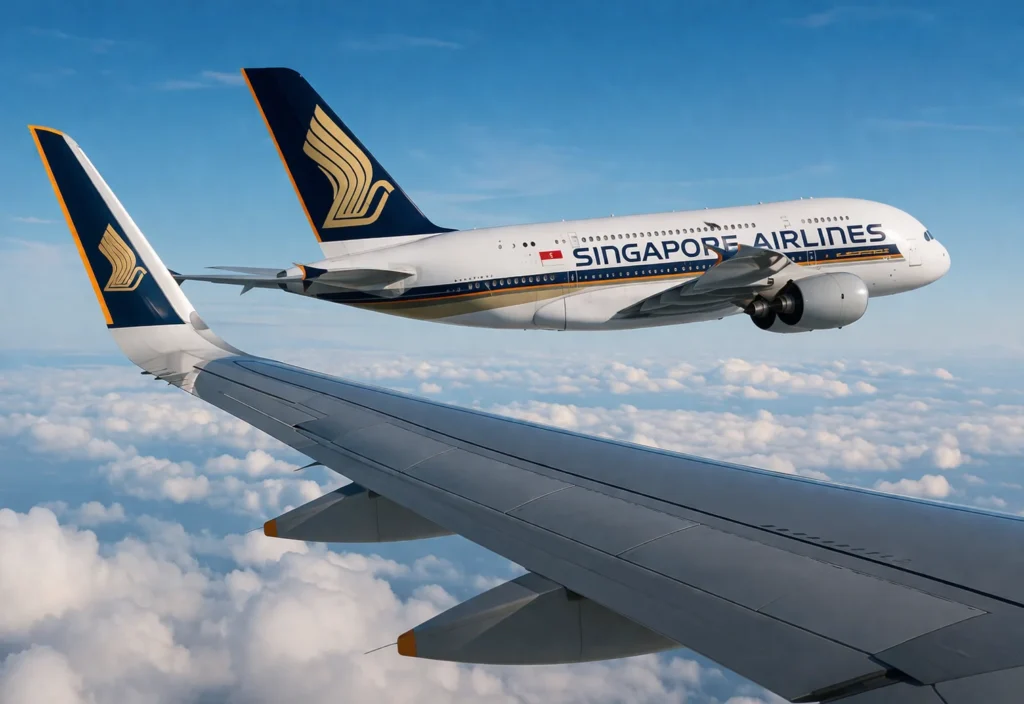
Global aviation and tourism networks are witnessing another significant adjustment as Singapore Airlines revises its long-haul operations by removing Airbus A380 services from its Singapore–Dubai route for the upcoming travel season. The decision reflects ongoing geopolitical and operational challenges affecting travel demand and route planning across key international corridors.
Singapore Airlines, recognized by aviation authorities and tourism boards as one of the world’s leading premium carriers, has long been associated with the Airbus A380. As the launch customer of the world’s largest passenger aircraft, the airline continues to play a major role in operating high-capacity flights that support international tourism flows, particularly between Asia, Europe, and Australia.
However, recent developments in the Middle East have led to adjustments in airline schedules globally. According to official aviation updates and airline operational statements, the removal of A380 services on the Dubai route is primarily linked to reduced passenger demand and evolving airspace considerations. These factors are closely monitored by international aviation regulators and transport ministries to ensure safe and efficient travel operations.
The route between Singapore and Dubai has traditionally been an important connector for both business and leisure travelers. Tourism authorities in both regions have highlighted the significance of this corridor in facilitating visitor exchange, particularly for transit passengers connecting to Europe, South Asia, and Africa.
Initially, Singapore Airlines had planned to deploy its A380 fleet on this route starting in late March, offering high-capacity services to meet anticipated travel demand. However, the airline has now opted to replace the aircraft with the smaller Boeing 777-300ER, which provides greater operational flexibility and aligns better with current passenger volumes.
This shift highlights a broader trend within the aviation sector, where airlines are dynamically adjusting aircraft types based on demand patterns, fuel efficiency considerations, and route viability. Government aviation bodies and international organizations such as civil aviation authorities continue to encourage such adaptive strategies to maintain network stability.
From a tourism perspective, the temporary suspension of A380 services may influence seat availability and travel planning, particularly during peak seasons. Larger aircraft like the A380 are often used to accommodate high passenger volumes on popular routes. Their absence can lead to reduced capacity, prompting travelers to book earlier or explore alternative routes.
Despite the Dubai adjustment, Singapore Airlines continues to maintain a strong A380 network across other major destinations. Official schedule data indicates that the airline will operate the aircraft on multiple high-demand routes during the summer travel period. These include key global hubs such as Heathrow Airport, Sydney, and Shanghai, where tourism demand remains robust.
Additional destinations benefiting from A380 operations include Frankfurt, Mumbai, Delhi, Melbourne, and Hong Kong. These routes are supported by strong tourism demand, government travel initiatives, and well-established air connectivity frameworks.
Tourism ministries across these destinations have consistently emphasized the importance of direct long-haul connectivity in driving visitor arrivals and economic growth. The continued deployment of the A380 on these routes reinforces their status as key international travel markets.
The reallocation of aircraft also demonstrates how airlines optimize resources in response to changing conditions. For instance, adjustments in scheduling between cities such as Delhi and Hong Kong reflect seasonal demand variations and tourism trends identified by national tourism organizations.
Looking ahead, Singapore Airlines has indicated that A380 services to Dubai may resume in the future, potentially aligning with the winter travel season. However, aviation authorities note that such plans remain subject to change depending on regional stability, passenger demand, and regulatory considerations.
For the global tourism industry, these developments underscore the interconnected nature of air travel and geopolitical factors. Changes in one region can have ripple effects across multiple markets, influencing airline strategies, travel patterns, and destination competitiveness.
Travelers planning long-haul journeys are encouraged by tourism boards and aviation authorities to stay informed about schedule updates and consider flexible travel options. As airlines continue to adapt, maintaining awareness of route changes can help ensure smoother travel experiences.
Ultimately, the temporary removal of A380 services on the Singapore–Dubai route reflects a broader shift toward flexibility and resilience in the aviation sector. While challenges remain, the continued operation of high-capacity aircraft on other major routes signals sustained confidence in global tourism demand and the ongoing recovery of international travel.